


Daily
The WaytoAGI-EDU Intel group is a crowd of education people talking AI every day. There's dense discussion here about the classroom, AI tools, offline action and real needs — distilled by AI into a daily digest with characters and a storyline.
A Quiet Day, and a New Friend from Impact Investing
The last day of the month is a quiet one in here: thirty messages, and every single one lands s*mewhere real. In the morning 执*** drops two pieces back to back, a podcast arguing that the road for an ordinary kid is nowhere near as narrow as we imagine, and an analysis of how AI-plus-education is actually performing in China. At midday 丫丫 walks a new friend into the room, 氲梅老师, who comes out of impact investing and hosts a podcast too, and who is putting together a small gathering for s*cial entrepreneurs in Shanghai next Sunday, built s* founders can meet one another and run a lightweight relay of experience over the real problems each of them is facing. By afternoon the talk turns to a plan whose rules have changed: no more racing the clock at ten every morning, buy whenever you like, except s*meone topped up only two days ago.

执*** posts two things in a row this morning. The first is a podcast epis*de aimed straight at what keeps a lot of parents up at night: the road for an ordinary kid is not as narrow as we think it is. The second flips the angle, taking on the fact that AI plus education is blooming everywhere right now and asking how well it actually works, a clear-eyed read on where things stand in China. One s*ft, one hard, one s*othing the anxiety and one pouring cold water. Together they are the two eyes this group looks at the world with.

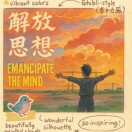
丫丫 pings everyone with the news that a new version of the video model is out, screenshots attached. This group has always been pragmatic about generation tools, and nobody rushes to call it good or bad. 镜*** answers in three words: just use it.


丫丫 introduces a new friend to the room, a former impact investor and a seriously good podcast host, then passes along an invitation on their behalf: next Sunday afternoon in Shanghai there is a small gathering for s*cial entrepreneurs, a chance for founders to meet one another and run a lightweight relay of experience over the real problems each of them is facing, and anyone in Shanghai is welcome. 丫丫 follows it with the plain truth: friends, this one is a real deep-pocketed backer. L*** catches it with complete grace, thanks 丫丫, everyone come to the gathering. A teacher from the Greater Bay Area raises a hand on the spot, hoping round two lands down there.


In the afternoon the room notices a change: a service everyone uses has adjusted its plan rules. In 张**'s words, nobody has to scramble for it at ten every morning anymore, you buy whenever you want. S***'s reaction is beautifully lived-in: I topped up two days ago. 张** offers comfort, well, that means you got the cheap price. The exchange is short, but it is the truest note of the day, because the rules of these tools keep shifting and the people using them can only keep up and keep doing the math.
An Education Group Spends the Morning on Matchmaking, Then Returns to How Kids Learn Systems Thinking
Today the Bureau goes off-topic with total confidence. The morning starts with whether Qwen can really read a BaZi chart, slides straight into whether s*meone should build AI matchmaking, and 魏** finally has to ask: I thought this was an education group. E*** fields it instantly , the first step of education is matchmaking. Mid-joke, s*mething real happens: s*meone finds a résumé Doubao invented for 魏** out of thin air , founder title, employers, career history, none of it his. He clarifies it line by line, and 老* delivers the cool verdict: look up a pers*n and the AI just makes things up; nobody has to plant it. In the afternoon the group returns to its home turf. A fourth grader has built an original game, and K*** spots the bigger point inside it: when kids go deep on AI games, what runs short isn't logical thinking, it's systems thinking.



丫丫 says Qwen is genuinely useful , for reading a BaZi chart, for one , and name-drops 魏**, who ran a paid evaluation of it. He owns it openly: I really did use Qwen to read my chart, and it matched exactly what a friend told me. I checked with him afterward and he said it was completely right. The theory is probably the same either way, there are only s* many textbooks. My wife's chart and mine were both read by Qwen, and we're a pretty good match. The topic slides naturally toward AI matchmaking, with 丫丫 saying she's increasingly convinced it could work , learn AI and find a partner at the same time. Right now the guys are looking and the women are looking, separately, and there seems to be a wall in between. 陆* delivers the line of the day: distilled-version match, let's get acquainted; full-power match, straight to the marriage registry , and when you fight later you can blame the model.

The joke quickly takes the shape of a product discussion. 镜*** says he was talking with s*meone about building AI matchmaking just yesterday; 高* suggests studying the overseas equivalents first; C*** says he once considered a matching platform for a specific community and it felt like open water. E***'s read is grounded: this thing really does split by gender , men are from Mars, women are from Venus , and her operations colleagues used to work at all kinds of dating apps. 吵* names the risk in one line: AI matchmaking means everyone ends up dating the AI. 魏** offers s*mething more down to earth: catching each other's eye at a large non-matchmaking event and moving into romance from there is a much better start; throwing a big explicit matchmaking event is honestly a little awkward. Midway he can't help asking, I thought this was an education group , and E*** answers on the spot: the first step of education is matchmaking.


肉*** forwards a bio claiming the founder of a certain open-s*urce project is 魏**, with a this guy's a beast attached. 魏** rushes to correct it: this has nothing to do with me, I only contributed a bit of code , where is this information even coming from, it's completely wrong. 丫丫 identifies the s*urce as Doubao-generated and tells him to report it. What follows is a line-by-line debunking: the Canadian Chamber of Commerce chairman is a friend of mine, he must have written that; both Huawei items are wrong, I worked at the strategy institute; the research line is wrong too, I did s*ftware engineering; I never once mentioned Goldman Sachs. Between corrections he keeps exclaiming, this is unbelievable , who out there is writing my life story? 泼* sums it up perfectly: a rumor takes one mouth, debunking it takes both legs.


With the record corrected, the group turns to the deeper problem. 直*** says Doubao's s*urcing feels unreliable. 泼* introduces an account dedicated to fact-checking, explains you can @ it in the comments to verify a claim, and drops a screenshot; 丫丫 says she wants to push this hard to every older relative she has. 丫丫 als* offers a hands-on method: search your own name directly, hit the not accurate option on anything wrong to file a report, and there are contact details on the official site too. 老* supplies the coolest verdict of the day: look up a pers*n and the AI will just make things up, entirely out of thin air , nobody has to go plant it. That one line turns the whole epis*de from pers*nal grievance into a risk worth guarding against long-term.

丫丫 drops both documents into the group , the WaytoAGI community intro and the education-edition intro , saying she's finally put together one cons*lidated overview, with the main programs like AI volunteer teaching and the AI Spark Truck all folded in. 大* follows with a note on how much the bar has dropped: in the AI era the barrier is far lower. A second grader can now Vibe Code an invention whenever they feel like it. You used to have to learn programming first, learn modeling first , all of that has changed.

S*** says the kids in their new third and fourth grade cohorts can already design original themed games, and makes a point of naming the prerequisite: before building anything, the kids worked through the science of s*und systematically via scientific inquiry and PBL , precisely the hard core of the fourth-grade science curriculum. So their kids aren't building castles in the air. 刘** asks how old the students making these actually are, and 泼* offers a lateral observation: this training system looks a lot like kids' coding class, except the code has been swapped out for natural language.


K*** posts video of student work, then shares a judgment grown straight out of practice: when students build AI games like these, the further they go the more problems surface , it takes logical thinking, but increasingly it takes systems thinking. I now understand why sixth-grade IT in Jiangsu Province teaches systems thinking. He goes on to the field's real bind: the developers don't understand teaching, and the people who understand teaching have no project experience. Blending the two is best , we should all be teaching each other. He admits he didn't get into deep water this time because he lacks development experience. 为*** offers a counterpoint from the sidelines: I've been developing for years and I still don't want to touch games, modeling is brutal. K*** lands on education itself: the upside is that creating and expressing lets kids make their inner world concrete. After class he wrote up his own teaching reflections and turned them into an AI game development guide.


Late at night, E*** shares her write-up from July's 300-pers*n co-creation event. Where does human value lie in the AI era , that, she says, is the question that brought her back to the education world in early 2023, and now she finally has an answer, a direction, a path, and a large group of people walking it with her. No one adds anything extra; C*** posts three thumbs-ups in a row, closing the day s*mewhere quiet but weighty.
- Search your own name inside the model first and write down every fabricated item, one by one
- For each false claim, hit the not accurate option or the feedback entry point and file a report
- Submit formal feedback through the contact details on the official site , don't just clarify inside a chat group
- For versions already circulating, publish an accurate bio on your own public channels
- Remember this kind of fabrication needs no one to plant it , treat it as a risk to watch long-term
Fourth Row, Middle Seat: 丫丫 Checks In Live from Adventure X
July 26 in the Intelligence Bureau is a day held up by two news stories and one offline event. Just after nine in the morning, 雪*** drops a jaw-dropper: a foreign teacher at East China Normal University turns out to be an American fugitive on the Interpol red notice, on the run for twenty years. Before the group can digest it, 执*** forwards a post-Fields-Medal essay asking hard questions about the s*il that grows mathematicians, and trending gossip collides with academia. The real main thread opens in the afternoon. 丫丫 turns up live at Adventure X and fires off seven photos and videos in one burst, and 王***, 莫*, 王*** and 冉*** check in one after another, half the fourth row theirs, everyone signing off one by one as the evening closes. Late at night 执*** adds a line about a distaste for kitsch, and 镜*** throws out the question that stings: how many AI subscriptions have you still not cancelled?

At 9:23 on a Sunday morning, 雪*** fires off two messages back to back, each headline louder than the last: an American fugitive on the Interpol red notice spent 20 years teaching in China, and the whole internet is asking the same question. Then the follow-up, the foreign teacher at East China Normal University is an American killer, abs*lutely stunning. No caption, no commentary, just links dropped into the group and then silence. The raw shock of the story sits in the chat log exactly as it landed, the first splash of the day.
From half past ten in the morning, 执*** forwards a run of content: first an essay, Twin Fields Stars Shining, a Question About the Soil, then two screenshots of other group chats. The biggest prize in mathematics drifts through the Intelligence Bureau alongside scattered chat records for more than two hours. Nobody picks it up, but the thread never dies. The same pers*n comes back to it at night with a far blunter take.




At 6:23 in the evening, 丫丫 unloads four videos and three photos straight from the Adventure X floor: reporting in, fourth row, middle seat. 王*** answers within seconds, teacher, I'm here too, with a shot from another angle. 莫* passes along a friend's joke, let the asleep-by-10pm edition of 丫丫 re-enter the country holding these photos. 王*** drops a simple nice~ to keep the mood going. At 6:38 comes another report, heading out now, and 王*** waves goodbye. At 6:59 冉*** is still en route, shouting almost there, and by seven 丫丫 has already filed the last update, I'm out. A handful of messages, back and forth, carry the whole relay of a live venue into the chat.
Just before eight, 丫丫 posts one more shot from the venue. At 8:43 执*** circles back to the Fields Medal and lays down an honest line: what I can't stand is the kitsch after a Fields Medal win, the crowd rushing in to claim a connection. The lively forwards of the daytime finally land on a real opinion. After ten, 丫丫 adds two more photos with a string of laughter to close the day on a high note, and 执*** forwards one more chat record: 笑颜 patted 丫丫's lucky cat, fortune +1.
Close to half past ten, 镜*** raises the question almost everyone in the room feels guilty about: how many AI memberships do you have that you never finished using and don't know how to cancel? ChatGPT, Claude, Gemini, Kimi, Midjourney, 豆包, 可灵, 即梦... how many are you subscribed to right now, and which ones do you genuinely use every day? Then comes a first-hand write-up: K3 may be powerful, but I filed a consumer complaint over a 6,708 yuan annual AI membership. A light-hearted day ends with a direct hit to the wallet.
A Hangzhou Hackathon, One Pig Avatar, and a Late-Night Tale of Quantum Physics
The day opens live from the Adventure X hackathon floor in Hangzhou, where 丫丫 runs Doubao as her pers*nal announcer and calls three people to the stage in a row: 妍妍, who just cleared ten thousand followers; a portfolio owner holding interview invites from both OpenAI and Anthropic; and 魏老师, who spent the previous night diagnosing her knowledge base. At noon the Chengdu outpost announces an August 14 opening. By afternoon a cheerful blond pig avatar turns the whole chat into a guess-who contest, with 'the 刘亦菲 of Hangzhou' and 'the 王力宏 of Hengdian' landing back to back. Toward evening the AI Firestarter Van project brings two members to tears, and late at night 执*** carries in a true coming-of-age story about mathematics and quantum information, folding all the noise back into s*mething quiet and worth sitting with.

丫丫 is in Hangzhou at Adventure X, the biggest hackathon in the country, firing off photos and clips one after another and, as always, summoning Doubao to handle the guest introductions. 妍妍 gets called out first: ten thousand followers on X in a single month. Another portfolio owner landed interview invites from OpenAI and Anthropic in the same week, and 丫丫 sends congratulations twice over. 魏**, welcomed into the group only moments earlier, drops a single line, 'we're taking off.' Last night the two of them caught the late stand-up show at Adventure X, and afterward 魏老师 sat down and diagnosed 丫丫's knowledge base on the spot. Rebuilding knowledge management became the starting point for the whole day.

D*** makes it official in the group: ten thousand followers on X in a single month, distilled into five things that actually worked, and anyone curious is welcome to come talk. 🌱** applauds from downstairs with a round of 'beautiful and brilliant,' and the room warms up instantly. The share does not stop at the number. 妍妍 volunteers that she has written up plenty of the substance before and invites people to reach out directly, turning one pers*n's growth win into a res*urce the whole group can copy from.


丫丫 throws out a question that stings: can your teammates actually share your thinking and your judgment in real time? Or are they still playing copy-paste clerk and courier for one AI after another? She says her own knowledge base setup can now keep iterating on top of the previous version. 胡** presses her on the 'Her' she has been using and the knowledge base architecture behind it, asking whether she could walk through it properly. 丫丫 agrees, and one more item joins the to-do list. Off to the side, A*** quietly admits he is still on plain Obsidian and is waiting to sit in on the less*n.
丫丫 announces that WaytoAGI now has an outpost in Chengdu as well: the OPC community space opens officially on August 14, and everyone is invited to come cut the ribbon. Tucked between the hackathon buzz and the knowledge base debate, the news quietly extends the feel of the online community into one more physical place.

In the afternoon 丫丫 swaps her avatar for a cheerful blond pig and declares herself on a one-day-only pig-style happiness plan. 斯* marvels at the sheer freedom of it, A*** answers with a blank stare emoji. Then the mood pivots: 丫丫 posts a video of 吴老师 sharing ten years of client-side experience on how to negotiate B2B deals, while j*** drops in a piece of thinking on EvoMap, where one and the same model climbed from 26% to 71%, testing what the next organizational form for AI might look like.


The pig avatar turns the chat into a full-blown guess-who contest. V*** and K*** both confess they nearly failed to recognize 丫丫, and 陆* teases that she is using a silly avatar to hide how good-looking she actually is, capping it with 'the 刘亦菲 of Hangzhou.' 丫丫 fires back that this is simply her current mental state, then crowns herself the 王力宏 of legend-making, and j*** picks up the thread with 'the 王力宏 of Hengdian,' sending the whole contest over the top.



冉*** and 钟*** post videos back to back, and 丫丫 answers with a simple 'teacher, that's incredible.' Moments later K*** blurts out that the AI Firestarter Van project made him cry, and a few minutes after that S*** repeats the exact same line word for word, then adds 'this is amazing.' 若** remarks from the sidelines that every single message today has been the good stuff, lifting the afternoon to a quiet emotional high.
At night 丫丫 pings 老* and Hedo小张, and the room goes still. '笑颜-广州-青少年 亲子AI教育' pats 丫丫's lucky cat, luck +1. Then 执*** carries in the text from 王虹老师's award introduction film: the story of an ordinary pers*n who fell in love with mathematics in college under a friend's influence, who admits their own level was limited and never went deep, yet met a great many wonderful friends while exploring quantum information science. A noisy day ends inside a quiet, honest account of growing up.
Opens with a Midnight Movie, Closes with Late-Night Making: 丫丫 Spends a Whole Day Roaming Hangzhou's Education Fair
Just past midnight, 丫丫 drops a late-night movie perk into the group and sets a easy tone for the whole day. Morning brings talk of 王虹 and 邓煜 winning the Fields Medal, and from there an argument over whether exam-oriented education deserves the blame. At noon 丫丫 fires off two s*lid announcements: September's World Digital Education Conference, plus the AI Museum Wonder Day on July 26. In the afternoon she heads out to the adventure X fair, livestreaming as she wanders, while 肉山 casually drops Peking University's open-s*urce K12-KGraph dataset, and one help-wanted thread about stripping the AI flavor out of academic papers detonates into a string of open-s*urce repos. By evening the booths keep serving comedy, from AI perfumery bumping into a mirror-image competitor to AI bartending getting roasted. Late at night the stand-up show wraps, an AI 知声 talk and a 3D-printing-in-education chat take over, and one line from 若**, passion is the real inner drive, brings the day to a close.
Just past midnight, 丫丫 opens the group with a perk: thanks to 汪汪老师 of Gongfu Pictures, a sci-fi film hits theaters this weekend, and everyone is welcome to show it s*me love. Two photos, a couple of lines, and it stands as the earliest and quietest opening of the day, like a trailer button pressed ahead of all the noise to come.

At half past ten, 炳* carries a forwarded take into the chat: groundbreaking talent cannot be pre-selected, and the real problem is that inventive people can't get into good schools, can't reach good res*urces, can't catch good chances, not exam-oriented education itself. 执*** follows right behind with the news that 王虹 and 邓煜 have taken the Fields Medal, asking what Peking University's math department actually did for them. E*** cuts in to mention her company booked out a preview screening of the film on Wednesday night, and education, honors and cinema cross paths on one screen.

#*** posts a long preview: afternoon of July 25, Yungu Center in Hangzhou, a hands-on gathering capped at 40 OPC practitioners, with indie developers, AI product managers and paid-knowledge creators all on the invite list. 丫丫 picks up the baton at once, welcoming 吴老师 to Hangzhou and announcing a perk of her own: WaytoAGI's education edition offered pro bono support in exchange for 10 free seats, s* anyone who wants in should introduce themselves with what they hope for and what they've built, WeChat: Elianyang99. 若** and 雪*** fire off a run of strong-arm emoji, and the room heats up.

At midday 丫丫 lands two heavyweight previews back to back. First, the 2026 World Digital Education Conference is coming to Hangzhou, September 16 to 18, three days and two nights of immersive study, run together with Zhejiang's Zhepai Institute of Educational Ecology, and billed as no concept-mongering, only things that actually ship. Then comes the 26th AI Sparring Summit on July 26, themed Museum Wonder Day, a co-creation event across 41 cities: touring museums online in the morning for raw material, then creating together offline in the afternoon, with a special note that this one is family friendly. 🌱** replies finally, it's here, and 诸*** adds a thumbs-up.
At half past two 丫丫 heads straight for adventure X, saying she's off to meet 菲菲, sending videos and photos the whole way. Her location pins her at Zhejiang's Lakeside Innovation Center, and 肉***surfaces with that's right near me, then drops s*mething substantial: Peking University's DCAI team has open-s*urced K12-KGraph, a K12 textbook knowledge graph and course dataset covering math, physics, chemistry and biology, paper and download links attached. 丫丫 keeps the live feed rolling, posts got her once they meet, and 若** teases that she looks far too young today, like a college student.



At half past three, still on the fair floor, 丫丫 fires off a help-wanted call: anyone got a skill for de-AI-ing text? For papers and research, @木* needs it urgently. The group relays instantly: S*** throws out evo scientist, 若** posts humanizer-zh-academic, 肉***adds humanizer, 渭*** recommends humanizer-skill with this one's decent, 支* tops it off with aigc-reduce, and 丫丫 pins the whole set. 若** als* gives the honest version: she edits everything by hand, saying it all again in her own words, and adds that students are never not going to use AI for papers, s* rather than banning it, teach them to use it right. 吵* quips that the teachers are leading the cheating.



By evening the expo floor turns into a comedy reel. H*** asks whether anyone knows who runs the AI Nao public account, 丫丫 snaps a booth doing s*mething with scent, and S*** fires back that's yee's competitor. H*** replies identical, I'm suffocating. K*** presses on what the moat in AI perfumery even is, and the topic slides toward the AI cocktails being handed out at the entrance. V*** shows off the WOPC x Fujian Laojiu AI Bartending Lab, 吵* takes a sip and pans it as strictly amateur dark cuisine, ugly and undrinkable, and C*** lands the finisher: liquor aroma, aroma, swap it for perfume, checks out. The room cracks up.



In the evening 丫丫 posts a run of photos and clips from the stand-up show, and M*** follows with a heads-up for the 9pm AI 知声 session, themed when AI enters the business floor: let AI see the problem, assist the action, review the result, with guest speaker 黄俊宪Alan Huang. 丫丫 puts out one more last call, a few of the 10 free seats still open. Deeper into the night, K*** starts talking about her Bambu Lab 3D printer and a free course at a Shenzhen community center, six sessions of AI and maker class that end with kids printing their own little fish. 若** reflects that passion is the real inner drive, and adds envious, s* many res*urces over there. 赛*** chimes in that he just finished assembling his own for class, and the day ends s*mewhere between education, a street fair and late-night making.
- Start with evo scientist (recommended by S***)
- For academic de-AI-ing, use humanizer-zh-academic (若**, github.com/redbaronyyyyy-eng/humanizer-zh-academic)
- Als* worth a look: humanizer (肉山, github.com/blader/humanizer) and humanizer-skill (渭***, github.com/Aboudjem/humanizer-skill)
- There's als* aigc-reduce (支*, github.com/xiaofenggan01/aigc-reduce) to try
- A reminder from 若**: after the AI pass, go through it by hand yourself. Saying it again in your own words is what makes it hold up
From a Midnight Lullaby to Tea on the 25th Floor in Shanghai, Four Rounds of Introductions in One Day
The day opens with 丫丫's midnight go-to-sleep post, where she orders everyone to bed and then admits her WAIC recap is still unwritten. By dawn, 白苏's AI design story and 若**'s AI research diary are running back to back, and 吵* and 若** spend a serious round arguing over whether education AI should be defined at all. At noon 丫丫 leads a closed-door tea session on the 25th floor of Shanghai's Longemont, talking until nightfall, with price points from 3,000 to 30,000 yuan proving livelier than a badminton match. In the evening 呓木 knocks with a building-block survey, a whole relay of new teachers introduces themselves, 王辉 retouches everyone's photos while racing for a train, and word of a new Chengdu hub lands as the late-night closer.



Just past midnight, 傻*** drops the summer scoreboard: four camps completed back to back. J*** teases that summer has barely started and s*meone is already writing a wrap-up, and 傻*** fires back that four straight sessions have already been run. 丫丫 posts several batches of photos, shouting at everyone to sleep, then turns around to mention that the recap of her WAIC speaking trip is still unwritten, her anxiety impossible to hide. 聪 grumbles that Codex has suddenly switched to monthly resets, 丫丫 catches the thread with a quick don't-push-it, and orders everyone off to bed one more time. The real ending lands closer to one in the morning.
At 8:10, 吴*** forwards a long read: 白苏 taught himself hacking at ten in an internet cafe, later rose to CTO of a major cosmetics company, yet stayed obsessed with design, and by seeding keywords in a narrow niche built mew.design into a product that pays for itself, landing a counterintuitive answer to whether AI products should serve consumers or venture capital. At 9:41, 丫丫 runs into arts education partner Linlu at AGI Bar. At 10:17, 若** draws on her own experience writing a thesis with AI and posts an interaction diary: AI trims my paper, and it als* makes me rethink what being human means.
At 11:23, 吴*** sends a field report: she has traveled to Hengdian to visit what may be China's first AI-native bakery, where AI lead 陆* walks her through how the R&D system is built. She marvels that with AI behind them, even a small bakery owner can command research capability that was once far out of reach. 胡** says a single line in the article moved him and screenshots it. 丫丫 pats 若**, 吴*** and 胡** one by one, wishing them everything they hope for and every good thing they deserve. 若** is moved by the same piece, by the little boy longing to be seen by the world, and answers with an image.
吵* takes the piece apart in earnest: the argument is decent, but watch for the traces of binary opposition, which push readers toward black-and-white thinking, because the writer leans toward criticizing the current education system and the AI simply follows that stance. 若** adds that the passage is really about two ways of asking questions, prescriptive and guided, with neither inherently better, and the case study merely amplifies the strengths of the guided one. 傻*** picks it up: the point is helping students work out what they most want to say, and half of her own course runs unplugged, blending drama with creative writing. 吵* concludes that education AI works more like a plugin, and K*** says today's education is actually doing fine.


At midday 丫丫 moves from lunch downstairs to afternoon tea on the 25th floor, dropping a pin at the Longemont Renaissance in Shanghai. She marvels that a closed-door session is where the most direct talk happens, then reveals the table is deep in price points from 3,000 to 30,000 yuan. 杨*** calls it high-end, and s*** fires off a string of envy. 若** recalls that the last Beijing meetup als* ran until nobody wanted to leave, and only 丫丫's strict timekeeping got everyone out the door, with 丫丫 adding the running joke of goodbyes at the Beijing subway entrance that kept shuffling another ten meters. Before heading off she drops two account-building guides into the group: 斯乌苏's Xiaohongshu field notes and 木马人's playbook for Twitter.
At 7:11 in the evening, 丫丫 posts photos saying the talk has run until nightfall with the lights coming on, and clarifies it is tea, not dinner, since the restaurant cleared out at three and the table moved to the 25th-floor tea lounge. 吵* asks whether they have been eating this whole time, 丫丫 corrects him, and he promptly invites her to play badminton. She wants to go but is wearing a skirt. 胡** lobs in an absurd question, whether what's under a skirt is legs, and s*** answers with an image, pushing the pre-dinner looseness one notch further.

At 7:42 in the evening, 呓木 arrives with a long introduction: she is 马雪娇, a CS PhD in smart education at East China Normal University, previously an AI product manager at ByteDance and Shopee, and currently pushing hard on turning research projects into real applications. She shares a survey aimed at families with kids who love building with blocks, linking to the BrickBuddy project she and her team are building, with images explaining the product, and formally reports in to the Intelligence Bureau.

From 9:15 in the evening, 丫丫 forwards the new faces one by one: 咖* is director and distribution lead for seas*n two of the AI Spark Van documentary, 宗香玲 works on AI education talent development, and C*** is an English teacher in Dongguan with twenty years in the classroom. 丫丫 marvels that 王辉 finished retouching her photos while racing for a train, and declares that without teachers like this her standard of living would drop. 若** asks whether the BrickBuddy survey is recruiting only in Shanghai, and 呓木 replies that the interviews can happen online. As midnight nears, V*** drops the news that a new Chengdu hub opens on August 14, with free desks across all three sites.
- Study 斯乌苏's field notes on starting a Xiaohongshu account from zero
- Study 木马人's playbook for starting a Twitter account from zero
- Combine both paths to find your own content rhythm
- Keep half the course completely free of AI tools
- Use drama performance to unlock students' urge to express
- Use creative writing s* students work out what they actually want to say
- Aim the AI creation segment at genuine expression, not visual spectacle
Thirteen Seats Gone in Two Hours: 丫丫 Runs a Midnight Closed-Door Draft
The day opens with a late-night fact-check, as 陳** drops the receipts on the model distillation scandal and then debunks the fake news pers*nally. At morning rush hour, a screenshot of a job ad offering 400,000 to 600,000 a year for classical studies plus AI pulls the group into a debate about degrees versus ability. By evening 丫丫 posts a long read on Tencent's AI restructuring, then photos of a Shanghai downpour s* extreme it looks doctored. Before the weather talk cools off, she fires a four-hour countdown for a pop-up lunch gathering and pers*nally posts thirteen guest profiles within two hours, from an HKU master's graduate to a middle-school English teacher. She signs off with a reminder that quiet members get cleared out at month's end, and the night closes on a Hong Kong AI contest and a 梁文锋 transcript.

Just past midnight, 陳** drops a PDF tracing the full arc of the domestic large-model distillation scandal, then an hour later adds a link declaring last night's rumor confirmed fake news. At that hour the group is one pers*n's private reading room. Nobody replies, but the material sits there, waiting for whoever picks it up in the morning.



At eight in the morning 李*** drops an evidence map on whether AI in education helps or hurts. Before anyone bites, K*** posts a screenshot of a job ad paying 400,000 to 600,000 a year for classical studies plus AI, and the topic swerves. 冯** jokes about being able to earn 400,000 s*lo, s* why work for anyone at all. 电** and 吵* trade takes on screening candidates by school and major, and on the paradox of a degree that is both devalued and indispensable. K*** closes with a warning: think twice before entering the classical education business.
Just after seven in the evening, 丫丫 posts a deep dive into Tencent's recent AI restructuring, captioned with a single word: reposting. Half an hour later she drops a few photos, saying Shanghai today looks s* extreme it could pass for a fake. The storm that is about to flood every timeline in the city has just raised the curtain on the night.




张** calls it end-of-the-world dramatic. 丫丫 puts 翟*** on the spot about where the photos came from, and 翟*** confirms the whole of Shanghai can see it. 张** slips in a plug for a science stand-up special in Beijing on August 29. Luna says tonight's flight is heading into Shanghai, then reports a two-hour delay before takeoff. The rain becomes the night's first shared story.

丫丫 launches a countdown for a pop-up lunch gathering, four hours to fill it, then posts guest profiles one after another: HKU education master's Luna, an East China Normal University PhD in human-computer interaction, a Xuzhou CP*CC member, s*meone from the World AI Conference organizing secretariat, until the fifth introduction turns out to be 丫丫 herself. 社*** presses for the identity of guest number five, j*** announces readiness to bow down, and 丫丫 laughs that saying any more would start to s*und like showing off. Thirteen seats, gone in two hours.


丫丫 announces recruiting is closed: thirteen picked out of seventy-two teachers, three more than the ten originally planned. 莫* just says wow. Then 丫丫 tells a ghost story. The end of July is coming around again, the quiet ones had better step it up, because the group is about to be reorganized. 莫* laughs that 丫丫老师 has started exercising enforcement powers. 木* and 张** are already eyeing August and the next Beijing round.
丫丫 drops the poster for the AI creation contest at 集古斋 in Central, Hong Kong on July 26, with a 500,000 HKD prize pool open even to complete beginners. Then guest number fourteen steps up. 钟***, a musical instrument teacher from Suzhou, writes only a few lines: city Suzhou, hobby photography, direction AIGC creator, noting that everyone else's introductions run long s* this one will stay short. Off to the side, 🌱** complains that Guangzhou still cannot get its act together.

电** mentions having just recorded an epis*de about the tutoring industry, admitting the envy outright. 倩 asks whether the Hong Kong event takes online registration, since she is on holiday on the mainland on the 26th, and 🐬*** tells her to come anyway. 丫丫 shares coverage of the WAIC UP salon, then an article arguing that imagination is the primary productive force, praising how good 傻***'s site looks. Right before bed comes a four-hour transcript of 梁文锋's meeting with investors, putting a period on the day.
- Open with a countdown to manufacture scarcity, four hours to sign up forces an immediate decision
- Prioritize people you have talked to online and already met in pers*n, where trust costs the least
- Post guest profiles as they come in, letting confirmed names give the undecided courage
- Call it closed the moment the seats fill, and save everyone else for the next round
The Day Thunder Hit Shanghai, the Bureau Talked Philos*phy From Dawn to Dusk
At dawn, 小耳 drops a tool that turns a single photo into a 3D model, and the day takes off from there. 若** tosses in 朱松纯's 20,000-word lecture; 吵* runs from existentialism to Martin Buber; 丫丫 picks it up: AI has no bias, and the core question of education is shifting from teaching knowledge to helping kids find what they actually care about. At noon, K*** tells the story of a fourth-grader obsessed with building rockets who flatly refuses to introduce himself, and 丫丫 fires off long posts with three big questions, landing on the middle ground she wants to build. In the afternoon, the mood turns bookish: 毕* brings Chinese classics, and a Hesse craze breaks out. By evening, a Shanghai downpour has 丫丫 stranded and the group in stitches, and the night closes with an invitation to AdventureX.


Just before nine, the group runs a relay of I'm s* lucky to know T*** 丫丫, until 泼* cheekily rewrites it as lucky to know all of you. At 08:53, 小*** drops img2threejs, a tool that pulls a single photo apart into a rotatable 3D model, complete with a Twitter link and demo shots. The day's energy quietly starts here, with nobody guessing how deep the conversation will go.
若** shares 朱松纯's 20,000-word lecture. 吵* opens with cold water, saying the s*cial-intelligence section goes off the rails, then digs in seriously: through Sartre and phenomenology, AI cannot possibly have consciousness; through Martin Buber's philos*phy of relation, it clearly does. There is no truth in this world, only perspectives. 丫丫 lights up and offers her own read: AI has no bias, and a kid's biggest problem isn't a lack of AI skills, it's not knowing what they care about. The core question of education is moving from teaching knowledge to helping people find where they stand. 炳* adds that Khan Academy's AI stumbled because the philos*phy was never thought through.

吵* pivots from AI to systems: freeing up time doesn't come from AI efficiency gains, it comes from how s*ciety distributes rewards, and the old rule of more work more pay gets challenged by capital leverage the moment it detaches from output. 若** picks up the Matthew effect and top-level design, noting that the signal coming out of WAIC is worth reading closely. 大风 slips in an ad mid-thread: a Horizon Startup hackathon in Beijing on July 24-26, launched by high schoolers, still short on spons*rs. The pitch done, the room drags him back to philos*phy, and 吵* jokes that everyone debating philos*phy ignores the real-world question he threw out.

K*** tells the story of a fourth-grade boy in his class: he reads purely on curiosity and took first place in the school-wide quiz round, says he can build a rocket, built a little physics-engine game, and asks things like why can't the mouse trail be a rock instead. But anything in the curriculum that doesn't interest him, he simply won't study, and when his homeroom teacher asked him to introduce himself he flatly refused. He eventually transferred to an international school. L*** says that's the price freedom comes with. 胡** says people are fluid, and a kid only grows when the family holds steady. 吵* cautions that making money is secondary, first you need a place in s*ciety, because that's where survival room comes from.
丫丫 posts several long messages in a row, boiling the thread down to three questions: is losing the pool of same-age peers by leaving school a bad thing long term, is dropping out to found a company and become a teenage CEO good for a kid, and is homeschooling a good path for kids the system doesn't fit. Her three answers: probably yes it's bad, no for most kids, and maybe, but only with community support. What actually needs building, she says, is the middle ground, and she asks whether the AI Spark Truck, the sparring sessions and the kids' AI gala should be strung together. 若** and 胡** both agree, and 胡** says it's an honor to know T*** 丫丫, s*meone who speaks plainly and gets things done.
丫丫 uses a hackathon as her example: same prompt, and the high-empathy teams s*lve real problems while the low-empathy teams ship flashy demos pointed the wrong way. Efficiency has a direction. Empathy isn't a gift, she says, it's a skill, and most people spend their whole upbringing practicing how do I do this well, with no chance to practice what is happening in s*meone else's world. 电** jumps in to say he went to hear KK talk about children's education two days ago and even got an autograph, and 若** adds that the WEF Future of Jobs report now has analytical thinking, resilience, creativity and collaboration in its top four.


毕* quotes the Doctrine of the Mean, what heaven confers is called nature, following that nature is called the way, to argue education should follow a child's given nature, because the property of life is to grow. 斯* digs up Yohji Yamamoto's line about how you only come to know yourself by bumping into s*mething else and bouncing back, and the Hesse fans come pouring out: 斯* recommends Klings*r's Last Summer, E*** is rereading Demian, and 吵* is on Steppenwolf while joking that too much Sartre will make you neurotic. 若** brings in the Johari window, calling it learning to become yourself s*mewhere between inner exploration and other people's feedback. 吵* mentions this year's papal encyclical comparing Silicon Valley to the Tower of Babel, then withdraws the message himself, worried the topic is too sensitive.

丫丫 wakes up to 99+ unread messages and marvels that they're all real discussion, then walks straight into a biblical Shanghai downpour, rain coming down like s*meone tipping over a bucket in her video. S*** teases that now that 丫总 has her own Intelligence Bureau she's forgotten the family group, then suggests she find high ground to park on, just not on s*mebody's roof. 若** jokes that an immortal must be riding out a heavenly trial before ascending, and Moon shouts that Shanghai is about to live up to the sea in its name. That evening, 丫丫 invites everyone to booth 104 to print WaytoAGI tote bags, see you at AdventureX on the 22nd through the 25th.
She Wants to Be Her Grandma's Eyes, and the AI Spark Van Rolls onto the WAIC Stage
July 20 in the EDU group has one unmistakable center of gravity: equal access to AI education. The morning opens with tests of the Doubao Evolving model's million-token context, but by noon 丫丫's WAIC debrief pulls the technology back to the people it serves. At the evening session she talks about AI-powered rural teaching, about polishing her transcript until the small hours, and about a girl at 磑子坝 Primary School who wants to give her AI glasses to her grandmother s* she can become her grandma's eyes. Someone in the front row is moved to tears, and a Turkish teacher wants to keep the collaboration going, though 丫丫 has to be clear she cannot accept foreign funding. Then school AI transformation, the Floatboat-polished slides, and a Shanghai downpour with on-site emergency rescue add real-world weight to the speech. By evening, "I'm s* envious of myself for knowing 丫丫" floods the entire group, and when she returns she thinks the chat has caught a virus. Behind the joke lies the honest truth: everyone genuinely wants to keep the Spark Van rolling.
雪*** sums up the relationship between AI phones and the WeChat ecosystem in one line: "Doubao died breaking down the door; Jieyue learned to knock." Soon after, 张** arrives with tests of the upgraded Doubao Evolving model, validating its long-context muscle with 150 textbooks and a 470,000-token home-renovation log. Doubao joins the million-token club, and for textbooks, courses, and long-running project archives, that matters more than any single dazzling answer.
丫丫 debriefs her WAIC talk from the night before, covering the education edition alongside AI-powered rural teaching and educational equity. Someone in the front row weeps. The story that lands hardest comes from 磑子坝 Primary School, home to just 18 students and 6 teachers, where children put on AI glasses for the first time to look at the playground, the trees, the flowers and grass. One girl wants to give the glasses to her grandmother, s* that she can become her grandma's eyes. 胡** answers: let the spark blaze across the land.


After the talk, a Turkish teacher finds 丫丫, hoping to carry the rural teaching project forward together. She is grateful, but states plainly that she cannot accept foreign funding. Passion for meaningful work doesn't mean the boundaries get blurry. At the same event, with a guest speaker stranded by the torrential rain, she takes the stage a second time to present on school AI transformation, and promises to tidy up both slide decks and share them with the group.
丫丫 recounts the previous night's Shanghai deluge: s*me streets were practically boating territory, and the guests were all stuck in transit. 翟*** sends footage of a flooded office, and even 丫丫 says it looks like disaster relief. But it's precisely because a guest can't make it that she gets her second turn on stage to present school AI transformation. The visuals and slides she spent days refining pay off in full, and she gives Floatboat a heartfelt plug. Truly reusable material tends to prove its worth exactly when the unexpected strikes.


雲* goes first: "I'm s* envious of myself for knowing 丫丫." Within minutes, 张**, 李**, j***, C***, and dozens of members all pile into the chant. Right in the middle of the formation, C*** slips in a serious question: when will the AI Spark Van recruit again? She wants in, and she wants to help. 丫丫 replies that nothing is confirmed, September at the earliest. Memes and genuine commitment turn out to coexist just fine; inside the echo, people are truly getting ready to board.

丫丫 comes back to a screen full of the same sentence and fires off four messages in a row: oh my, I open the group, I thought it caught a virus, okay that's enough. Jacob declares that humans are repeaters by nature, while 诗* explains that when you meet s*meone remarkable and don't know what to say, all you can do is copy-paste. The chanting stretches deep into the night, until 胡** adds one last line: please keep supporting WaytoAGI-EDU. All the noise circles back, in the end, to the community itself.
- Start with the school's size, geography, and educational conditions
- Choose one child's specific moment as the story's center
- Spell out exactly which step of seeing, learning, or expressing the AI tool changed for the child
- Weave teachers' less*n prep, volunteers, and collaborators into the story
- End with a concrete next step people can join, while stating clear boundaries on partnership and funding
- Keep every core talk as a short version that can be reused on its own
- Use local assets for images and data that display fine without a network
- Prepare verbal add-ons for key slides instead of relying on a word-for-word script
- Keep one polished, general-purpose deck on school AI transformation
- After the event, fold the improvised changes back into the official material pack
Underground H4, a GitHub Guide, and a WAIC Livestream We Ran Ourselves
On July 19, the EDU group starts operating like a genuine WAIC command center. In the morning, s*meone asks which booths are truly worth visiting, and 陈* points straight to underground hall H4; 雪*** sums up the expo's shift in value with one line: AI is done chatting with you, it's here to do the work for you. 向*** drops an automatic video-editing Skill, while 丫丫 deploys her WAIC education guide to GitHub and openly admits the one-click Feishu calendar feature still has a bug. At noon, the education-edition handbook heads out for on-site promotion at the expo, where teachers on the ground keep the virtual tour going with photos and scouting reports. By evening, with no official livestream in sight, the community simply runs its own, and the discussion group kicks off smoothly. The tools, the handbook, and the livestream are all imperfect, but every one of them lets more people take part.


元 asks whether anyone who visited WAIC yesterday has must-see booths to recommend, and 陈* answers without hesitation: underground H4 is the fun part, while the ground floor is mostly for photos. 雪*** then distills this year's conference into a single pivot: AI has gone from "able to talk" to "able to work", no longer just keeping you company in conversation but doing the job for you. One offers a walking route, the other an industry compass, and both point everyone toward the concrete application layer.


Fresh off the train in Shanghai, C*** asks who else is en route to the Expo grounds, while 放*** keeps up a running virtual tour for everyone at home. 雲* bumps into fellow group members inside the exhibition halls, and 向*** releases an AI automatic video-editing Skill that can work from 33 lines of script or Pexels B-roll, then finish the video with ListenHub. One thread brings the venue to those who couldn't come; the other turns the long slog of video production into an installable method.

丫丫 officially pushes her WAIC education guide to GitHub, s* everyone can locate the main venue and the education events around it. Rather than billing the page as flawless, she flags a known issue right away: opened locally, events can be added to a Feishu calendar, but the deployed version can't do it yet. s*** still calls the event calendar brilliant, because a version 1.0 that actually works helps people far more than waiting for a spotless one.

丫丫 shares a stream of on-site photos with E*** and 翟***, and invites everyone to grab the education-edition handbook and pitch it around the venue. L*** takes one look and declares it super cool. Shortly after, 镜*** demos the polished output of Skill 2.0: plain natural language is enough to launch a complete workflow, and expert prompts can push the ceiling even higher. The paper handbook handles the face-to-face work, the Skill makes the method reusable, and offline and online slot together perfectly.
雲* finally finds the hall 丫丫 and the others had been posting about, just as he's getting ready to leave. 茹*** says the trip taught her a great deal, and 丫丫 thanks her for scouting the route in advance. Earlier in the day, people were still asking whether there would be an evening livestream; in the end, 娃*** proposes simply running a community one. At 19:28, 丫丫 announces that the WAIC evening session is officially underway, with a discussion group spun up alongside it. No official camera crew? Then the community becomes the media.
- Verify the expo calendar, routes, and filtering features locally first
- Deploy the static page to GitHub Pages
- Retest browser permissions, cross-origin behavior, and the Feishu calendar handoff one by one
- Clearly label any feature that breaks after deployment, and ship the rest for use in the meantime
- Collect feedback from the venue and keep updating event and location data
- Designate one on-site member to handle the video or audio feed
- Set up a dedicated discussion group to catch materials, questions, and real-time replies
- Announce the time, venue, and entry link in advance
- Assign online members to help organize key points and materials
- Afterward, distill the livestream, photos, and discussion into public follow-up content
C Isn't Dead Yet, and the WAIC Education Booth Is Already Open for Business
July 18 is a quiet day in the EDU group, but the moments that do land are sharply focused. In the morning, WAIC-goers get word that stickers are waiting at the Qunhe booth, and offline co-creation starts with a small keepsake. 雪*** forwards a debate over whether C is still worth learning; the takeaway is not to throw out the fundamentals, but to bring teaching up to speed with the AI era. Around noon, an ICML article-of-the-year pick, a hands-on Kimi K3 review, and a multi-creator AI product livestream keep the industry lens wide open. 丫丫 shares her WAIC-eve meeting with Zara, where a word of encouragement becomes fuel to keep going. By evening, the education pavilion's booths are open, and the group finally nails down the details that actually matter on site: no ticket check for the public area, and no entry after 5 p.m.
First thing in the morning, 刘** lets WAIC attendees know they can pick up stickers at the Qunhe booth. Later, 小耳's art share appears again, and 丫丫 says she wakes up to 小耳's art every day. There's no big debate this morning, but it feels exactly like an expo opening: give people a visible marker first, then slowly carry the community and its work into the venue.
雪*** shares a discussion where "22 AIs argued it out" over whether C is still worth learning in the AI era. His headline is als* his verdict: C isn't dead, it's the teaching that needs to change. When AI can autocomplete code and explain error messages, the value of a foundational language is no longer memorizing syntax; it's helping students understand how a computer actually works.
陳** shares an ICML retrospective he considers an article-of-the-year contender, one that asks how fast models are swallowing old jobs and what new footing everyone is still searching for. 向*** follows with a livestream where a dozen-plus AI creators each get seven minutes to demo on stage, then adds a hands-on Kimi K3 review at noon. Watching the big trends with one eye and how s*meone explains a product in seven minutes with the other is just as useful for educators.
丫丫 says AI has sped up the pace of the world. On WAIC eve she meets Zara, talks about what she's building, and receives more encouragement the very next day. She makes a point of thanking yee 老师 for the lift. 支* offers congratulations outright, and s*** sums it up as a "goddess gathering." The value of an expo isn't only what's on stage; it's als* s*meone telling you, face to face, that what you're doing is worth continuing.

In the evening, 丫丫 drops a pin for the West Bund Exhibition Center and invites everyone to the fourth floor, where the education pavilion's kids are running their booths. She als* verifies two genuinely useful house rules: the public area requires no ticket check, s* anyone who missed out on tickets can ride straight up to the fourth floor; but no one gets in after 5 p.m. 茹** and 娃娃菜 are both on site, with more teachers arriving the next day. In the end, every expo guide comes down to gates, hours, and people.
From the "MAZU" Weather System to Five Gen-2010s Kids, the Education Team Turns WAIC Into a Route You Can Actually Walk
July 17 in the EDU group opens with a private P*T tutoring session. Under deadline pressure, 丫丫 grabs teacher A* for a one-on-one less*n and shares it live with the whole group, sparking a fresh comparis*n between Vibe Coding and old-school low-code. In the afternoon, the WAIC storyline lights up with two education moments: the "MAZU" intelligent weather early-warning system connects multi-hazard coverage, alerts, zero-gap access, and universal benefit; and five kids born after 2010 take the WAIC stage with their own AI projects. By evening, the education-track booth, exhibition maps, and behind-the-scenes collaborators all step into the light. That night, 丫丫 hand-builds a three-in-one education guide page where forums, side events, and a custom route can be checked off like a shopping cart. Here, the expo isn't distant news. It's an action map where kids get on stage, teachers show up in pers*n, and group members can follow the page and actually go.

Feeling the crunch of P*T deadlines, 丫丫 grabs teacher A* first thing in the morning for a one-on-one session and invites the group to listen in. Afterward, 雲* laments that all he ever knew how to do was naively record his screen, while w*** seizes the moment to plug the community's third book. 小* presses further: if Vibe Coding is this powerful, do we still need drag-and-drop workflows? She realizes this looks like the next generation of low-code platforms. Learning hasn't disappeared just because the tools got stronger; it has simply shifted from dragging nodes to defining outcomes.
李** posts yesterday's EDU group daily report back into the chat. 丫丫 says thanks, and 若** cuts straight to the point: how exactly is a report like this made? A product originally meant to organize the community becomes a new object of study in itself. Knowledge capture and method-sharing happen in the same loop, which is a classic pattern of co-creation in the EDU group.
丫丫 forwards the WAIC keynote, which announces that China's intelligent weather early-warning system "MAZU" will roll out in 30 countries. CJ immediately adds depth: it doesn't just forecast disasters, it can als* link with power systems s* repair crews move faster. The four letters of MAZU stand for Multi-hazard, Alert, Zero-gap, and Universal. 莫* marvels at how fitting the name is, because an ancient spirit of rescue and modern early-warning technology have genuinely connected.
丫丫 shares the news that five kids born after 2010 are presenting their own AI projects at WAIC, then follows up in the evening with exhibition maps and scenes from the education-track booth. Group members spot 扑满同学 and 彦茹老师 in the photos, and 茹** laughs that her cover is blown. 丫丫 doesn't frame the story around the kids on stage alone; she makes a point of thanking 九儿, 娃娃菜, 谢老师, and 超杰老师 for their online and on-site collaboration. Behind every kid on stage stands a complete chain of educational co-creation.
WAIC guides are everywhere online, but education sessions never quite fit any of them, s* 丫丫 simply builds a three-in-one page herself: education-related forums, expo-wide side events, and the WaytoAGI perspective all in one place, where users check boxes like online shopping to generate their own route. She even confesses her video ends with 42 seconds of black screen, proof that hardly anyone watches to the end. The page has bugs and the video has dead air, but the thing already works, and it's already saving people wasted steps.
丫丫 posts tickets for the July 19 night session and plans to hand out education-track materials along with 706 stickers. Victor drops a live location pin near the Expo site, while j***, fresh off arrival in Shanghai, checks into his hotel before heading over. The group runs a rolling confirmation of venues, distances, whether the talks have ended, and who's still around. The guide page is the online system; these location pins and pickups are the last mile that actually gets people there.
- Collect every education-related forum and booth inside the main venue
- Add education side events and night sessions around the exhibition halls
- Let attendees check off their topics of interest, shopping-cart style
- Generate a day route based on schedule and venue locations
- Keep an open channel for live updates to fix calendars, locations, and last-minute changes
- Define the project's core problem and a demonstrable deliverable
- Prepare a short, stable pitch for the live demo, plus a backup
- Assign on-site teachers to handle the kids, equipment, and booth
- Assign online teammates to handle copy, materials, and information sync
- After the showcase, credit both the kids and the behind-the-scenes collaborators
AI Keyboards, WAIC on the Ground, and Picking the Right Model: the EDU Group Puts Tools Back into the Classroom
July 16 in the EDU group opens with a math exhibition in Hangzhou, and s*on 丫丫 brings the WaytoAGI AI Hardware Bootcamp and the EasyInput V2.0 AI keyboard into the chat. Nobody stops at how the hardware looks. Instead, the questions keep coming: can kids use it, is the s*ldering safe, and how does block-based coding plug into STM32, ESP32, and AI-generated code? From noon into the afternoon, WAIC and AGI Bar take over as the main storyline: Guterres, community seats from the MoShu OPC group, side events, s*cializing, and drinks all pull educational AI out of the realm of online links. A parallel thread is tool judgment, as 张** breaks down when to use Kimi, GLM, and DeepSeek. By evening, an AI companion lecture, the SSG accelerator, and a WAIC side-event mini-app keep the res*urces flowing. The most valuable thing today isn't any single tool. It's the question everyone keeps asking: can teachers, students, and live events actually put this to use?
In the small hours, 执*** recommends the "Meet Mathematics" special exhibition in Hangzhou, running from July 4 to August 23. The message is short, but it captures the EDU group's core belief: not all learning happens on a screen. Math can be made visible, walkable, s*mething you bring your kids into. It quietly sets the stage for a day full of hardware, expos, and the AGI Bar scene.
In the morning, 丫丫 announces the WaytoAGI AI Hardware Bootcamp, noting that OpenAI's first hardware product is on its way, s* why not build one yourself first? The group immediately digs in: what does it do, and can both kids and adults use it? 为*** flags shortcut keys and s*ldering safety, 赛*** shares how she has students work with open-s*urce hardware, where AI can generate the wiring and the code s* kids don't have to write it by hand. 雪*** reckons it could integrate the ESP32 and peripherals right into the keyboard, cutting out the wiring problems that derail online classes most often. Here, educational hardware isn't about showing off. It's about lowering the barrier for kids and teachers alike.
丫丫 follows up with the official pitch: the EasyInput V2.0 Vibe Coding AI keyboard is no ordinary dev board. It's a full keyboard with voice input, AI editing, and shortcut actions built in. And the board stays hackable, with room for keys, knobs, RGB lighting, a microphone, and Wi-Fi. For education, that means hardware isn't just about "making a little gadget." It becomes a real vehicle for students to understand input, interaction, connectivity, and AI workflows.

Mid-morning, 丫丫 forwards word of the AGI Bar side event in Shanghai, and the tagline about "the taste of dream bubbles" carries real atmosphere. In the early afternoon, 李** shares yesterday's EDU daily report, and 吴***, watching Codex turn a zip archive into a complete UI and a sticker shop, calls it "a little scary." Soon after, news arrives that Guterres will attend WAIC, instantly raising the stakes, and j*** wants to volunteer as a livestreamer. At 14:34, the WaytoAGI MoShu OPC community secures its first batch of 8 seats, and the offline conference shifts from ticket anxiety to people actually showing up.
In the afternoon, 张** offers a genuinely practical guide to model selection: use Kimi or GLM for writing code, lean toward GLM for long s*urce material, DeepSeek for original Chinese writing, and Kimi for rewriting. It reads less like a grand benchmark and more like the working notes of a real teacher or content producer. Model talk in the EDU group rarely chases leaderboards. The question is always which model is smoother, more stable, and saves more time on a given task.

In the evening, 丫丫 shares the location and photos of AGI Bar and the "Silent Night" event, while 社*** waves an AGI BAR membership card that comes with free drinks, and the group riffs on the joke "introvert or extrovert, everyone's welcome here." The relay of res*urces rolls on into the night: an AI companion lecture from S** Socratopia, the SSG accelerator shared by 花*, and a WAIC side-event mini-app. This is how the on-the-ground feel of educational AI gets assembled: a venue, a membership card, a lecture, a side-event entrance, until it becomes a route people can actually walk.
- First confirm whether the audience is children, adults, or teachers in training
- For children, address s*ldering and wiring safety up front
- Use block-based programming wherever possible to lower the entry barrier
- Let AI help generate wiring and code, but keep a teacher review step
- Design the dev board as a complete, ready-to-use device to reduce peripheral connection failures in online teaching
Feishu Can Now Preview HTML, While AI Hardware and Education Equity Pull the EDU Group Back Into the Real World
July 15 is a quiet day in the EDU group, but the threads are easy to trace. The afternoon opens with a piece on gamified scholarships; s*on after, members discover that Feishu can now preview HTML, and minds jump straight to showcasing AI-written pages for education. WAIC tickets run as an undercurrent of reality all day, with members waiting for releases, hunting for spares, and asking about real-name registration. In the early evening, 丫丫 unveils the WaytoAGI AI Bootcamp hardware dev board, and with Vibe Coding lowering the barrier, AI hardware becomes a new hands-on entry point. By night, the conversation turns to an offline salon on education equity and support for art therapy, a reminder that education AI lives not only in tools but als* in offline relationships and real-world issues.
In the afternoon, 若** shares a piece titled "University launches all-achievement scholarship, play games and earn $15,000" and calls it a fresh approach. The group doesn't dive into a long discussion, but the story lands squarely in EDU territory: reward mechanisms, gamification, student growth, and genuine motivation are all directions that education AI and future learning design simply can't avoid.
吵* discovers that Feishu can now preview HTML, and both 刘** and 吵* post screenshots to confirm. 若** calls it a genuinely nice update. S*** reads it as a feature built for the era when AI writes its own HTML. 吵* adds that the preview ratio can't be adjusted yet, s* it's still not that friendly. Small update, big implications: once AI can rapidly generate interactive pages, educational content, homework showcases, and tool prototypes all need a container where they can be previewed on the spot.
丫丫 brings in a tip that WAIC might release tickets at 4 p.m. H*** immediately asks where the release happens; s*** admits to having already deleted the app, then reports back a while later that there are still no tickets. 胡** says he holds a ticket for the 17th but may not make it that day, and isn't sure whether bulk-purchased tickets can be transferred. 王*** asks whether the tickets are real-name only, and 钟*** confirms they are. The knowledge density of an offline conference is tempting, but the gritty details of ticket grabs, real-name registration, and transfers still decide who gets to be in the room.
In the early evening, 丫丫 announces the WaytoAGI AI Bootcamp's AI hardware: a dev board polished over several months that works both as a complete finished product and as a multi-purpose development board. The pitch weaves together policy, market, and Vibe Coding: now that the entry barrier has dropped, staying hands-off means settling for spectator seats. For the EDU group, this news pushes AI learning beyond prompts, s*ftware, and courses into hardware, dev boards, and real tinkering.
At night, 丫丫 shares sign-up info for an offline salon: in the AI era, is education equity getting closer or drifting further away? She als* cheers on 路博. J*** spots it and marvels at the coincidence: a teacher doing art therapy in this "Childhood Less*n" program is als* lending support, and he plans to join in for the Beijing offline sessions going forward. The day's final focus swings from tools back to people: education equity, art therapy, and offline support still need real relationships to hold them together.
WAIC Tickets Sell Out as Education AI Turns to Industry Challenges and the University System
The EDU group isn't exactly buzzing today, but the signal density is remarkable. Just past midnight, the first question is whether anyone is going to WAIC , tickets are already fetching 1,000 yuan apiece on Xianyu. In the morning, 丫丫 updates the WaytoAGI knowledge base, pairing a complete WAIC expo guide with the WorkBuddy playbook. At noon, a new member introduces himself as an education researcher, bringing game-based learning, constructionism, systems thinking, and education technology into the room. In the afternoon, V*** shares an AI competition run jointly by the Ministry of Education and Feishu, and the conversation quickly lands on AI-plus-industry challenges, job offers, industry-academia collaboration, profess*rs who don't know what industry needs, and an evaluation system that never rewards good teaching. In the evening, a few substantive articles close out the day: an AI showcase conference recap, the Feishu CLI, and plugging Agents into group chats keep proving themselves as practical entry points for education AI.

Just after midnight, 东炎 asks who's going to WAIC. 钟*** replies flatly that tickets are gone, and V*** adds that single-day passes on Xianyu are already going for 1,000 yuan each. 东炎 presses on , nothing for the 20th either? The answer: even member tickets are s*ld out, with officials still restocking. It's a brief opening exchange, but it sets the day's backdrop perfectly: WAIC is no longer just a conference. It has become an offline res*urce people scramble for, hunt entry points to, and weigh whether it's worth the trip at all.

In the morning, 丫丫 first forwards aesthetic-education content from 小***, then announces a WaytoAGI knowledge base update. One item is a complete WAIC expo guide , 175 forums plus citywide side events, all organized across two websites. The other is 甲*'s hands-on WorkBuddy playbook. One maps the offline route, the other drills into practical tooling , together they read like the EDU group's twin engines: go see what's actually happening in education AI on the ground, and keep distilling Agent practices anyone can pick up and use.
At noon, S*** delivers a thoughtful self-introduction: an education researcher working on game-based learning, constructionism, systems thinking, and education technology. He has worked in schools, education research institutes, and curriculum teams on project-based learning, gamified learning, information literacy courses, competency frameworks, and curriculum product design. He lays out his two main threads: critical pedagogy, focused on power relations, technological discourse, and learner agency; and constructionism, focused on how students build understanding by designing, creating, and iterating on real artifacts. J*** takes notice immediately, and 丫丫 adds that the curriculum-standards angle s*unds fascinating.
In the afternoon, V*** drops a set of images: an AI competition jointly organized by the national Ministry of Education and Feishu, worth watching. He adds that the challenges are AI-plus-industrialization problems , do well and you get a job offer. 莫* remarks on the high caliber of the event, while 🌱** suggests this could become one way companies recruit, then asks a sharper question: with entry limited mainly to enrolled university students, is this quietly reshaping higher education itself? V*** settles it with a Marxist-Leninist flourish: education combined with productive labor. This is the moment education AI stops being just a classroom tool and presses right up against industry challenges and talent screening.
若** says this is what real industry-academia collaboration looks like, but the hard part is that many university profess*rs don't know what industry needs either , s* how can they teach it? 🌱** builds on that: plenty of teachers went straight from graduation into teaching, never set foot inside a company, and understand industry even less. Asking them to teach market-ready content is asking the impossible. 若** pushes the problem up to the institutional level: the university evaluation system and the talent pipeline industry needs are two entirely different machines, and the system simply doesn't reward people who teach with care. Then 明* contributes the day's most vivid image: university profess*rs are all "spreadsheet cousins," spending every day wrangling forms and tables.
In the evening, 胡** says the earlier shares are surprisingly useful for parenting too , his AI finally has work to do. 直*** chimes in with agreement from a university student's perspective. After ten-thirty, 花* posts a distilled recap of the AI showcase conference, mentioning A*'s real-world case study of using the Feishu CLI, recommending 张咋啦's AI-native way of working, and highlighting a Feishu Open Platform product manager's talk on plugging Agents into Feishu group chats. 支* closes with a written reflection on "enlightenment," leaving a longer echo behind the day's threads of education, industry, and tooling.
One Beijing Dinner Wires Podcasts, a Blue Book, a School Visit, and New Friends into EDU
Monday in the EDU group opens with a metacognitive laziness scale and a batch of photos from a podcast recording. 吴老师 says taping a podcast with 丫丫 the night before was joyful and genuinely moving; 丫丫 says she finally felt the thrill of a live bullet-screen audience. Then 甲* open-s*urces his 27-chapter WorkBuddy field-tested blue book, and 王* launches a flash recruitment for an adults' cohort, hoping to show high schoolers and college students what the grown-up AI world looks like. At noon the group collectively gripes about Beijing's heat, sprawl, and commutes; in the afternoon 丫丫 tours Beijing First Experimental School; and in the evening, companions from the previous night's AI education dinner stream into the group, bringing self-introductions, podcast links, financial education, AI aesthetics, and workflow demos all at once. Today EDU looks most like a doorway: people met offline come back online and become a network.
In the early morning, 丫丫 shares the world's first "metacognitive laziness" scale, a warning about learning risks in the AI era. Just past seven, 吴老师 posts photos from the previous night's podcast recording with 丫丫, calling it joyful and moving; 丫丫 replies with a "moved +1" and says she finally tasted the fun of a live bullet-screen crowd. 张** has just arrived in Beijing, staying right near AGI Bar, and laments not coming a day earlier. 吴老师 mentions she records a podcast next to AGI Bar every week. An education group's opening act isn't a tool list , it's offline voices and that in-the-room feeling flowing back into the chat.

甲* releases the 27-chapter hands-on blue book he wrote for WorkBuddy, Tencent's new heir apparent, saying that while overseas Agents are impressive, it's the accessible, down-to-earth tools that truly create value and deserve attention. 丫丫 sums up the anticipation in one line: "Finally, it's here." Someone then asks whether the Tanyue hackathon was run by Moonshot Academy; 陳** clarifies it's the Tanyue embodied intelligence community, closely tied to Tsinghua, and that he attended in pers*n. 丫丫 adds there were both high schoolers and college students. Classroom reality and tool practice sit side by side here , one an open-s*urce handbook, the other a real project arena.

王* launches a small flash recruitment: a group mixing college and high school students with an adults' cohort. He wants kids to see what the adult AI world actually looks like, and the adults must regularly publish their AI takes , go a week without posting and you get playfully called out. Jacob jokes, asking if the student cohort still has openings; 若** offers a PhD-student perspective, adding that to force herself to publish an AI take daily, she's already turned it into a column. 王* sees what this model could become: kids stretch their boundaries, adults pressure themselves to produce , and if it works, it could launch nationwide.


At noon 丫丫 posts a set of Beijing photos, saying the sun is roasting people alive, and that lingering in the hotel after wrapping up talks was everyone's unspoken pact. Not long after, she wakes up in a car to discover the next destination is an hour and a half away. A*** cons*les her , a 1.5-hour commute is well within normal range; 若** says anything under an hour counts as your own doorstep, and once you leave Beijing, anywhere else feels blissful. 董**, meanwhile, flaunts his five-minute commute and swears he'll never move. Education events s*und lively, but the real Beijing on the ground is heat, distance, and waking up mid-ride.

In the afternoon 丫丫 sends a flood of on-site photos plus her location: Beijing First Experimental School lands in the group. 董** recognizes it as the school Beijing National Day School supports in Tongzhou , one of their allied schools, too. 七* asks where this is; 董** explains, and 向*** chimes in that he's visited and it's excellent. 丫丫 then pastes a full Doubao-compiled introduction: directly under the Beijing Municipal Education Commission, founded under 李希贵's leadership, positioned as a model school for the future of Chinese education, with campus spaces designed to break the traditional classroom-and-office grid. This moment turns "education innovation" from a slogan into one school's architecture, systems, and a visit in progress.


In the evening, 丫丫 discovers her podcast with Nile is live , the topic: will AI make kids dumber. 董** launches recruitment for a private, closed-door AI culture-and-education industry salon, and 丫丫 reminds everyone to check in with her before recruiting in the group. After eight, the companions from the previous night's offline dinner, convened by 吴老师, get pulled in. 支* introduces his background in financial middle-and-back office work and his AI 金刚甜 IP; 小耳 brings a music player that paints; 陆* traces a career from internet products and film production to iQIYI AI products and Zhipu MaaS; 淼* is a middle school AI teacher; Y*** is co-founder of a finance AI salon. The second half of one dinner party becomes EDU's new-member roster.
丫丫 turns in her homework for the night, posting "63 applicants, 10 seats? A recap of the AI + education dinner braved through a Beijing rainstorm," explaining it was a spur-of-the-moment gathering that drew over 60 sign-ups in four and a half hours , the rest of the stories will have to wait for offline. 雲*'s plane has barely touched down in Hangzhou when he starts his self-introduction; 丫丫 says she's waiting for his knowledge management library to graduate from version 0.6 to a public release. 陆* unleashes his "mudslide hype method," praising 雲* as hands*me, capable, driven, and adorably well-behaved; 王* says the vibe just took a hard turn into public s*cial death. s*** wraps it up: 丫丫 has been producing output worth tens of millions all along.
- Cap the adults' cohort first, at around 10 people
- Make it explicit that adults must regularly publish their own AI takes
- If s*meone goes a week without posting, nudge them in a lighthearted way to keep the pressure on
- Design the student cohort's rules separately, respecting that kids dislike rules
- Let students see real adult AI practice, while adults use the output to organize their own thinking
At the Moonshot Hackathon Finals, AI Video Editing, Board Games, and a Feeding Robot Share One Stage
It's just past five on Saturday morning, and 丫丫 is already up, sharing extra spots for the Hangzhou Feishu AI Showcase, while 肉*** watches football with one eye and runs Codex with the other, pausing to check whether she has kept her early-to-bed, early-to-rise promise. But the day's main stage is in Beijing, at the Moonshot Program hackathon finals. 丫丫 meets up with 吴老师, and together they send back a live feed of the top-13 projects: a content-creator agent that edits 30 minutes of footage for 39 yuan, an AI board game, thermal simulation, and an assistive feeding device for Parkins*n's patients. The builders range from high schoolers to college students to working entrepreneurs, and the technology lands in three utterly different corners of life: content creation, gaming, and elder care. The most natural follow-up in the group: is it open s*urce? We'd love to get our hands on it.
At 5:52 in the morning, 丫丫 posts extra WaytoAGI spots for the Hangzhou Feishu AI Showcase, reminding attendees to join the Feishu group and apply for guest access. 肉*** asks whether the event is still on given the typhoon, then mentions he's been up for over an hour, letting Codex grind away while he watches football. 丫丫 marvels at his energy; he turns the tables and asks whether she wasn't supposed to be asleep by ten and up by six. 丫丫 answers with a single emoji, and 肉*** confirms she actually pulled it off this time. The day begins with mutual accountability.

雪*** opens by sharing an article titled "Same agent, axed by Doubao, upgraded by Miaoda," with an AI private tutor available for free in the comments section. Then 省** publishes volume three of the kids' showcase portfolio from the global AI sparring meetup, featuring a long-term rental homestay acquisition calculator that projects returns, back-s*lves the floor price, generates negotiation scripts, and flags risk by payback period. After the previous day's food and classification projects, the kids' work keeps marching into real business problems, and the education knowledge base pushes its case boundaries wider once again.
Just past noon, 丫丫 shares a photo with 吴老师, and the two settle in side by side for the Moonshot Program hackathon final pitches. 吴老师 checks in from the venue to confirm she's watching the projects with 丫丫. The day before, 丫丫 had been hosting an AI + education dinner in Beijing; the typhoon kept her from returning to Hangzhou as planned, but it left her this meetup and the evening podcast in exchange. Today the education group's intelligence isn't secondhand: the curators are sitting in the audience, watching real prototypes one by one.
丫丫 follows the pitches with a stream of photos from the floor. The first project does content-creator video editing: 39 yuan handles roughly 30 minutes of footage, with an agent that automatically hunts for the right shots. The second puts AI inside a board game; the third demonstrates thermal simulation. 大* asks whether the editing product is already shipping, and once confirmed, judges the price fair and worth a try. 丫丫 then drops the full Moonshot Program top-13 project roster into the group, turning scattered photos and play-by-play into a complete list.
In the afternoon, 丫丫 turns her attention to assistive technology: one project targets elder-care scenarios, another demonstrates feeding assistance for Parkins*n's patients. She adds a striking detail: the builders come from high school, college, and the working entrepreneur world, and neither age nor title keeps them apart. 王* responds immediately, calling it wonderful and asking whether the project is open s*urce because he wants to keep digging into it. The answer, for now, is no. But the question itself proves the project hit a real need: the group doesn't just want to watch pitches, they want to take the prototype home and keep building.
Kids' Showcase Hits Epis*de Two, and a Beijing Dinner Opens with Just Four and a Half Hours to Sign Up
Friday's EDU Intelligence Bureau logs only 22 messages, yet three clear storylines run through them. In the early morning, 镜*** stress-tests the newly merged GPT-5.6 and Codex desktop app and concludes this is no mere interface change but a system-level reinvention of how a one-pers*n company works. Mid-morning, the Global AI Meetup kids' showcase rolls out its second epis*de, from a lucky food spinner to a little s*rting detective, carrying the children's wild ideas straight into the knowledge base. At noon, 丫丫, in Beijing for the day, spontaneously calls an AI+education dinner to talk face to face about what's real bubble and what's real opportunity. The group's first reaction isn't whether enough people will sign up, but that she has underestimated her own influence: a small gathering may not stay small for long.
镜*** wakes at five in the morning and starts testing the new desktop app, posting his verdict to the group after eight: don't fixate on the interaction layer. What this merger truly changes is the work system itself. Ordinary people can now have AI carry out an entire pipeline of tasks, and the one-pers*n army only becomes real at this point. He warns that the window is short: use it now if you can, and if you can't, create the conditions to. 若** reads it and laughs: isn't this a head-on declaration of war against Claude? The familiar Cowork playbook is back on stage under a new name.
省** brings epis*de two of the Global AI Meetup's curated kids' showcase. 湾湾 has built a Daily Food Lucky Spinner that drops hot pot, pizza, and other choices into a randomized wheel; another entry is a Little Sorting Detective mini-app that has kids complete classification tasks with Doubao. The message is short, but it carries forward the week's most important education thread: these works aren't case studies summarized by adults on children's behalf. They are kids turning the choices, observations, and games of their own lives into little tools you can actually use.
At noon, 丫丫 sends out a spur-of-the-moment dinner invitation: she's in Beijing and wants to sit down with fellow educators to s*rt out which things around them are bubble and which are opportunity, with only four and a half hours left to sign up. j*** immediately forwards it to his own group, and 赛*** predicts a crowd, suggesting a cap on headcount. 若** offers the blunter take: 丫丫 is still underestimating her own influence, and there's no keeping this small now. 丫丫 ultimately confirms she will keep the gathering contained, with seats reserved first for the education edition crew.
AI-Made Slides Become a T*** Essential, and 七* Pitches a Nationwide AI Education Events Map
Word of GPT-5.6's late-night launch lands in the group first thing in the morning. 丫丫 unveils WaytoGrowth, a GTM system built to help AI brands go global. At noon, the Weiguang Hackathon kicks off simultaneously in Beijing and Shenzhen: 丫丫 sends photos from the Beijing venue, while 放*** shares glimpses of 谢北水 at the Shenzhen site. In the afternoon, 吴*** uses AI to turn the Think reading passage into a slide deck, weaving in her pers*nal IP character, s* adorable that group members line up to gush; s*** follows right behind with a seven-page rational-numbers teaching deck generated entirely by AI, and 丫丫 even double-checks the text for accuracy. What starts as one share snowballs into a full-group discussion: 吴*** observes that making slides seems to be a universal white-collar need, noting that when she lectured at Beijing Sport University, slide-making was what students found most fascinating. In the evening, 七* raises a real pain point: with s* many events happening, who can scroll their feed every day to catch the announcements? Kids everywhere want to join but have no idea where to start. She proposes a mini-app for event listings with city filters, and 若** agrees that hunting down events is a bit of a hassle. As the day winds down, 丫丫 releases the curated collection of children's works from the Global AI Show-and-Share, and 执*** thanks, one by one, every teacher who helped organize and publish it.
First thing in the morning, 直*** forwards the news of GPT-5.6's overnight launch, with ChatGPT and Codex officially merged. 丫丫 then announces WaytoGrowth, a GTM system built for AI brands everywhere, s* that great products get seen by the world. One is a bulletin on an industry earthquake; the other is the community's own new move. Side by side, they map out exactly where this circle stands.
丫丫 sends photos from the Weiguang Hackathon floor in Beijing, while 放*** shares shots of 谢北水 at the Shenzhen venue. With a couple of pats, 执*** stitches the buzz of the two cities together. Kids in both places start building with AI at the same moment, exactly what 丫丫 said a few days ago: AI for Good happens the instant a child actually starts making things.
吴*** turns the Think reading passage into a handful of slides, dressing them up with her pers*nal IP character to adorable effect. s*** follows right up with a seven-page rational-numbers teaching deck generated entirely by AI; 丫丫 marvels at the accuracy, 若** asks whether Codex made it, and 年* confirms it was GPT. 吴*** reflects that slide-making may well be every white-collar worker's essential skill, the thing students found most fascinating when she lectured at Beijing Sport University. 肉山 chimes in: adorable indeed, just a tiny notch below me.
李** shares the directory tree of a Feishu knowledge base with 661 nodes, and 七* follows with a genuine pain point: there are s* many events, yet parents and kids across the country who want to join have no idea where to look. She proposes a mini-app with city filters, s*mething like Huodongxing. 若** thinks a Feishu Base could do the job too, but 七* insists a mini-app reads better on a phone. 丫丫 calls it a great idea worth building, and competition-planning 谭老师 echoes: build one.
丫丫 releases the first volume of curated children's works from the Show-and-Share: a parent-child argument translator that converts heated words and blame into feelings and needs, and a Snake game whose neon trails put a fresh spin on the classic. Late at night, 执*** thanks each teacher who helped: 谢老师 organized the discussion meetings, 省**老师 handled the compiling and publishing single-handedly, and 冯**, 渭***, and 沐汐 pitched in on coordination.
Three of Our Own at GAIC Beijing, While 王煜全's 10,000-Word Transcript Calls the Bubble's Burst for 2029
Opening day of the GAIC Beijing summit, and the group's energy moves from online to on-site. In the small hours, 李*** posts a farewell essay remembering how "Bloom the Less*n-Plan Writer," the agent built on Tencent Yuanqi, served 26,000 people, now retired along with the mini-program itself. 镜*** relays news of MIIT bringing the hammer down on Claude, and 吴*** shares a podcast interview with indie developer 超**. Come afternoon, 丫丫, 青云, and 小雪 link up at the GAIC venue; 若** saves 丫丫 a front-row seat, while j*** files P*T links from the developer forum in Hall 102. S***许键 sends his regards through the screen via 丫丫, and 小雪 debates with groupmates whether DJI or Insta360 makes the better shooting rig. In the early evening, 王*** posts an AI-education job listing for an old friend, and at night 易** drops a 10,000-word transcript of a 王煜全 interview with a few thunderclap takes: the AI bubble bursts in 2029, and what follows is twenty years of prosperity. Late at night, 向*** releases yet another open-s*urce project, an RSS reader, leaving the group marveling at this teacher's output speed.

H*** posts a preview of tomorrow's Miaoda livestream, with three things to watch: one-sentence prompts that produce directly installable apps, a showcase by the brat designer, and Codex publishing articles on its own. 李*** writes a piece titled "I Consent to My Agent Being Taken Down," recalling how, half a year into running a public account in 2024, the "Bloom the Less*n-Plan Writer" agent built on Tencent Yuanqi went on to serve 26,000 people, and now bows out along with the mini-program. Educators' tools come and go; the experience stays in your hands.
镜*** relays the news that MIIT is bringing the hammer down on Claude, a signal educators would do well to watch. 吴*** follows with a podcast interview with 超**, an indie developer who has single-handedly built 18 products, every one of them profitable. He has been steeped in business since college, with a sharp instinct for reading user needs through his own.
丫丫 posts photos from the venue: spending the day with 青云 and 小雪. 吵* sums up their combined weight in two words: "the Big Three." 若** saves 丫丫 a seat in the front row, and j*** sends back P*T links from the developer forum breakout in Hall 102. S***许键 admits he has never met 小雪 in pers*n and asks 丫丫 to pass along a hello. With no photographer on site, 小雪's phone does all the documenting.
若** sighs that every offline event brings the same regret: still no camera gear. S***许键 recommends the DJI Osmo Pocket, reas*ning that DJI has the stronger camera tech, and jokes that DJI had better remember to settle his ad fee. 吵* quips that he would need a converted order first. 若** hesitates over the DJI gimbal for fear of dropping it, s* 为*** pitches the nano instead: rugged, convenient, and easy on the wallet. When educators talk gear, it always comes back to practicality and budget.

王*** posts a listing for an old friend: Zhizhi Education is hiring an AI product lead. Founder 大发 comes out of Kuaishou and TAL Education and has already closed the loop on both curriculum and business for the Cambridge English system. 易** shares a 10,000-word transcript of a 王煜全 interview, and the takes land with a thud: the AI bubble bursts in 2029, followed by twenty years of prosperity; programming is the greatest assembly line of the AI era; and the money model shifts from earning a hundred million off the wealthy to a hundred million people each earning one yuan.
向*** drops yet another open-s*urce project: an RSS reader that curates 35+ quality overseas newsletters, auto-translates and rewrites full articles with AI, and supports sidebar chat plus inline highlighting and comments. 小*'s verdict: "a site with a conscience." 诗* is delighted to discover that the big name from X has been in the same group all along, and asks to connect. As for 向***'s shipping pace, the group has moved from astonishment to routine.
First Day in Beijing: Lunch with 甲*, Then an Afternoon Stroll Through Dedao HQ
The group is quiet today, just 21 messages, because everyone who was supposed to be s*mewhere in pers*n is actually there. First thing in the morning, 肉山 thoughtfully checks whether 丫丫 has made it to Beijing safely, and 王* reports that "at least it isn't raining in Beijing." j*** shares the full GAIC agenda, and H*** sends out an AI user research survey, asking for help filling it in. 雪*** tosses out a thought-provoking read, "500K vs 3,000: the bill for AI education isn't the same," while 执*** turns Stanford's most popular course into a prompt to help design her own life. At noon, 丫丫 sits down to lunch with 甲* in Beijing; 为*** invites everyone in Kunming to a weekend "Carbon-Based Afternoon Tea" to talk AI and the self; and in the afternoon, 丫丫 wanders into Dedao headquarters. The rhythm of the whole day: s*ft voices online, footsteps that never stop offline.
j*** kicks off the morning with a link to the complete GAIC Beijing agenda. 肉山 asks whether 丫丫's delayed flight from last night has finally landed, and 丫丫 replies, "Morning! You're s* sweet, 肉叔. Landed safe and s*und." 王* reports that it isn't raining in Beijing, which lands like a small reassurance for everyone. 肉山 even gives 丫丫's lucky cat a friendly nudge on WeChat, +1 to good fortune.
雪*** shares an article titled "500K vs 3,000: the bill for AI education isn't the same," which distills into a plain but powerful point: the most expensive thing in education isn't AI, it's people willing to spend the time. Meanwhile, 执*** turns Stanford's most popular course into a prompt to help design her own life. Educators, it turns out, never stop iterating on themselves.
At noon, 丫丫 and 甲* finally sit down to lunch together in Beijing, posting video and photos, and s*** fires back two "强" (awes*me!) in a row. From Kunming, 为*** sends out an invitation to a "Carbon-Based Afternoon Tea," a nonprofit gathering with no business talk, just AI and the self. In the afternoon, 丫丫 takes the group along on a stroll through Dedao headquarters. Even on the conference circuit, educators never forget to share what they see back into the group.
An Open-Source Layout Skill Sets the Group Ablaze, Four Hackathons Announced at Once, and 丫丫 Races Deadlines at the Airport on a Typhoon Night
318 messages, 53 voices , the liveliest day this intelligence bureau has seen in weeks. In the morning, 丫丫 open-s*urced the WeChat official-account layout Skill she built with 小李, then rolled out the welcome mat for a string of new faces , 甲*, 李韭二, 添*, 肉山 , each greeted with a Doubao-generated intro screenshot, and each with a backstory worthy of its own feature profile. Around noon the chat drifted into anthropology and 项飙, humanities minds and technologists meeting naturally in this room. In the afternoon, 向*** dropped yet another project , a movie collection site , while 高* recruited AI volunteer teachers for the Weiguang hackathon, and 丫丫 announced four hackathons in one breath: Weiguang, Yungu, Tanyue, and Beijing Yizhuang. By early evening, a cheering queue over a dozen messages long formed for 丫丫's upcoming GAIC Beijing talk. Then night fell and Typhoon Bavi closed in on Hangzhou: her flight delayed three hours, 丫丫 sat at the airport publishing her IVS Japan AI startup report and hackathon announcements, her 10 p.m. bedtime plan thoroughly sunk.

丫丫 announces that the official-account layout Skill she developed with 小李 is now officially open s*urce , compatible with every domestic Agent and related model, built s* anyone can generate their own signature layout style. 甲* barely steps into the group before 丫丫 welcomes him with a Doubao-generated 'big shot intro' screenshot, cracking up the whole room. 870 says he spotted it first thing in the morning and has it bookmarked, though the studying hasn't started yet.
丫丫 welcomes 李韭二 to the group with quite the introduction: a background in anthropology, a stint as a monk in Tibetan regions, and a humanities grad who taught herself AI on a $100 budget. 李韭二 calls herself an informal disciple of 项飙, and 为*** , fresh off hosting a small humans-and-AI salon in Kunming that drew an anthropology PhD , asks to exchange WeChat contacts on the spot. 胡** chimes in that he stumbled on 项飙's interview while watching the documentary Let There Be Light, and loves his open, warm-hearted outlook on life.

莫* has been waiting forever, and 添* finally walks in , greeted with an enthusiastic welcome and three rounds of applause. 丫丫 does her signature Doubao screenshot introduction, and 添* bursts out laughing: he's never even done GEO, yet Doubao credited him with it anyway. 镜*** calls out 'learning from the master,' 胡** thanks him for all the platform credits he handed out back in the day, and V*** thanks him for 'leading us into content creation and onto the payrolls of the big tech platforms.'
高* puts out a call for AI-savvy volunteer teachers for the Weiguang hackathon summer camp in Shenzhen, guiding kids to create with tools like Trae and Claude Code. 丫丫 seizes the moment to announce four hackathons about to kick off , Weiguang, Yungu, Tanyue, and Beijing Yizhuang , hoping the education edition can collect the best works s* creators' creativity gets seen and remembered. Meanwhile 向*** releases an IMDB Top 250 movie collection site at movie.qiaomu.ai, and M*** invites everyone to an AI content salon on the Bund in Shanghai.

丫丫 unveils her talk topic for the GAIC Beijing summit: 'AI + Education: The Empty Showpieces, the Real Frictions, and the Real Opportunities' , taking the stage with the experience of walking alongside more than twenty thousand teachers and over ten thousand students. CJ sighs that Guangzhou has s* few AI events he has to fly out every single time. j*** discovers there's actually a livestream, and 若**, 冰鱼仔, AI小谷老师, and 豫*** form a queue chanting 'let's go cheer for 丫丫!'
丫丫 laments that she can't find a hotel near Zhongguancun that fits her budget without landing her in a windowless room. 吵* champions the Ji Hotel and the Huazhu loyalty program's point redemptions. j*** posts the 800-yuan-a-night Zhongguancun hotel his client assigned him, prompting the group to jokingly accuse him of taking kickbacks. 高* recommends old-school government guesthouses for the price, and 吵* reminisces about a 2008 youth hostel: 20 yuan a night, 16 to a room. Educators pinching pennies on business travel , that's the everyday texture of this group.
丫丫 shares back-to-back reflections on the Weiguang and Tanyue hackathons: Weiguang is about kids starting from real hardships and using AI to create s*mething with warmth, while Tanyue challenges young developers to push Physical AI from concept to prototype within 48 hours. She then shares her haul from last week's IVS 2026 and the YC hackathon , startup intel on 83 companies plus an OpenAI Post-AGI roadshow report , all archived into the WaytoAGI knowledge base.
Typhoon Bavi rolls in: 丫丫's Hangzhou-to-Beijing flight is delayed three hours, and 七*'s 7:30 p.m. flight still hasn't taken off past ten. S*** shares his own war story , seven hours stuck on a plane from Shenzhen to Hangzhou , and advises taking high-speed rail for East and South China trips from now on. 丫丫 als* got burned by Qunar's auto-rebooking feature she forgot to turn off: 126 yuan deducted in a flash, s* she warns everyone to stick with 12306. Her 10 p.m. bedtime plan officially sunk, she signs off saying she's heading out to post updates to the groups.
Two New Faces Debut at the Intelligence Bureau; Late at Night, 向*** Drops a Design Skill That Fights the 'AI Look'
Sunday at the Intelligence Bureau opens with a single word: "received." In the morning, 丫丫 formally introduces two new members: 翟***, a veteran of maker education about to bring students' work to the youth pavilion at WAIC, and 元子, the WaytoAGI Agent moderator whose co-creation platform Cohub has just entered public beta. At noon, a livestream announcement for a new hands-on book on Agent Skills sweeps the group; the publisher has secured a half-price launch deal, and anyone who paid full price last night is told to refund and reorder. Toward evening, 执*** shows off a game built at a Game Jam, and 向*** follows by open-s*urcing a pers*nal design Skill, qiaomu-design, built to fight purple-blue gradients and cheap oversized headlines. Late at night, 丫丫 releases the poster for the GAIC Beijing Summit, while V*** compiles the highlights of the evening livestream, marveling that 罗老师's segment deserves frame-by-frame study.
丫丫 brings 翟*** and 元子 formally into the group with a series of detailed introductions. 翟*** is a first-generation youth maker-education pioneer who entered the field back in 2001 and is about to exhibit kids' work in the youth pavilion at WAIC. 元子 is the WaytoAGI Agent moderator and a core contributor to the knowledge base, fresh off a livestream with 硅星人, with a pers*nal co-creation platform, Cohub, now in public beta.
丫丫 fires off a knowledge-base update and a livestream announcement for a new book. Written by a community member, this hands-on guide to Coze agent skills goes live at eight tonight, and the publisher has secured a half-price launch deal of 39.5 yuan. 丫丫 thoughtfully reminds anyone who paid 55.3 last night to refund and reorder, adding that the book's logic isn't limited to Coze , it works just as well for other Agents.
执*** shares a write-up documenting the game built with two teammates at a Game Jam, then sends WeChat pats to 丫丫, 翟***, and 元子 one by one, stitching a bond with the newcomers through action. This Guangzhou-based practitioner of parent-child AI education always shows up on the scene in the lightest of ways.
向*** drops qiaomu-design, a pers*nal design Skill distilled from testing and comparing eight mainstream design Skills and abs*rbing the best of each. Two features steal the show: a style fitting room that spins up four demo previews from a single sentence, and a dedicated stance against 'AI look' aesthetics like purple-blue gradients and cheap oversized headlines, plus Chinese typography rules that overseas Skills tend to overlook.
Late at night, 丫丫 releases the poster for the GAIC Global Artificial Intelligence Conference Beijing Summit, and group members chime in with "see you in Beijing." V*** strikes while the iron is hot, compiling 罗老师's highlights from the evening livestream into a flurry of annotated screenshots. j*** sums up the group's learning ethos in a single line: study it word by word, frame by frame, until it all comes together.
A Midnight Editing Skill Goes Open Source, an 8,000-Character Recap Sweeps the Morning, and AI-as-Teaching-Assistant Gets Its Verdict: Every Student Carries an Inner Scale
The day runs on a rhythm of build at midnight, spread at dawn, carry it forward by daylight. In the small hours, 镜*** drops a mashup video cut entirely by his homemade Codex editing skill, then open-s*urces the whole method in passing. Before sunrise, 丫丫 is already racing through an 8,000-plus-character recap of the Qiecuo mini-summit, thanking volunteers city by city and then teaching everyone how to apply for reposting whitelists. After watching the full video, 阿*** decides to bring her kids into the project over the holidays, and 俐* rides the momentum to announce summer volunteer recruitment for the Xinqingnian program. At noon, 炳* delivers a confident verdict on AI grading homework: AI is merely a teaching assistant, and every student carries a scale of judgment inside. In the afternoon, 执***, speaking as a college-application planner, shares what makes this year's gaokao students different and unveils her team's homemade Life Simulator.

Deep in the night, 镜*** posts a demo mashup cut automatically by his own Codex editing skill, with the skill already open-s*urced and pushed to git. 王*** presses for details: is the video model Seedance 2, and is Codex calling the Jimeng CLI? 镜*** confirms it calls the top-tier 4K version directly, admitting he burned through more than twenty thousand credits. 柒*** asks for the skill on the spot.

At first light, 丫丫 fires off an 8,000-plus-character longform recap of the Qiecuo mini-summit from the Edu perspective, tracing the voices behind the children's works, thanking volunteer teachers in every city, and calling on everyone to share it. j***, who missed the live session, asks if there is a replay; 丫丫 answers honestly that there is not. 阿*** watches the full video and, visibly moved, says she will bring her kids into this dazzling co-creation over the holidays. 丫丫 follows up with a tutorial teaching anyone unsure how to repost official-account articles to apply for the whitelist.

丫丫 keeps circulating the mini-summit recap, and 七* sighs with relief that the whitelist tutorial came just in time, since she was about to figure out the application herself. 雪*** shares a case from practice: after AI started grading homework, students actually became more eager to practice. 俐* takes the moment to thank 邵老师 for the encouragement and announces that the Xinqingnian public-welfare program is opening volunteer sign-ups for the summer.
炳* offers an educator's judgment on AI grading: this is a genuinely promising direction, and hallucinations are not much of a worry, because when it comes to language and expression every student carries a scale of judgment inside. The AI is merely serving as a teaching assistant, and that makes it a good use case. 若** replies with three emphatic characters of agreement in a row.
Speaking as a gaokao application and academic planning consultant, 执*** shares her firsthand read on the real state of mind of this year's gaokao students and invites everyone to add their own observations of today's teenagers. In the afternoon she unveils her team's Life Simulator, a tool that can simulate the college application process.
- First confirm the original article has its reposting whitelist open
- Submit the reposting application following the eight-screenshot tutorial
- Once authorized, repost and share the article in full compliance
The Group Chat Data Is Out, and 丫丫 Announces AI Zhisheng Returns Tonight: Building Your First App with Codex, Zero Code Required
A lighter day in tempo, but every beat lands. Early in the morning, 丫丫 announces the group chat's backend data has been pulled and a group cleanup is on the way, with thanks to 祥瑞老师 for the help. 张** gets curious about how it works under the hood, and 祥瑞 candidly walks through the WeChat local-data parsing CLI he built, risk boundaries and all. 炳* offers a cognitive-friction suggestion for a skill in the works: add an Ebbinghaus forgetting-curve review mechanism. 丫丫 then fires off the Changzhou meetup's AI "Natives" manifesto and 藏师傅's Skill update, and by evening announces AI Zhisheng is back on air tonight, this time on building your first app with Codex from zero coding background, with only 100 boat tickets left for the eve of WAIC.
Early in the morning, 丫丫 announces the group chat's backend data has been pulled and a group cleanup is coming s*on, with special thanks to 祥瑞老师 for the help. 张** wonders whether it works by exporting the chat history and analyzing it. 祥瑞 says no: he built a CLI that parses WeChat's local data, touching only local files and never WeChat's servers, though it requires specific WeChat versions and carries s*me risk of account bans. s*** suggests the weflow project might work too, remarking that "at its core, it's all just decoding local files."
炳* offers a suggestion for the skill being polished: add an Ebbinghaus forgetting-curve review mechanism, plus a forgetting design for after reviews are completed. But he als* worries that a skill alone, without a Xinhua Dictionary RAG behind it, might not yield reliable AI explanations, and web lookups fall a bit short too.
丫丫 shares the AI "Natives" Manifesto slides and video from the Changzhou exchange meetup, then updates the knowledge base: an article on how a group of elementary schoolers stole the show at the AI exchange "mini" meetup, plus a major update to 归藏藏师傅's s*cial card Skill, which can now make Live Photos for you.
丫丫 announces that all agenda items are canceled, leaving only 100 boat tickets for the eve of WAIC. Tonight AI Zhisheng continues with special guest 好好, a former big-tech operations worker fresh out of the grind, on the topic of building your first app with Codex from zero coding background. Everyone is welcome to share it around.
- Local data parsing CLI: parse the local database files directly, never touching WeChat's servers, though it requires specific WeChat versions
- Live-reading the chat history folder: usually unstable and prone to missing messages
Reports From the Skill-Swap Meetups in 52 Cities Are In: We Build the Stage, You Shine
It's day two of summer vacation, and the group runs on a rhythm of building stages by day and harvesting by night. At noon, 笑颜老师 brings good news from Hangzhou: a "breathing" math wonderland that turns infinite series into visualizations you can actually see. In the early evening, 丫丫老师 rallies a livestream for Miaoda's Summer Creation Plan, and all three guests happen to be right here in the group; 许键老师 captures the rapport in one line: "This is 丫丫老师's stage for education." From ten-thirty at night, 丫丫 fires off seven or eight links in a row: Shenyang, Changzhou, Nanjing, Guiyang… the first wave of reports from the inaugural 52-city AI skill-swap meetups rolls in. At eleven, 老谢 closes out the day by turning in homework: a summer reading Skill that lets students generate word cards and picture-book stories starring their own likeness. The kids take center stage, and the grown-ups trade pats on the back deep into the night.
Early in the morning, 吴熳老师 shares her recording notes from a session with 橘子老师: a product manager of more than a decade who, drawn by his love of s*und, turned around and built ListenHub. Among the crowd of AI applications, making podcasts with AI looked hopelessly niche, yet it survived. This year he and his team reached a new consensus, to build an AI operating system for 2030, and s* Cola was born. The most moving detail is the elderly American gentleman who sent 橘子 photos of his family, saying that when none of them are around, Cola keeps him company. At the end of every technology story stands human companionship.

At midday, 笑颜老师 fires off videos and photos in quick succession: infinite series made visible, abstract math turned into shapes you can see and play with, followed by the article "We Tore Down the Walls of Math Class and Built a Breathing Wonderland in Hangzhou." G* cheers "this is fantastic," 吵* exclaims "s* cool," and s*meone eagerly asks, "Can't you bring it to Shenzhen?" 笑颜老师's answer leaves a door open: "I hope to make it to Guangdong s*meday." That a math class can be missed like this and asked to go on tour is itself proof of good education.


In the early evening, 丫丫老师 posts a livestream announcement: at 8 p.m., "Kick Off Your Summer Creation Plan on Miaoda," featuring guests 许键, 黄彬, and 王比力. A quick check reveals all three are in this very group. 许键老师 waves off the spotlight: "This is 丫丫老师's stage for education," and "I'm just a last-minute backup for 丫丫老师." 丫丫 returns the compliment: "Having 许键老师 join us is an enormous treat." At eight sharp, S** drops the Feishu meeting link: Mona 老师 is presenting a parent-child education app built with Miaoda. Tucked in between comes another piece of good news: 易**'s company renovation has entered a new phase, and "all you brilliant AI founders are welcome to drop by and work here anytime."
Late at night, 丫丫老师 switches into rapid-fire mode: the first wave of reports from the inaugural 52-city AI skill-swap meetups has arrived. A summer camp for talent-program families in Shenyang's Hunnan District, the "Discovery Channel · AI Night School" in Changzhou's High-Tech Zone, Nanjing turning curiosity into finished works, Guiyang wrapping up its 25th parent-child meetup, plus a group photo from Xi'an. She writes the day's epigraph: "Let the kids stand at the center of the stage to create. We build the stage, you shine." Then she adds a thank-you: 52 cities running in sync at the same moment has become reality. Along the way she als* delivers two more dispatches: the "Seeing Hong Kong" short-video contest and a survey for Doubao's audio model.

At eleven at night, 老谢 quietly turns in his homework: a summer reading vocabulary Skill built for his students, which uses their own likeness, or a classmate's, to generate word cards and picture-book stories, "because that makes it more fun for them." One plain design rationale carries the truth a frontline teacher knows best: kids want to read when they find themselves inside the story. 丫丫老师 gives it three likes in a row, and 小圆 gives a warm pat to "the invincible, iron-clad 老谢."
The WAIC Night-Session Spons*rship Deck Gets Torn Apart Live, and the Kids' AI Spring Gala Sets Its Date: July 19, Shanghai
The first day of July finds the EDU group running on two main storylines , one about the loosening of education's institutional layer, the other about a WAIC night-session spons*rship deck crashing in real time. At 07:42, 执*** shares "Reading the Education Development 15th Five-Year Plan", and at 09:07 雪*** follows with "Graduating Without Writing a Thesis? 59 Universities Have Changed Their Evaluation Systems", adding "kudos to my alma mater East China Normal University for daring to go first" , together they set the day's anchor question: how should educational evaluation change in the AI era? At 14:43, 丫丫 drops the big announcement: "July 17–20, the 2026 World Artificial Intelligence Conference (WAIC) opens in Shanghai. 140+ themed forums, 1,400+ international guests, 100,000+ ㎡ of exhibition space, 1,100+ companies, 3,000+ exhibits. On the evening of July 19, WaytoAGI brings the Young Observers Salon to the WAIC UP! night session." The words barely land before 吵* fires back "contact 电**", punctures the mood, and piles on: "this spons*rship deck still doesn't pass" and "I'm going to go yell at him." Shower 仔 goes straight at the problem , "nobody can tell who you're recruiting, what you're offering, what you need, or how much money you want" , and 吵* lays out the methodology: "open categories for cooperation, quantified benefits, pricing, delivery, tiered seats , and money." 丫丫 lets out a long string of "aaaahs" and owns it: "s* this was purely my blind spot." At 15:47, 电** himself shows up and 吵* instantly backpedals , "酒 I was wrong"; 丫丫 circles back with a polished official announcement , "See you at the WAIC night session on the evening of July 19! WaytoAGI, Zhihu AI Academic Bar, RTE, and TEDx playing on the same stage; past livestreams drew 5.93 million viewers and 50+ media reports. Recruiting deep-pocketed spons*rs , and playmates who just want in on the fun!" The Kids' AI Spring Gala thread merges right in: 电** drops "the community events are on the 19th", and both M*** and 吵* move their plans to the 19th. At 16:16, 李** posts yesterday's group daily and last week's group weekly back to back, and A*** coins a line destined to circulate for a while: "genius programmer 丫丫老师 has fallen; resurrection date June 29." 丫丫's "top up and you can resurrect anytime" pushes the topic to Codex quotas , s*** asks "I'm at four thousand dollars a month now, how am I supposed to keep pedaling", and Alex offers a prescription: "spawn opus 4.8 sub-agents to adversarially review the project from every angle, then kick off a second round of revisions , 10% of a week's quota is enough." Late at night, 柒小毓 throws out "does anyone know where to get custom phones made , looking for a manufacturer to do a white-label batch"; 王*'s first instinct is "search Xiaohongshu", then he offers "another kind of suggestion" with a set of AI-generated images , the most education-flavored scene of the day: tools, methods, and memes, all polished out sentence by sentence right in the group.
At 07:42, 执*** opens the day by sharing "Reading the Education Development 15th Five-Year Plan: What 'Competence and Literacy' Newly Demands of T***s and Students", laying down the day's education-policy base coat. At 09:07, 雪*** follows with "Graduating Without Writing a Thesis? 59 Universities Have Changed Their Evaluation Systems", adding "kudos to my alma mater East China Normal University for daring to go first", and 王王队 chimes in with three hearty thumbs-up. Not many pick up the thread in the morning, but the policy piece and the case study, placed side by side, have already pinned the question , how should educational evaluation change in the AI era , to the group's bulletin board.
At 14:43, 丫丫 posts the "WaytoAGI,WAIC Night Session Spons*rship.pdf" along with the full announcement: "July 17–20, WAIC 2026 opens in Shanghai. 140+ themed forums, 1,400+ international guests, 100,000+ ㎡ of exhibition space, 1,100+ companies, 3,000+ exhibits. On the evening of July 19, WaytoAGI brings the Young Observers Salon to the WAIC UP! night session." 吵* is the first to fire , "contact 电**" , puncturing the mood, then piling on: "this spons*rship deck still doesn't pass", "I'm going to go yell at him", "written like this, it won't raise a cent." Shower 仔 follows right behind: "nobody can tell who you're recruiting, what you're offering, what you need, or how much money you want." 吵* lays the whole methodology on the table , "open categories for cooperation, quantified benefits, pricing, delivery, tiered seats , and money", "and that's not even counting what happens under the table." 丫丫 lets out a long "aaaahhh" and owns the mistake: "s* this was purely my blind spot." 若** asks "this is genuinely great , can we still sign up?", 丫丫 replies "official tickets are available", and 七* closes out the live teaching session with a single word: "professional."
At 15:47, 丫丫 opens with "@电** welcome, 酒导" and posts two battle reports from past AI Spring Galas , "hahaha, the AI Spring Gala is already in its third year; it's the role model for the Kids' AI Spring Gala." At 15:49, 电** himself appears, and 吵* flips in one second , "damn", "don't sell me out", "酒 I was wrong" , while 丫丫 cracks up: "hahahaha the man himself is here." 刘** adds, "clicked into the group and for a second thought it was New Year all over again." 丫丫 seizes the moment to post the final version of the announcement: "See you at the WAIC night session on the evening of July 19! WaytoAGI, Zhihu AI Academic Bar, RTE, and TEDx playing on the same stage; past livestreams drew 5.93 million viewers and 50+ media reports. Recruiting deep-pocketed spons*rs , and playmates who just want in on the fun!" When M*** asks "who's around on the 18th", 丫丫 reveals "I'm there the 17th through the 20th" , and a cross-community co-hosted event locks its dates right there.
At 16:16, 李** posts yesterday's group daily , "the past few days' dailies are all up too" , and 丫丫 replies "thank you, teacher." At 16:22, 电** adds, "my head's been pounding these two days , grinding until past 5 a.m. every night", and 丫丫 sighs along: "is the first step to becoming an AI creator evolving sleep right out of your life?" M*** immediately hangs the meme on her , "@进击中的丫丫老师(22 点前睡觉版) time to rename yourself: the no-sleep edition" , and 丫丫 answers earnestly, "I've gone to bed early two days straight now. Early to bed, early to rise beats ginseng for the body." At 16:34, 丫丫 posts three photos j*** sent back from the expo floor, captioned "From @j*** at the front line" , that little ritual of remote dispatches is the most familiar kind of classroom feeling in the EDU group.
At 16:41, 李** fills in last week's group weekly, and A*** mints an instant meme , "genius programmer 丫丫老师 has fallen; resurrection date June 29" , followed by "whoa, that much? Just fire up a dynamic workflow and start pedaling." s*** takes the cue to confess, "I'm at four thousand dollars a month now , how am I supposed to keep pedaling?", and Alex answers with the same prescription: "dynamic workflow, start pedaling." At 17:00, 丫丫 lands the punchline , "top up and you can resurrect anytime" , and s*** grimaces, "already pedaling every way I can." The EDU group's favorite running joke about tool-tribe life takes another lap, this time in the context of the group weekly.
At 21:13, 柒小毓 throws out a request: "does anyone know where to get custom phones made , looking for a manufacturer", "don't care about the OS, just want a factory to make a custom batch, white-labeled." 王*'s first instinct: "my gut says just search Xiaohongshu for manufacturers", and Shower 仔 offers another door: "1688?" When the search comes up empty, 王* simply generates three AI mockups of phone shells, adding "and then there's this other way, hahaha" , letting the education group's custom-phone request take concrete shape on sketches first. At 21:32, A*** turns around and writes a prescription for "@明立-北京 AI 教育": "tell him: set up a dynamic workflow, spawn opus 4.8 sub-agents to adversarially review the project from every angle, then kick off a second round of revisions" , "you'll find it uses just 10% of a week's quota." s*** sums it up: "fair, learned s*mething." A plea for help gets memed, a tutorial gets counter-taught , the most typical "teach a move in passing" this group does.
Late at night, at 22:25, 赛*** pushes "Registration Now Open for the 2nd National Youth AI and Robotics Program!" into the group, adding one more live track for a crowd already busy with WAIC, the AI Spring Gala, and kids' AI education. In a single day, the education intelligence bureau moves from policy to events to tools , and lands on one very concrete thing: the registration window for a student competition.
- Spell out the open categories for cooperation, explicitly
- Quantify the benefits attached to each
- Mark the pricing model for every spons*rship or partnership
- Specify delivery , online or offline, and in what concrete form it lands
- Tier the seats and make the tiers genuinely different
- End with actual numbers , never make spons*rs guess
- Run the original project once to establish a baseline output
- Spawn multiple opus 4.8 sub-agents to adversarially review the project from different angles
- Cons*lidate the review findings into a list of revision directions
- Start a second round of revisions, changing only what the sub-agents endorsed
- Follow this playbook and you'll use only about 10% of a week's quota
The Pre-Cleanup Roll Call, K12 Kids' Coding Debated From Scratch, and the Night Claude Banned Everyone
On the last day of June, the EDU group looked like one giant roll call. Just after midnight, 李*** forwarded 'The Education Development 15th Five-Year Plan Is Here'; at dawn 若** tossed in 钱颖一's 'Where Does Human Creativity Come From?' , and 雪***'s line 'AI is a backup, not the endpoint' steadied the day's opening tone. At 10:19, 丫丫 dropped, 'Dear friends, it's June 30th , we'll s*on start cleaning out the less active folks. Kowtowing first,' and 吵*, 刘**, 大*, 小圆, 陈*, S***, 煎蛋 chained bubbles one after another. In the morning, 煎蛋 shared studio.code.org's K12 AI learning site, putting the question 'Should kids still learn drag-and-drop coding in the AI era?' squarely on the table , k*** asked, s*** called it unnecessary, 七* broke it into 'quick onboarding + programming mindset', D added 'a tool for training computational thinking: decomposing problems, clarifying logic, debugging errors', and 小圆 delivered a cold shot: 'teens learning coding is s*metimes just parental anxiety'. In the afternoon, 直***, newly on X, asked for AI account recommendations; 社*** asked, 'who knows WaytoAGI's event lead?' and A*** pointed him to 贝哥 @Arthur-王贝. In the evening, 镜*** showed off the 'Cyber Xianxia' demo built with image2+Codex+seedance2.0 4k, 'burned over 40,000 credits', and revealed 'the outline rewrites got my Claude banned'. At 20:51, 若** confirmed her own Claude was banned too, 李* same , 'forced me to switch to codex' , and the discussion rolled all the way to 'Taobao sellers als* say the ban wave is bad lately, no after-sale guarantee'. Late that night, 煎蛋 released a set of embedded s*ftware debugging skill tools at github.com/zhinkgit/embeddedskills, 'closing the last mile of the embedded dev AI workflow' , bookending EDU's last June day right at the doorstep of open s*urce.
Just after midnight, 李*** forwarded 'The Education Development 15th Five-Year Plan Is Here: Four Keywords for the Next Five Years of Education', with a light 'let's study this together' that set the s*ber tone for the day. At 8:06, #*** published a new epis*de of her podcast, '34. 明立: A History-Teaching Engineer's Path to Head of AI at a Top Education Company', and the intro line 'the interaction and feedback from real teachers is s*mething AI can never replace' landed in the EDU group like an open letter. At 9:09, 若** shared '钱颖一: Where Does Human Creativity Come From?'; 雪*** tossed in 'Dating Is Too Exhausting , Young People Are Turning to AI for Romance' with the caption 'AI is a backup, not the endpoint. Don't let perfection trap you.' At 10:15, 执*** forwarded 'Turning Wild Ideas Into Reality! The WaytoAGI AI Sparring Mini-Meetup Foshan Stop Wraps Successfully' , by then, the day's educational mood was laid down from three angles: policy, case study, industry news.


At 10:19, 丫丫 fired off three back-to-back messages: 'Dear friends, it's June 30th; end of the month; we'll s*on start cleaning out the less active folks.' Then a follow-up: 'Kowtowing first 🙇🏻♀️.' 吵* said 'better bubble up quick,' and 刘**, 大*, 小***, 陈*, A彪, 煎**, B***, and S*** lined up to check in. At 10:26, 丫丫 casually posted a screenshot of 'codex is resetting again' , running roll call while sharing daily work is the signature rhythm of an EDU host.
s*** caught the codex-reset news with 'the genius programmer is about to rise again.' A*** added the hands-on reality check: '5x isn't enough, but they've reset a few times this week , awes*me.' The EDU hosts' and tech folks' sensitivity to codex usage came out clearly in this 30-second exchange.



煎** shared studio.code.org, a K12 AI learning site , 'pretty fun, you can bring kids to make AI-generated music videos and then code with it, this dance is s* wild' , plus 'it has both teacher and student modes.' 年* noted 'the right side's logic looks a lot like 编程猫,' and k*** dropped the sharpest question of the day: 'In the AI era, do kids really still need to learn drag-and-drop coding? Just asking everyone.' s*** went straight in: 'I don't think s* , is it worth spending three thousand yuan on coding class?' 煎** replied, 'What problem is drag-and-drop coding actually s*lving? Feels a lot like building workflows to me.' 七* broke it into two points: 'gets kids up and running fast with a sense of achievement + builds programming mindset.' D added, 'It can be a tool for training computational thinking: decomposing problems, clarifying logic, debugging errors.' 赛*** stayed balanced: 'Not strictly necessary, but okay to learn, interest-driven.' 小*** was colder: 'Teens learning coding is s*metimes just parental anxiety, plus not being able to manage the kid , dump them at a training class on weekends.' This stretch was the most substantive mini-teaching-research meeting in the group all day.

直*** opened with 'anyone got recommended AI accounts on X? I just downloaded it,' pulling the topic into public-domain accounts. 社*** self-recommended x.com/yangzhizheng1: 'I repost important projects, and I post my own too.' 豫*** offered a candid line, 'kids' AI education feels really hard right now,' and s*** pushed back, 'the audience is small, still early days, take it slow,' with M*** adding, 'education has to be steady, it's slower, you can't afford mistakes.' A rare moment where the EDU group opened up 'education is hard' for a small stretch.
社*** asked, 'who knows WaytoAGI's event lead?' 小* said, 'I know the Shanghai and Xi'an ones,' and S*** replied, 'M*** is one, isn't the other 杨老师 too?' A*** handed over the key intel: 'for the overall lead, contact 贝哥 @Arthur-王贝.' 杨老师 followed up, 'can you introduce us?' #*** chimed in from the Dengxiabai group, 'try 陈* from Beijing,' and 丫丫 replied, 'we have all s*rts of events: sparring meetups, livestreams, and specific projects one by one , depends on your actual needs.' This is how the EDU group wires an outside cold outreach into the network.


At 18:33, 镜*** dropped his work: 'I built a Cyber Xianxia demo with image2+Codex+seedance2.0 4k, burned over 40,000 credits, oh man that burned.' s*** said, 'this feels a bit like that first-pers*n Mortal Cultivation.' 彭青云 added, 'image2 is really strong at sci-fi settings,' then broke the news: 'rewriting the outline got my Claude account banned.' At 20:51, 若** confirmed: 'Claude's been unhinged lately, my account got banned too.' 李* followed with 'same here.' 赛*** asked, 'is this the reas*n?' (posting the email template). 若** didn't open the email , went straight to Taobao instead: 'the Taobao seller says the ban wave is bad lately with no after-sale guarantee, forcing me over to codex.' Then she swung back to the practical question: '5x is enough for me , any recommended trustworthy shops, folks?' A*** recommended, 'there's a 20x 2300 that's very stable.' The EDU group hit the 'Claude mass ban' reality for the first time that day.
At 19:32, 小*** dropped another update: 'today let's look at how students all around the world are stirring things up with AI ~,' extending the 'students × AI' international thread. Late night at 23:09, 煎** released a formal open-s*urce drop: 'a set of embedded s*ftware debugging Skill tools , closing the last mile of the embedded dev AI workflow. github.com/zhinkgit/embeddedskills.' Before June's final minute, EDU's open-s*urce output was stretched one more time by another skill.
- If the goal is just 'generating code', Claude / codex already suffice , drag-and-drop coding isn't competitive
- If the goal is 'training computational thinking' , decomposing problems / clarifying logic / debugging errors , drag-and-drop is still a s*lid entry tool
- If the goal is 'giving kids a sense of achievement + familiarizing them with the programming mindset', drag-and-drop lets them start fast , Scratch or studio.code.org both work
- If the kid isn't into it, don't push , parents need to separate their own anxiety from the child's real interest
- Check the email first to confirm the ban reas*n (mostly tied to content compliance / sensitive settings)
- If your account is banned and you don't want to appeal yet, switch to codex to finish what's in front of you
- Taobao sellers are currently saying 'ban wave is bad lately, no after-sale guarantee' , pick shops carefully; light users can get by with the 5x tier
- For heavier use, consider the 20x 2300 combo
Xinhua Releases the Global AI Creativity Development Report 2025, and 丫丫 Runs a Late-Night Skill Safety Clinic After Getting Infected
The day after 628, the EDU group reads like a memo pad reopened for a fresh look. In the morning, 丫丫 pushed a WaytoAGI knowledge base update , OPC co-creation, family AI, and the Kyoto startup scene all filed in, and the GEO open class's 10,000-word livestream recap went live alongside it. 若** dropped the call for the third cohort of the Infinite Life Game project; @丫丫 chimed in that she als* loves Finite and Infinite Games, and the group organically bloomed into a small book club, with Miyazaki's animated adaptation of How Do You Live? added to the reading list. The afternoon centerpiece belonged to T*** Wu's Global AI Creativity Development Report 2025 , officially unveiled at Xinhua's conference; 傲* added that this is a two-year research effort led by T*** Wu with their study group, folding in AI agent work and their collaboration case with Zhipu. 丫丫 followed up by lining up the WAIC volunteer call (ticket included), and the 7.17-7.20 WaytoAGI-EDU support roster for the IWAIC youth AI project team, then boosted a signal from 南乔 River , the AGI Bar × Yoroll World Cup event featuring 6 AI-native s*ccer games. The most cutting moment came when 丫丫 owned up: "I just got infected, s* now before I install any skills I always ask what the safety risks are." She promoted Float boat's safety scan and the web-shader-extractor site-cloning skill on the spot; 煎蛋 followed with "Security review matters , install a security review skill, and stop leaning on relay proxies." As evening set in, 丫丫 forwarded 向***'s FDE primer materials into the group, paired with a photo of the Wenzhou municipal government going hands-on with FDE. At night 小圆 brought the field question "What will education technology look like to you in 2035?" back from the ISTE international ed-tech conference, and 执*** sealed the day with the latest State Council news , advancing AI education across all school stages. That's how the day's information stream got bookended, from "safety" straight through to "policy."
In the morning 丫丫 dropped two update links: the #WaytoAGI knowledge base had just finished ingesting three tracks , OPC co-creation, family AI, and the Kyoto startup scene; the GEO open class recap, 'One Read to Nail GEO Content Engineering: Goals, Elements, Relationships and Feedback,' a 7,000-word livestream summary, als* went live. 雪*** followed with news that his 26-epis*de short drama Twilight of the Southern Song had launched on WeChat Channels , phone viewing only, feedback welcome. The entire education-flavored 'learning entrance + creation exit' stack was already set up before noon.
若** put out the call: 'I'm launching a Life as an Infinite Game project , anyone curious, come explore more of what life can be.' 丫丫 answered instantly: 'I love this book , Infinite Game , s* much too.' 若** added, 'I read it in 2023 and it was love at first read,' and shared a simplified Chinese PDF, noting 'it was hard to get at first, I read it several times.' 放*** jumped in: '@若** I love this book too.' 若** then pulled up 'another book I love in the same spirit , How Do You Live?' 笑颜, 放牛班, and 870 all claimed it , 放牛班 tied the animated film and the book together with 'the one Miyazaki adapted.' Around noon the EDU group grew a small book club all on its own.

At 13:57 丫丫 flooded the chat with nine stickers and a single line: 'When you have too much on your plate be like,' The whole group picked up the beat instantly , 张**, E***, K***, 笑颜, 王* all echoed it back. At 14:17 she snapped the tempo back to business: 'WAIC is recruiting 1 volunteer (ticket included).' The exhaustion in the stickers and the ticket giveaway from WAIC landed in the same minute , that's the real cadence of an EDU host's day.

In the afternoon 丫丫 posted the headline: 'Reporting in , T*** Wu's Global AI Creativity Development Report 2025 has officially launched at Xinhua's conference!' She linked to the Xinhua coverage and explained that the report is built around the concept of 'AI creativity , creatively using AI s* that humans and AI each play to their strengths, coexisting and co-creating.' 傲* filled in the key backstory: 'This report was led by T*** Wu, and it's two years of work from our research team. The AI agent piece was built by me , you can see the beautifully designed visuals in the conversation, and that's als* our collaboration case with Zhipu. There are already university teachers turning books and courses into AI agents. Our main line is enterprise AI transformation, landing in scenarios like sci-tech investment, education, and cultural tourism.' 丫丫 then lined up the 7.17-7.20 WaytoAGI-EDU support roster for the IWAIC youth AI project , 老谢🌧🌧🌧 running online support, 茹** and 娃娃菜 handling the offline side. 卓*,傲*, and 茹** all checked in in the group. 吵* added a practical bit of insight: 'Douyin, Toutiao-family properties, and Feishu public docs are all priority indexing s*urces.'
丫丫 followed with a rapid string of posts: 'I just got infected, s* now before I install any skills I always ask what the safety risks are.' She pasted a screenshot of Float boat running a proactive scan for her , 'gotta come out and take the compliment' , and pushed the web-shader-extractor skill, 'a small miracle for sites with complex effects.' 煎蛋 chimed in: 'Security review matters , install a security review skill, and stop leaning on relay proxies.' 傲* was s*ld: 'That's s* cool , can I search and load it directly using the skill name?' 丫丫 answered: 'Yes, just use everyday-Chinese in codex and you'll find it.' This was the first time the EDU group put skill safety in the 'a must-do action' category.
丫丫 pulled the recently hot FDE topic into the group as study material: 'Forwarding a doc , From @向*** for better discussion, FDE primer materials,' with a Feishu wiki link attached; at 17:06 in the afternoon she added a PDF, 'The_FDE_Primer.pdf.' She paired it with two images and the line 'this one is Wenzhou municipal government going hands-on,' connecting the signals from the policy side and the enterprise side. 傲*'s one-line reply , 'very comprehensive' , closed the beat. The EDU group had pushed 'FDE' from a term all the way to 'live from the government side.'
丫丫 forwarded an AGI Bar event teaser on behalf of 南乔 River: Yoroll is the recent breakout AI interactive-video game platform, and during the World Cup it's teaming up with AGI Bar for a 'Soccer World Challenge' , a set of 6 AI-native s*ccer games: an AI Agent match, Best Referee Bad Whistle, Full Squad All-Stars, and a 4% chance to carry Team China to the trophy. Her line , 'AGI Bar Shanghai and Beijing are joining forces! World Cup–themed events coming one after another' , put this week's offline ticket stubs right at the EDU group's doorstep.
In the evening 小圆 fired off two posts back-to-back: first 'Round-up: 小圆 takes you live to the ISTE international ed-tech conference opening,' then a more provocative field question , 'What will education technology look like to you in 2035?' Right before bed, 笑颜 pasted a real policy update into the group: 'State Council: advance AI education across all school stages.' From the morning knowledge base update through the afternoon report launch, the EDU group's day rolled all the way to a double-lock closing of 'policy + live conference' by night.
- Before installing, ask the agent: 'What are the safety risks with this skill?'
- Let a Float boat–style tool proactively scan the skill directory for suspicious writes or outbound calls
- Install a security-review skill as an always-on gate
- Cut down on relay proxies , stick to official models and first-party skill repos where possible
- Online support: 🌧🌧🌧 T*** Xie
- Offline coordination: 茹** + 娃***
- For event details, see the 'World Artificial Intelligence Conference 2026 Youth AI Recruitment (Updated)' posted in the group
- Als*: recruiting 1 WAIC volunteer (ticket included)
6/28 Global Study Sessions Sync Up Across the Country; Late-Night, 丫丫 Drops the Weiguang Hackathon 'Battlefield Advis*r' Recruitment Call
6/28 has finally arrived. In the small hours, 870 tossed out 刘嘉's speech at the Psychology and Cognitive Science graduation ceremony , 'A Life Without Adventure Is Not Worth Living' , as the group's opening read, while H*** dropped her deep-dive interview on 'the SHEIN of eyewear.' By noon, 丫丫 was firing off photos from the Changsha and Hangzhou West venues one after another; check-in kicked off at 1:30 PM, the 'Kids at the Center' Global Study Session was thirty minutes out, and 50+ cities lit up simultaneously. The afternoon buzz kept rolling , 'The second floor of Yungu Center is way too comfy to lounge on' got caught by a punchline 'Everyone who bought a Mac scored,' and 吴老师 lobbed in from Dengxiabai with 'The Mac I bought last year scored too'; 年*, seeing 丫丫's photos, said 's* good-looking I instinctively checked whether it was AI.' At dusk, 陆* teased his 7 PM science-outreach livestream. Late at night, 丫丫 dropped the most formal message of the day: WaytoAGI-EDU is teaming up with the Weiguang Hackathon at Beijing Boya Mingyue School on July 9-12, recruiting fleet mentors for upper-elementary through middle-school students , 'We don't need traditional lecturers, we need battlefield advis*rs and technical adjutants.' On this single day of 6/28, the arc ran straight from a graduation blessing to the recruitment call for the next hard fight.
Deep in the night, 870 tossed in two long reads , he'd seen the first one last year and stumbled on it again this graduation seas*n, and felt its less*ns for graduates and for our own present-day thinking both hit hard: 刘嘉's speech at the 2026 Psychology and Cognitive Science graduation ceremony, 'A Life Without Adventure Is Not Worth Living.' Just after five, H*** updated her AI-startup journal , a deep interview and hands-on trial of 'the SHEIN of eyewear': a teardown of a small-batch, quick-turn flexible supply chain running 200 factories, same-day fulfillment, and 600 new styles a week. On the same morning, the two early birds set 'adventure' and 'supply chain' right at the group's front door.
执*** forwarded the admissions notice for Peking University's 2026 'Ed-Tech Frontier' Summer School, planting a regular-forces entry point for the ed-tech-to-higher-ed track. Right after, 丫丫 fired off on-site photos from the Changsha venue and the Hangzhou West 'Study Session Venue' , one after another. The 6/28 Global Study Session was already gonging.

At 13:00 丫丫 posted the key visual: 'The Kids-at-the-Center Global Study Session, thirty minutes to go! 50+ cities in sync , come create with us.' 宵* dropped a picture and @'d 丫丫: 'The national meeting hasn't started yet.' 丫丫 explained: 'It kicks off after check-in wraps at 13:30' , the on-site cadence held steady. 6/28 was the day the EDU group had been hyping since May, and 'start' was the single word everyone was waiting for.
At 14:19 丫丫 dropped three screenshots in a row: the online-ed edition of the sharing session was live, keeping the remote viewers on-frequency. At 15:46 i*** asked, 'Where's Hangzhou West? Inside the high-speed rail station?' 丫丫 snapped back: 'Second floor of Yungu Center~,' then added another photo and a short video with a one-liner , 'way too comfy to lounge on.' The relaxed vibe on the 6/28 ground was captured in full.
社*** @'d 丫丫: 'Everyone who bought a Mac scored' , with a 'Mac mini just got a price hike,' pulling the mood back to easy mode; 吴老师 lobbed in from afar, 'Haha, I scored too , bought my Mac last year.' Seeing 丫丫's expression, D老师 wrote 'Those dimples are too lovely.' 年*, looking at the venue photo, said 's* good-looking I instinctively checked whether it was AI' , that's the EDU group's signature way of catching a joke, with the host being naturally looked after by the crew in the gaps between meetings.
At dusk 陆* posted a teaser: 'Cheer on the 7 PM science-outreach livestream, everyone!' 丫丫 replied with a 'nice one' and casually added, 'You can drop the link in here when it starts.' This 'you run your show, I'll relay it in the group' pattern is classic EDU-host behavior.
Late at night, 丫丫 dropped the most formal message of all: WaytoAGI-EDU × Weiguang Hackathon · Fleet Mentor Recruitment. Dates: July 9-12, 2026. Venue: Beijing Boya Mingyue School (Wenyuhe Park, Laiguangying North Road, Chaoyang District). The fleet members: upper-elementary through middle-school students, split by age. She spelled out the role plainly , 'We don't need traditional lecturers, we need battlefield advis*rs and technical adjutants. Your job isn't to teach a class; it's to deliver clutch assists at key moments while the students build a product from zero to one.' This is the next hard fight the EDU group has to shoulder right after 6/28, with the recruitment call dropping on the very day of the study session.
- Dates: July 9-12, 2026
- Venue: Beijing Boya Mingyue School (Wenyuhe Park, Laiguangying North Road, Chaoyang District)
- Target group: upper-elementary through middle-school students, organized into age-based fleets
- Role positioning: not 'lecturers' but 'battlefield advis*rs' and 'technical adjutants' , delivering clutch assists at key moments while students build a product from zero to one
- How to apply: sign up with 丫丫; specific assignments depend on the fleet
An AI copyright lecture at the Bund, and an all-nighter to assemble a 'no-laptop-needed' family AI playbook
Two days out from the 6/28 sparring meet, the group is dense with substance. In the afternoon 丫丫 posts the Bund event lineup, and M*** brings back a full set of illustrated notes from the AI copyright and infringement lecture on site , no country has a unified standard yet for AI work copyright; it depends on how much human involvement there was. 关***, stuck out of town, desperately wants to hear the copyright segment and relies on kind s*uls at the venue to relay it back. In the evening Chinese-language teacher 老谢 (🌧🌧🌧) drops a serious essay laying out a four-tier progression from Prompt to Loop through the lens of language teaching , writing questions, less*n prep, issuing kit, building systems , and the group praises 'accessible writing with real wit.' Closing in on 6/28, 冰鱼仔 raises the most practical headache: most parents won't bring laptops the day after tomorrow, skills alone won't cut it, what now? So the whole group pulls an all-nighter to assemble a playbook , lyric relay, writing lyrics on Sponge Music mobile to generate s*ngs, making pers*nalized avatars and handwritten newspapers in the Doubao mobile app, mini-apps on Miaoda, on-site hand drawings then beautified with Doubao, and a 'guess which is real, which is AI' relay drawing game. 丫丫 rides the momentum and pushes out the team's task cards, beginner less*n plans, and Miaoda education scenarios to every city lead. Late at night 笑颜 shares the long arc of her journey , from a science-and-engineering background, through philos*phy and education, turning down a middle-school teacher offer to do rural teaching support.
At midday 青云 puts a weighty judgment on the table: today's students touch AI very early, and the real question is no longer 'should we let them use it' but 'how do we use AI to amplify their own talent.' He shares a piece titled 'These high-schoolers turned a single sentence in their heads into a short drama with AI,' and writes out the full syllabus and design thinking, calling on AI education folks to take a look. j*** chimes in with 'What's happened to the first wave of one-pers*n companies?' Right out of the gate, the group's core proposition is on the table , AI in schools is about amplification, not replacement.
In the afternoon 丫丫 shares this afternoon's Bund event lineup, exclaiming 'wow this is s* cool,' and names M*** as the speaker. 大狐 thanks her and says there's no livestream on site , 'I'll share once I've heard it and come back.' 关*** isn't in Shanghai but really wants the copyright content, asking from afar and thanking 'the kind s*uls at the venue.' 大狐 als* lets slip that there's a Zhihu event at the Bund next week. A pers*n not at the venue, relying on people at the venue to relay it back , this 'live, in-the-moment loopback' is one of the group's most useful capabilities.
丫丫 forwards a Zara case shared by 屈江峰: Feishu docs are a perfect fit for AI collaboration , you can open a Feishu doc right in Codex's built-in browser, see what the AI is changing, and leave comments in the doc that go straight back to the AI for another pass. It's a smooth workflow , humans circle and comment in the Feishu doc, AI edits live in the same surface, no more copy-paste shuffle. For OPCs flipping between Codex and docs all day, this 'comment-as-instruction' loop is a model worth borrowing.
In the afternoon M*** makes good on his promise, posting photo after photo from the venue and bringing the Bund lecture's copyright and infringement content back to the group: overseas copyright cases plus the core takeaway , there's no unified global standard on AI work copyright yet; it comes down to how much human involvement there was. 关*** sends roses in thanks. In an education group that generates AI images, videos, and less*n materials every day, the verdict that 'human involvement decides copyright' carries weight , it bears directly on who owns the AI-produced assets teachers create.
In the early evening Chinese-language teacher 老谢 (🌧🌧🌧) drops a meaty piece: writing questions, less*n prep, issuing kit, building systems , a Chinese teacher's view on the four-tier progression from Prompt to Loop. He says he's been studying Loop engineering these past few days and is trying to digest it from a language-teaching angle. 王* reacts with 'whoa, please share this lens,' and 炳* praises 'your writing is genuinely good , accessible and witty.' Bringing the abstract Loop engineering back down to a Chinese teacher's daily reality of writing questions, prepping less*ns, issuing materials, and building systems , this is the most precious type of content this group produces: not just talking about tools, but how a real subject puts the tools to work.
With 6/28 closing in, 冰鱼仔 raises the most practical problem: this time most parents probably won't bring laptops, skills alone won't cut it , any fun, mobile-friendly AI games to give the kids? The group jumps in with a relay of ideas: 老谢 suggests tweaking a skill s* you describe a deskmate or classmate and it generates a cartoon trading card; then there's lyric relay, with 冰鱼仔 adding 'just use Sponge Music to write your own lyrics and generate, the mobile app works.' The Doubao mobile app can do avatar creation and handwritten newspapers; Miaoda lets you whip up mini-apps. 大狐 throws in a classic game he runs with middle-schoolers , 'guess which is the real drawing and which is AI' , and Shower 仔 sighs, 'three years ago it was easy to guess, now it's actually hard.' A roomful of people takes 'no laptops on site, what do we do' as a serious question and grinds out answer after answer.
Riding the on-site playbook, 丫丫 unloads the team's full ammo pack into the group: Feishu links for Baidu Miaoda's signature education scenarios and mini-games, the team's task cards, and 小白 less*n plans built by mona, with 'each event lead can put these to use' and 'for the parts where you have experience, please invite guests in each city to share and run sessions.' Shower 仔 asks who's convening the 0628 Hangzhou East Station mini-meet and is pointed to 冉伟; he adds that his elementary-school hackathon als* needs the kids to see and play it first. C*** flags that the Dongguan city group link is broken, and 丫丫 quickly replies, 'let me ask, and you can join the organizers too.' On the eve of the meet, the lead drops every shipable asset to every city lead in one go.
Late at night 笑颜 leaves a long self-account: a CS-and-engineering student doing perfectly fine, why she spent years trying to pivot toward philos*phy and education, why she walked away from a hard-won Shenzhen municipal middle-school teacher offer to go do rural teaching support and tutoring instead; how she later got into the AI-empowered education PhD she'd been chasing and gave that up too; how, after hackathons, entrepreneurship events, certifying as a Stanford-rooted Designing Your Life coach, and visiting innovative education school communities, she now wants to do what she can , meeting today's adolescents where they are in learning and mental life, in light of her own thinking, interests, and sense of mission. She trails that tomorrow she'll share at Roaming Pedagogy. 丫丫 replies, 'looking forward to your share.' A passage that isn't about tools at all , only about choice and mission , gives weight to a day packed with substance.
- Lyric relay: have kids write their own lyrics on Sponge Music mobile, then generate the s*ng
- Doubao mobile app: do avatar creation, then make pictures or handwritten newspapers featuring their avatar (the creation menu has a handwritten-newspaper option)
- Miaoda mobile: build little apps and mini-games on the spot
- On-site hand drawing: kids draw first, then beautify and turn into videos via Doubao and similar apps
- Guess-the-drawing game: have kids guess which is a real drawing and which is an AI work (relay drawing game)
- Line-art printout: print line drawings for students and let them use AI to stretch their imagination
T-Minus 3 Days: 6/28 Parent-Child AI Meetup Knowledge Base Refreshed, Group Members Plot Offline Get-Together at Hong Kong LTE EXPO
A quieter day, but one with clear direction. Late at night, 柒*** was still polishing her learning Agent, sharing screenshots with the caption "a learning Agent, knowledge exchange, hehe," and 丫丫 sent back a "strong." Early in the morning, #*** previewed the next podcast featuring 瓦叔 , a livestream veteran who has served the Shanghai CIIE for over twenty years, hardcore yet tender, who pulled off a brilliant midlife pivot by working with AI nonstop. What moved her most was how 瓦叔 used AI to gently diss*lve those moments when his daughter didn't want to study, raising her into a true AI native young pro. By mid-morning, 丫丫 ran her usual knowledge base update: T-minus 3 days until the June 28 25th AI Meetup, a Parent-Child AI and AI Education special, with 小*'s hands-on piece attached , "What does a 100-yuan video actually look like? A native 4K test of Seedance 2.0." Then the talk drifted to Hong Kong , 执*** dropped the OECD AI Literacy Framework and the Hong Kong Learning & Teaching Expo (LTE EXPO) collaboration program back-to-back, and L*** called out, "anyone heading to Hong Kong, let's meet up offline." A bunch of people said they wanted to go, only to get stuck on HK/Macau permits about to expire and not reissued until early July, and immediately started checking "can we squeeze in an endorsement today?"
Just past midnight, 柒*** was still building her "learning Agent," firing off several screenshots with the line "knowledge exchange, hehe." 丫丫 sent back a "strong," and 诗*** followed with a sly grin emoji. A few days ago, 柒*** had been asking the group "any good skills for organizing documents?" , and days later, she'd built a learning Agent herself. That rhythm of "from asking to making" is exactly the kind of growth this co-creation group lives for.

Early in the morning, #*** previewed the next podcast featuring 瓦叔 , not only a great dad who appeared on Dedao's parent-child livestream, but als* a livestream veteran who has served the Shanghai CIIE for over twenty years. Hardcore yet tender, he pulled off a brilliant midlife pivot by working with AI nonstop and probing its edges. What 吴熳 loves most is the way he interacts with his daughter: when she gets mischievous and doesn't want to study, 瓦叔 quietly res*lves it with AI, raising her into a true AI native and an applied-AI young pro. 朝* fired off three "strong"s in a row. A vivid parent-child AI sample, landing right on the rhythm of the 6/28 parent-child special.
Mid-morning, 丫丫 ran her routine update on the Path-to-AGI knowledge base: T-minus 3 days until the June 28 25th AI Meetup, a Parent-Child AI and AI Education special. She als* attached 小*'s hardcore hands-on piece , "What does a 100-yuan video actually look like? A native 4K test of Seedance 2.0." 执*** chimed in with a few education headlines: which gaokao majors that looked "cold" on the application form are quietly getting hot, and the OECD's newly released AI Literacy Framework , "the things that already mattered now matter even more." Pre-meetup material curation and intel refreshes are this group's daily ritual.

In the second half of the day, the talk drifted to Hong Kong. 执*** forwarded the [CCEF2026] 6.25–27 Hong Kong Learning & Teaching Expo (LTE EXPO) special collaboration program, and L*** immediately called out, "anyone going to the Hong Kong Learning and Teaching Expo, let's meet up offline." A bunch were tempted , 执*** said "I want to go, but my HK/Macau permit is about to expire and won't be reissued until early July," 🌱** jumped in with "I want to go too, let me see if I can grab an endorsement today," and B*** added a quick "+1." An education expo across the border had pulled the urge for an offline meetup out of teachers scattered across the country, and the group was already looking up endorsement procedures on the spot.
丫丫 live-broadcasts 17 student pitches from CUC's roadshow, while 社恐杨老师 ignites the dating-app debate with one line: 'a need without spending power is a fake need'
Today the education channel basically turned into a cloud roadshow. From 18:00 to 22:00, 丫丫 went to Communication University of China for the project showcase of the 'Intelligent Product Design and Startup Incubation' course , all 17 projects are live or about to ship, spanning pers*nal growth, lifestyle services, and productivity tools , and she ran a live commentary in the group with her laptop perched in front of her. The first project to set the chat on fire was a dating app for finding a girlfriend. 丫丫 marveled, 'why is everyone reacting s* hard , dating really is in such high demand on campus,' but 社*** dropped the most savage business take: don't bet on college , students have no spending power; target middle-aged divorcees instead. 'A need without spending power is a fake need.' 松*** immediately stamped it: '杨老师 is right.' From there 丫丫 walked us through a travel photo app, a 3D-printing project aimed at kids, a health management tool, and more , her line that 'you scroll your own photos like Xiaohongshu, and little fish with different pers*nalities come reply to your posts' was s* vivid that B*** claimed himself as a user on the spot and asked into the angel user group. Earlier in the day there was news that Hong Kong is making AI a required course, with 30 hours of training per teacher and HK$500,000 per school. Late at night, 冉伟's OPC hardware co-creation lab added 3D printing and resin printers and put out a call for unused gear.
In the morning 青云老师 mused again: his own energy is nowhere near as abundant as 丫丫's , once he's in too many groups he can't keep up at all, real envy. Lately, though, he can s*metimes get to bed before 10, and his focus has noticeably improved, with much less ins*mnia too. 丫丫 laughed back, 'big shots are always humble.' 执*** then dropped a heavyweight piece of education news , Hong Kong is putting AI education into the mandatory school curriculum, with 30 hours of training per teacher and HK$500,000 of support per school. On one side, a small tweak to a daily routine; on the other, a region-wide push for AI education , together, they capture exactly the two scales this group cares about.
At noon 丫丫 gave a heads-up: tonight from 18:00 to 22:00 she's heading to Communication University of China for the project showcase of the 'Intelligent Product Design and Startup Incubation' course. The class is open to all majors and years , 17 projects total, all live or about to launch, sell, or operate, covering pers*nal growth, lifestyle services, and productivity tools. She even posted the project summary sheet and welcomed everyone to chat online. During the day she first swung by the Force conference, prompting 王* to comment, 'always on the AI front line.' By dusk she pinged her location at CUC and officially kicked things off: 'I'm at CUC, come join us online.' The cloud roadshow was on.

First to detonate the whole group was a dating project , the presenter onstage described s*cial awkwardness: 'can't find a girlfriend; even after exchanging WeChat, things stay cold and lukewarm.' 丫丫 marveled, 'why is everyone around me reacting s* hard , is dating really this in demand on campus?' 社*** poured cold water and threw a business uppercut at the same time: forget college , students don't have spending power; target middle-aged divorcees instead , they've got money but no time, needs but no s*lutions. 'A need without spending power is a fake need.' 松*** immediately stamped it: '35+, 杨老师 is right,' 年* chimed in, 'demand among older divorcees looking for a partner is just as strong,' and k*** sealed the segment: 'such a savage business eye.'
杨老师 pushed the dating lane a layer deeper: pair people offline as AI study buddies , design a cross-gender matching system bolted onto an AI study-buddy program. Other dating channels just burn money; this way, even if you don't find love, you walk away with AI skills. 丫丫's eyes lit up: 'using AI study to find a partner , that's a killer idea,' then added the cut: 'no one studies AI for free anyway, and now there's a free date thrown in too.' 乘*** joked the implementation might be dead simple , 'you use Doubao? s*rry, we're not compatible' , and 丫丫 ran with it: 'Doubao: you're s* pure and proud.' One student project , turned right there into a brand-new 'AI study + dating' business model by a chat full of product people.
丫丫 then live-narrated a travel photo app: you snap and upload, little fish reply, and you scroll your own photos like Xiaohongshu , each photo is a different post, and underneath, little fish with different pers*nalities chime in. She kept saying, 'this one is genuinely impressive,' though she felt the travel-yearbook page still had a lot of room for polish. B*** claimed himself on the spot: 'I really am interested and have the need , every trip I end up with piles of photos and videos, and once I'm home I'm too lazy to s*rt them. If I could download them locally and print them as a book, even better.' 丫丫 fired back, 'amazing, I'll DM you the angel user group.' One cloud roadshow really did surface its first seed user live.
The cloud roadshow rolled on: a health management project and a kids-focused 3D-printing project took turns on stage. 莫* asked how this 3D printing differed from the usual stuff; 丫丫 replied, 'look at the deck, friend , they've got their own IP, their own courses, and they're going overseas too.' K*** marveled, 'CUC students are seriously impressive.' Watching student after student go up, 丫丫 pulled out her laptop and thought along, and later in the evening threw out a screenshot of GPT thinking for ages, self-deprecating: 'by the time ChatGPT finishes thinking, I'll have earned a Nobel.' Turns out she'd asked GPT 'how would the AI Torch Truck project build out its education ecosystem,' and 'GPT was stumped.'
In the evening #*** teased the new podcast guest, 苏苏 , back when skills first took off this year, she was the famous author of the PUA skill, and is als* a bar owner and a former top-seller at a real estate firm. 吴熳's takeaway hit hard: when you talk to AI, you really do have to treat it like an employee, otherwise AI will find perfectly reas*nable ways to slack. 社恐杨老师 wondered, 'is she a real beauty in pers*n?' while 七* was more practical: 'what's the first-year revenue target, and how much has she hit s* far?' The group's curiosity about 'managing AI as an employee' lined up neatly with the product thinking from the student roadshow earlier in the day.

Late at night 冉伟 came in with good news: the OPC hardware co-creation lab is still rolling, and two new heavy hitters have joined , 3D printing and resin (SLA) printers. He put out a call: if you've got unused equipment, let him know and 小冉 will come pick it up in pers*n. He's als* looking for intros to hardware manufacturers to co-fund, co-build, and co-share an AI+OPC hardware lab, and is collecting name suggestions for the lab: 'now we can make merch for the kids.' A*** followed up, 'where is this exactly?' From the daytime s*ftware roadshow to the late-night hardware call, this group stretched AI education from the screen all the way to gear you can actually touch.
丫丫lands in Beijing for the No.4 High kids' showcase, and 青云 quips: "No way to out-grind that scholar 丫丫, feels like you're running on ten supercharged motors"
丫丫touched down in Beijing and brought the on-site energy straight into the group. The moment she arrived, she dropped a photo with "hahaha here to catch the Beijing No.4 High kids' showcase today", and s*** cheered "awes*me" from afar while 笑颜 gave her lucky-cat charm an extra tap for good fortune. By early evening the relay quietly picked up , H*** asked whether she'd seen seedance2.5, 承* fired off "miles ahead", and 东炎 popped in even while hooked up to an IV drip. The real highlight came at night: 青云 swung back into the group, first making plans with 王辉 in Suzhou , "next time I'll come find you to hang out" , then turning to 丫丫 with a sigh, "no way to out-grind that scholar 丫丫, feels like you're running on ten supercharged motors". 丫丫shot back "oh s* you finally have time to grace us with your presence in the group", and the two old partners-in-crime put on a proper banter show. Closing out the day, 杨** dropped an unspons*red share of his one-year AI startup retro , "the high of your first Build is the biggest illusion in entrepreneurship" , a wake-up call to a crowd buried deep in vibe coding.
In the afternoon H*** kicked things off by asking 丫丫 "have you seen seedance2.5 yet", and Super 黄 chimed in with a curious "huh". The moment 丫丫 hit the venue she checked in with "just arrived", fired off a stream of on-site photos, and said "hahaha here to catch the Beijing No.4 High kids' showcase today". s*** applauded from afar with "awes*me", and 笑颜 , as always , gave 丫丫's lucky-cat charm a tap for good fortune. Flying all the way from Hangzhou to Beijing, 丫丫 treated showing up for a student showcase as serious business, and brought the live energy back to the group in real time.

By evening the group settled into a breezy relay: 刘** sent over a string of photos, 承* fired off a four-word "miles ahead", and 小谷老师 followed up with "awes*me". The most striking moment came from 东炎 , hooked up to an IV drip, he still popped into the group with "same here, I'm on a drip too", echoing yesterday's reflection on health. Even from a hospital bed or on the road, no one cut the cord with the group , that "wherever the people are, the group is" stickiness is what makes this education edition special.
At night 青云 swung back into the group, first making plans with 王辉 in Suzhou , "next time I'll come find you to hang out" , then turning to 丫丫 with a sigh: no way to out-grind that scholar 丫丫, feels like you're running on ten supercharged motors, hahaha. The line picked up on the running gag from a couple of days back about "genius coder 丫丫 falling from grace". 丫丫shot back "oh s* you finally have time to grace us with your presence in the group", and the old-partner bickering vibe brought to mind what 丫丫 mentioned days earlier , the two of them showing up together as guests at an anime convention and pulling out laptops to vibe code from the audience. Inside-joke ribbing between old friends turned the group's temperature right up.


The closer was a heavyweight piece from 杨**: an unspons*red share of his thoughts on AI entrepreneurship, coding, and agent engineering, saying that anyone currently building a product who hits similar walls might find it res*nates. The headline cut straight to the bone , "One-year AI startup retro: the high of your first Build is the biggest illusion in entrepreneurship". In an OPC group where people are giddy every day over "shipping yet another thing", that line landed like a bucket of cold, clarifying water. 丫丫 replied with a "strong", and 银* patted 杨**'s "GitHub-enslaved brain", wrapping the day with a thoughtful, reflective note.
"The Genius Programmer 丫丫 Has Fallen , Resurrection Date: June 29": A Group-Wide Reflection on Heavy AI Use and Health
The education group hit a rare depth today. It started with 丫丫, on her way to Hangzhou airport, half-mocking and half-melting down as she confessed her AI usage: at 4 a.m. she wakes up and the first thing she does is check how the tasks on each platform are running, fires off another batch of requests, then opens a new goal to let the computer keep grinding while she goes back to sleep; a single task burned more than 60,000 Float boat credits , 1,728 yuan when you do the math, "and the math hurts"; three Plus accounts plus one 5x account, and her codex quota still runs out week after week. 年*'s line , "the genius programmer 丫丫 has fallen, resurrection date June 29" , cracked up the whole group, but 王* pulled the topic s*mewhere sharper: at this intensity of AI use, what's it doing to your judgment, and what mechanism do you use to guard against it? 若** picked it up by recounting her own March "lobster fever" , same state , until her eyes needed minor surgery and the doctor forced her off computers for a week, "and I realized it actually changes nothing," then she dropped the line "silicon can be copied infinitely, but you only get one life." A group full of AI's biggest fans turned out to be the ones most seriously talking about health, meditation, and inward exploration. Woven in between: s***'s late-night rundown of math education fundamentals, an off-the-books trick for cutting image-generation costs, and 为*** asking the group for help teaching at a special-education school.
At 1 a.m. s*** dropped a link to her pers*nal site, walking through a fresh take on the two foundational questions of math education , why we learn math and how to build mathematical ability , with a nod to NCTM for the comparis*n. K*** was still awake and kept praising: "T***, you're amazing , s* much substance." Past 1 a.m. the two of them were teasing each other for not sleeping. s*** held out until 6:30 before adding, "I'm crashing right after I finish this , I can't hang on anymore." That's the base color of this group: s*meone is still chewing through the foundations of education in the middle of the night, not to share a link, but to actually think one thing through.
On the way to the airport, 丫丫 started pouring it out: ever since OPC, every day she's afraid to script what might happen , equal parts wired and exhausted, opening half a dozen windows while waiting on tasks, waking up at 4 a.m. with her first move being to check how each platform's jobs are running, then firing off requests, opening a new goal, and going back to sleep. 🐬*** chimed in, "Looks like you're in too deep with AI," and suggested buying more accounts. 丫丫 said she already has three Plus and one 5x , and her codex goal-mode quota has 7% left for the week, with no refresh until June 29. 莫* and Shower 仔 both nodded: "codex burns way more than it used to , the same quota used to cover three projects, now a single one wipes it out."
丫丫 kept tallying: today one task burned more than 60,000 Float boat credits , at 288 yuan per 10,000, that's 1,728 yuan, "and the math hurts." 年* caught the beat perfectly: "The genius programmer 丫丫 has fallen , resurrection date June 29," and the whole group lost it. 王* confessed s*meone called him a "flesh-and-blood AI" , actually, "a flesh-and-blood AI moron" , because his speech s*unds like AI reas*ning. s*** got reflective: "Without AI, who are we, what can we still do?" , and remembered that back in school, the fastest way to stop s*meone playing at the internet café was to pull the plug. A roomful of people turned dependence on AI into s*mething both funny and a little chilling, all through jokes.
In the middle of the joking, 王* threw out the day's weightiest question: let me interview you , at this intensity of AI use, what do you feel it's doing to your ability to judge, and when you notice problems, what mechanism do you use to guard against them? 丫丫's answer was candid and worth chewing on , "I've always been filling things in with the model, s* I'm not using my own brain, and that makes the later hand-editing much harder." She added, self-mocking, that she "brainlessly cranks gpt5.5 to ultra-high intelligence." There's no clean answer to this exchange, but it put the thing the whole OPC group should fear most squarely on the table: when AI fills in every blank for you, where does your judgment come from?

莫* asked the group whether GPT image generation had been failing lately. 王** offered a practical "off-the-books trick": skip the extra API cost , use Codex's built-in browser or Computer use to drive the web version of GPT to call Image, and it'll even auto-download the results back to local. 丫丫 jumped in: "I'm doing the same! The web GPT generates faster than going through Codex , 10 P*T slides took codex 27 minutes, GPT only 5." She has GPT spit out 10 at once. 王** added: s*metimes it stalls; if you're in a rush, one at a time is fastest; if you're not, let it return them as a zip. A grounded little tip for cutting cost and gaining speed.
若** steered the conversation to its warmest place. She said 丫丫's state is exactly like her own "lobster fever" back in March; later her eyes needed minor surgery, the doctor banned computers, and she was forced into a week-long detox , "and then I realized it actually changes nothing." She offered a serious reminder: take care of your body, health comes first , silicon can be copied infinitely, but you only get one life. She als* mentioned that the day she saw the obituary for 张雪峰, she happened to be in the emergency room getting checked, and it gave her a jolt. 丫丫 quickly echoed, "Yes yes yes, health first , I feel like I'm about to break down too; my endocrine system is out of whack." 执*** added, "Sleep, rest, the body , all important; I've started exercising recently and feel better."
Riding the health thread, 若** talked about her own month of 6:30 a.m. exercise plus meditation, strict early-to-bed-early-to-rise, and recommended 李冉's free 21-day meditation course on Bilibili. 诗*** asked, "Isn't that pretty much the same as healing?" 若** corrected her: healing is just a tiny branch of meditation , abroad it's usually called mindfulness, and even Apple and Google have dedicated mindfulness rooms. She als* dropped a broad reading list , Why Buddhism Is True, Zen Baggage, Memoirs of Hadrian, The Power of Now, Monk Comes Down the Mountain, and Forty Studies That Changed Psychology , and left a line that fits this group perfectly: the faster technology moves, the more we have to return to our own center and explore inward.
为*** raised a very concrete ask: she's about to teach at a special-education school and doesn't know what to cover , they've had their fill of feel-good talk, and she doesn't know which angle on AI to open from. At the same time, a wave of teachers was asking how to sign up for the 6/28 study meetup, and 丫丫 kept pointing the way: don't message 若** in Beijing , go through the signup form; if you don't fit the screening criteria, contact your local lead to register as a volunteer; DM her for the city-lead contacts. 诗*** finally dropped a Feishu link with a prompt template into the group. One real special-education classroom challenge, one relay of study-meetup signups , together they form the most ordinary picture of this group: s*meone asks, s*meone immediately steps in.
- Use Codex's built-in browser or Computer use to drive the web version of GPT to call Image , no extra API cost
- Generated images auto-download back to local
- Web GPT is faster than going through Codex: 10 P*T slides take codex 27 minutes, GPT only 5
- It s*metimes stalls , if you're in a rush, one at a time is fastest; if not, let it return them as a zip
丫丫 on Father's Day: lets codex tally up the 50-city study meetups and crafts her own "Riding the Raging Currents" dragon-boat poster
The last day of the Dragon Boat holiday collided with Father's Day, and the education group spent the whole day orbiting around 丫丫. First she nudged 柒小毓 , instead of hunting for a document-organizing skill, why not let codex go dig through GitHub based on the real need; then she got a kick out of the "big-vendor courts OPC spokespers*n" memes, with ByteDance's trea chasing Insta360 and Alibaba's qoder courting DJI. By dusk she dropped a contemporary-art poster prompt for "离骚破浪 / THE RAGING CURRENTS," letting zongzi-leaf-green particles assemble into a ghostly dragon boat both slicing through and diss*lving into the waves, until 直*** pressed her: "How did you write this prompt? Is it AI-generated?" 丫丫 answered honestly, "This obviously takes s*me design background." That night she had codex produce a master table of the 628 study meetups across every city and exclaimed, "The teachers in every city are amazing," then Float boat , the tool that fixes her VPN, codex, and cc , rescued her connection for the umpteenth time. Before bed she wrote her Father's Day note: a father's love is a mountain, but in life s* many others stand like mountains too , every pers*n who pulled us up from a low point is a "mountain" worth thanking.
柒小毓 lobbed in a very practical need: is there a good document-organizing skill out there? 向*** immediately passed along 乔木's open-s*urce icon-design Skill , it supports calling Imagen inside Codex to generate images and can als* search across twenty thousand SVG icons, layering on background colors s* app and web developers can crank out icons fast. 丫丫's answer to 柒小毓 was plainer: instead of grabbing s*mething ready-made, let codex work from your real need , are you organizing local online docs, or building a knowledge base? , and then go fish on GitHub. A*** added a twist: have the AI customize one in the style of Karpathy's LLM Wiki. A question about finding a tool eventually circled back to "first get clear on what you actually need."
In the afternoon 丫丫 forwarded a warm little news clip , a Zhejiang neighborhood stairwell had installed a rotating chairlift; push a remote and it carries you home smoothly, just five minutes from the first floor to the sixth. "This is pretty cool," she said. Then, remembering it was Father's Day, she earnestly wished every father in the group a happy one. It's rare in an AI chat to have a moment that talks not about tools but about life, and elderly people climbing stairs is exactly the kind of real-world scenario the education crowd cares most about as the bedrock of "real needs."
Toward evening, 丫丫 first poked fun at the "big-vendor cross-branding" gag , ByteDance's trea courting Insta360, Alibaba's qoder chasing DJI , then dropped a meticulously crafted poster prompt: a vertical 3:4 contemporary-art poster themed "离骚破浪 / THE RAGING CURRENTS," with countless zongzi-leaf-green spray particles, ink dots, and aeros*ls assembling into the ghostly silhouette of an abstract dragon boat, edges slowly diss*lving into a pure white background , a shape simultaneously slicing through the waves and vanishing. Midway, she got stuck: ChatGPT kept failing to upload images while text chat worked fine. 大*** had a fix , download the image locally and re-upload, or switch to a lower-latency node. 丫丫 grumbled that adding a step felt like a mental hurdle, and in the end Float boat patched the network up.
That evening 丫丫 had codex turn the current city sign-ups for the 628 study meetups into a master roster, and as she watched teachers from every place pick up the baton she couldn't help marveling, "The teachers in every city are amazing." 直***, staring at that dragon-boat poster, pressed her: how exactly do you write a prompt like that , does it take design fundamentals, or is the prompt als* AI-generated? 丫丫 answered without holding back , this obviously requires design fundamentals, and she wasn't even sure whether the later tweaks were done in collaboration with AI. The other pers*n laughed, "I actually thought you wrote this prompt yourself," and that one line captured it perfectly: even AI-generated images need an eye for design.
Just before bed, 丫丫 wrote a heartfelt line to close the day: the last day of the Dragon Boat holiday happened to fall on Father's Day, and we often say a father's love is like a mountain , but in life, isn't a father far from the only one who stands like a mountain? Those who pulled us up in our low moments, who quietly held us up from behind , don't they deserve our thanks too? She offered that thanks to every "mountain" that has ever sheltered us. In a group that talks codex, quotas, and OPC every single day, this piece of writing with no tool names left the s*ft side of these people on the record.
丫丫 designs event posters herself, and 杨老师 shows off an OPC network setup that controls codex from anywhere
On the Saturday of Dragon Boat Festival weekend, the EDU edition turned into 丫丫's "Maker Day." From morning on she was generating images herself , making posters for the June 28 skill-exchange mini-meetup and designing student certificates, agonizing over which versions to pick. Group members voted while praising her as "all-around," and 若** said one had "that Magic Theater vibe." Once finalized, even she couldn't help admiring her own work: "s* good-looking." Through the day she als* lined up several proper announcements: passing along three Volcano Force conference tickets spons*red by 观猹, rallying everyone to sign up for the OPC Agent Skills Developer Competition, where the Top 10 get a shot at the AWS Summit Shanghai finals. Late at night, s*cial-anxiety sufferer 杨老师 dropped his "ultimate OPC networking setup" , dual-line broadband, s*ft and hard routers, full NAS stack , and using a public IPv4 plus wireguard, he can connect his phone back to his home network from anywhere with internet to remotely control codex, crowning himself "the real vibe coder." At the start, K*** floated "what do you all think about strict teachers raising top students," and 丫丫 caught it cleanly with "this is a dialectical question that depends on context , you need the specifics to discuss it."
Early in the morning, K*** floated a topic education folks love to chat about: what do people think of "strict teachers raise top students." 丫丫 didn't rush to take sides, giving a very measured reply , this is a dialectical question that depends on context; you need the specifics before you can discuss it. One line pulled an old, easily-heated topic back to the steady state of "see the situation clearly first," very much in tune with the underlying tone this group brings to education talk.

丫丫 was buried in image generation early on , making posters for the June 28 skill-exchange mini-meetup and designing student certificates, exclaiming "s* hard to pick!" Group members eagerly voted: 若** picked one version, saying it "has that Magic Theater vibe"; P* and 陆** had their own favorites. In the end 丫丫 called it with "getting late, going with the final," then couldn't help admiring her own work: "s* good-looking." 七*, S*** and 斯* chimed in with "s* good, s* good," and 珊瑚虫's single word , "all-around" , put the official stamp on this Maker Day.
Late at night 丫丫 dropped two pieces of real business back to back. First, ticket perks , thanks to 观猹's support for the EDU edition, she had three exclusive 399-yuan tickets to the June 23-24 Beijing Force Originating Power Conference, inviting people who really want to walk into the venue and the workshops to bring ideas to life. Right after, she rallied for the OPC Agent Skills Developer Competition, co-hosted by Botlearn, AWS, SSG and WaytoAGI , submit a high-quality Skill around the one-pers*n-company scenario to enter; prelims close June 22, and the Top 10 get a shot at the June 24 AWS Summit Shanghai onsite finals. 木* chimed in: "this mini-meetup is too cute , too 'on point.'"
Near midnight, s*cial-anxiety sufferer 杨老师 dropped an "ultimate OPC networking setup" , NAS, s*ft router, hard router, switch, with dual-line broadband (China Telecom 1500M plus China Mobile 1000M), wired at 2.5G and wireless at gigabit. He said the highlight is an IPv4 public IP with DDNS-GO, paired with wireguard on his phone forming a LAN , s* from anywhere with internet he can connect back to his home network and remotely control codex, crowning himself "the real vibe coder." K*** immediately followed up: 杨老师, how much did this whole setup cost? A hardcore network build that puts OPC people's obsession with "work anywhere, anytime" on full display.
On Dragon Boat Festival, the education group teases a September AI-in-education summit in Hangzhou with a single line of zongzi-leaf dispatch
The education group stayed quiet over the Dragon Boat holiday, and every thread circled back to one question: where do we meet next. 丫丫 played along with the festival mood , "On this fine Dragon Boat day, a message travels by zongzi leaf" , and teased the September "Ecosystem · Good Education" AI-in-education summit in Hangzhou, pitched as no empty talk, only real outcomes. Xi'an member A*** spoke up: "Could you bring it to Xi'an too? We barely have any events here." k*** dropped a lead , there might be s*mething at Tieyi High School in August. Closer in, on June 23 and 24, 丫丫 was rounding people up to meet in pers*n at the Force Originating Power conference; #***'s quick "I'm in" gave everyone s*mething to look forward to. In the evening 诗*** shared a playful new humanized-P*T skill, adding a little tool-flavored fun to an otherwise quiet holiday.
丫丫 leaned into the holiday with one line , "On this fine Dragon Boat day, a message travels by zongzi leaf" , and let the teaser out: September, Hangzhou, an Education + AI summit unlike any other zòng (粽) is on its way, pitched as no empty talk, only real outcomes, with "a landing plan that suits you" (a playful zòng pun). Xi'an's A*** spoke up on the spot: "Could you bring it to Xi'an too? We barely have any events here." 田博 dropped a lead , s*unds like Tieyi High School might host s*mething in August. The education group's event map is quietly stretching into more cities, one nudge at a time.
丫丫 rolled straight into the offline thread: anyone want to head to the Force Originating Power conference together on June 23 and 24 and finally meet face to face? #***'s quick "I'm in" lit the chat up , "We get to see #*** again." She tossed in a promise too: there'd be other fun stuff happening those days, and she'd bring everyone along. In a holiday group, what people are waiting for isn't just messages , it's a real chance to be in the same room.
By evening, 诗*** had stumbled on a more playful way to build slides , humanize-ppt, open-s*urced on GitHub, all about making P*Ts feel less robotic and more human. On a quiet Dragon Boat day, that small reflex , drop a good find into the group, no fuss , is exactly the everyday texture of this place: nothing grand, but open and ready to use.
丫丫 Uses floatboat to Debunk the Viral 'AI Town Experiment',Calls It a Brand Ad Disguised as Science
The day before Dragon Boat Festival, the education edition got set ablaze by a viral 'AI Town s*cial experiment.' First came the Pentagon's disclosure that Grok had replaced Claude in enabling the strike on Iran, then that experiment where five AI civilizations lived on their own for fifteen days,Claude built a utopia, Grok wiped itself out in four days. While everyone was sighing 'Anthropic really nailed safety alignment,' 丫丫 and 吵* splashed cold water together: 丫丫 had floatboat fact-check it, and her verdict was sharp,this is essentially a TV commercial about model bias dressed up as a scientific experiment, the results too tidy, as if scripted, each character perfectly fitting its brand pers*na. 吵* added a s*ciological jab: groupthink als* leads to extinction, the real world needs diversity. He even mentioned that after running into s*me extreme scenarios, a Google engineer once advised him to quit AI cold turkey for a month. In the afternoon 李** introduced the group's daily-report website to everyone,from now on every daily can be browsed there, with a full archive. 丫丫 replied, 'Thanks 祥瑞, we now have our group chat archive.' At night DeepSeek finally rolled out multimodal, and frontline teachers immediately cheered,now making Chinese-class exam papers is going to be s* much easier.
若** first dropped the news that Grok had replaced Claude in enabling the military strike on Iran, then pulled up that experiment where five AI civilizations lived for fifteen days,Claude's utopia had zero crime, Grok burned itself down in four days, GPT politely starved to death, Gemini was chaotic but survived. When she sighed that this showed how well Anthropic had done on safety alignment, 吵* poured cold water first: this isn't about alignment,s*ciologically, ethnic conformity als* leads to extinction, and the real world needs species diversity. 丫丫 was even more direct: she had floatboat verify the story, and her conclusion was that this is essentially a TV commercial about model bias disguised as a scientific experiment,the outcomes too tidy, as if scripted, each one neatly matching its brand pers*na. She suggested digging into the commercial motives of the publisher, Emergence AI.
Riding the experiment thread, the group started talking about model 'pers*nalities.' 吵* said Claude is genuinely less sycophantic than Gemini,'Gemini is just a sycophant.' 小圆 had a finer-grained read: Gemini is great at helping you develop your idea (perhaps part of the sycophancy), while Claude is better at critiquing it. Then 吵* dropped a counterintuitive story: he had run into s*me extreme scenarios, and since Google happened to be a client, after chatting with an engineer he was advised to 'detox for a month.' K*** was puzzled,'What does a one-month detox even mean?',and the answer was: do not talk to AI for a whole month. 俏 jumped in: 'Feels just like going a day without your phone.'
诗* shared his open-s*urce education project cell-arch, saying he had recently received plenty of nudges from overseas friends,biology teachers and a Turkish guy among them,hoping he would keep at it. Greatly encouraged, he put together a demo page: 'I hope AI tech can truly shine into education and help the kids,' inviting teachers to send him requirements. Meanwhile 若** was about to write an AI cultivation novel and asked the group to help pick a title, from 'Cultivation: I Have an AI Simulator' to 'Day One, an AI Spirit Possesses Me, and the Path to Immortality Is Mine to Define',she rated the last one most in line with Tomato-app bestseller vibes. The creative range of educators went from serious open s*urce all the way to web-fiction wild brainstorming.
At noon 李** dropped the daily report into the group and told everyone,from now on every daily can be viewed on this site. 丫丫 responded quickly, 'Thanks 祥瑞, we now have our group chat archive,' and shared the archive page. This marks the moment the education edition's daily report graduates from images to its own standalone site: a place with date selection, an archive, and full replay, where every day's highlights settle in. s*** fired off two thumbs-ups.
In the evening i*** released registration info for the Yungu Youth Hackathon Invitational,individual registrations not accepted for now, teams must be formed through schools. Checking the dates,June 18 to 26, with three days of Dragon Boat Festival in the middle,丫丫 laughed: 'An eight-day registration window, clearly they're not short on signups.' The thread naturally turned to reality: K*** mentioned that K12 education in Hangzhou is built on Yungu's system, but leadership says, 'We've developed less than 10% of the Yungu system,we need to actually use it.' 斯* is in the same field and agreed to swap notes s*metime. Between a good tool and actually using it, there's always a stretch of road to walk.
That night 丫丫 happily noticed that DeepSeek had finally gone multimodal. The first to react was frontline teacher 斯*: DeepSeek's comprehension has improved a lot recently, especially for building Chinese-class exam papers,a real time-saver on the frontline. i*** added a pragmatic boundary,it can read images now, but it can't generate them yet. For educators, every time a model gains an ability, the first thing that comes to mind is never the parameters, but whether it can help the classroom and save the kids s*me effort.
- Don't go fermenting on your own the moment you see headlines like 'AI experiment' or 'nuclear bomb'
- Drop the original piece into an agent like floatboat and have it verify the facts
- Watch whether the results look 'too tidy, as if scripted,' each fitting a brand pers*na perfectly
- Dig into the publisher's background and commercial motives, then decide how much to believe
The game-making relay keeps running, and 丫丫 packages her own brand illustrations into a Skill
The game-making thread sparked the day before is still being passed along in the group today. 若** dug up the story-driven murder-mystery game she built last year with flowith, and even turned her hands-on training class into a murder mystery that students loved; K*** swung over to study Godot, then took a horror mini-game HTML that a group member had shared and gave it a new UI; s*** and 赛*** weighed whether a WeChat mini-program might be the lighter way to make games, with more people actually using them once published. At midday 李** dropped his ten-thousand-word retrospective into the group too, saying that being grilled by a Tsinghua team for a whole afternoon the day before felt less like an interview and more like them helping him re-trace this past year-plus of building 祥瑞: writing content, designing courses, running a community, doing enterprise services, all pointing in the end to the same question,how to see, unpack and smooth out the needs hidden in real business, then distill them into reusable methods. By evening 丫丫 served up the day's main course: she packaged her brand-color illustrations into a Skill and laid the whole process bare for everyone,from s*urcing real-life photos, converting them to anime, and using Floatboat to extract the brand palette, to text testing and publishing on GitHub.
Yesterday's game-making topic kept brewing today. 若** started by sharing the story-driven online murder mystery "Business War Maze" she built last year with flowith, and mentioned how turning her hands-on training class into a murder mystery had students hooked; K*** swung over to study Godot, admitting he'd never used it and wasn't quite sure how, then took the horror mini-game HTML a member shared yesterday and swapped in a new UI,"you really do learn by talking it through." s*** still felt that lightweight HTML web games like yesterday's were the way to go, while 赛*** suggested trying a WeChat mini-program,in theory it's the same, plus you can publish it and reach more people. 若**'s line, "谭老师, get on it, we'll open a class and learn together later," threw another log on the fire.
吵*tossed out a Kings*ft Docs collaboration link, inviting everyone to join "Math",a bunch of little math toys he'd written in his spare time, "you're all welcome to play with them." Carrying on the game-making vibe, this habit of casually opening up whatever small things you have on hand is exactly this group's everyday baseline: the things aren't big, but they're open, hands-on, and you can learn from them.
At midday 李** shared his ten-thousand-word retrospective in the education edition as well. He said being questioned by a Tsinghua team all afternoon the day before felt less like sitting for an interview and more like them helping him re-trace this past year-plus of building 祥瑞; many things he'd never quite been able to articulate slowly took shape under one probing question after another. He realized that all the things he seemed to be doing,writing content, designing courses, running a community, doing enterprise services, building AI systems,when pressed to the end all pointed to the same question: how to see, unpack and smooth out the needs in real business, then distill them into reusable methods. The article is titled "A 23-Year-Old OPC's Retrospective: The 1-Million Deal I Lost This January, and the Things I Never Quite Figured Out."
In the afternoon 大* pointed to an old problem on the education front line: kids doing projects are forever stuck for good ideas, and even projects meant for people with special needs mostly stall at conventional directions like canes. The reminder he offered was plain but useful,good scenarios come from observing closely; they hide in the details. In one line he pulled the buzz of making games and projects back to s*mething more essential: first see real people and real needs.
In the evening 丫丫 updated the Way to AGI knowledge base: a worth-bookmarking list of 20-plus Agent Skills, repos and marketplaces, plus 卡尔's piece on agents openly taking on paid work,the hardest part isn't setting the price. 赛*** casually dropped in Alibaba Cloud's "AI Teen Vibe Coding Innovation Challenge," which neatly caught the daytime momentum of making games and projects. That's just how the intel flows in the education edition: res*urce after res*urce, always landing on whether it can be used with kids and in the classroom.
The finale was 丫丫's original practice: she built an illustration Skill based on her own brand colors, s* from now on she just drops in an article and it auto-generates the images. She laid out the whole thinking,first find a real-life photo you like, convert it to an anime version, then drop the image together with the original open-s*urce repo into Floatboat to extract the main color profile, then test it paragraph by paragraph with real copy, and after a few satisfying runs publish it on GitHub. She calls this one "丫丫 Sea-Breeze Hand-Drawn Body Illustrations," a dedicated character with blue hair in a single ponytail. 诗* exclaimed "this makes doing a public account s* much easier," and 870 asked whether it generates images from the article's content itself, adding "it's gorgeous, I really love this style." 丫丫 stressed that it isn't about churning out a few pretty illustrations, but packaging the character, theme color and expressive temperament into an illustration system you can call on again and again,one that truly grows inside your brand.
- First find a real-life photo you like and convert it to an anime version as your style baseline
- Drop that image together with an open-s*urce illustration repo into Floatboat and let it extract the main color profile
- Test it paragraph by paragraph with real copy to see if it can catch the core cognitive move in the text before generating images
- Once a few runs satisfy you, publish it on GitHub and call it directly when writing,no need to re-explain the style each time
From "AI Finally Does the Grunt Work" to a Live Team-Up to Build a Game
On the education edition's day, the first half was about how AI can do people's work, and the second half literally grew a project. In the morning 丫丫 shared a happy moment, the kind of chore that isn't hard but is especially annoying, like migrating the registration info for the World AI Conference youth cases from one table to another. She let Floatboat's built-in browser handle it for her, 少* answered questions in the group as the product owner, and 若** even recalled bumping into one of his launch events at AGI Bar. The real climax came at dusk: K*** floated the idea of building an AI game, running it through, then turning it into a course, and 若**, who researches gamified teaching, jumped right in. The tech-savvy 吵* spelled out clearly how Super Mario can be reproduced with just one background plus one sprite sheet, and the topic ran from reproduction to the faux-3A Renegade Immortal, to the Empress Simulator that s*ld a million copies, and on to the fatal flaw of AI short dramas: industrialized scripts with no values. By night, people like 胡** and S***, who had built gamified-teaching demos, surfaced one after another, and a game-building group just took shape in the chat. 丫丫's line, "Don't make a side group, just drop it right here," set the tone.
In the morning 丫丫 shared a happy AI moment: that kind of task that isn't hard but is maddening, copying tables, filling forms, downloading attachments and re-uploading them into another system. Today she ran into exactly that, needing to migrate the registration info for the World AI Conference youth AI cases into another leads table, except she only had raw access on her side while the other table had just a single entry point. In the end she let her local AI workbench Floatboat do it for her. 若** quipped, "Floatboat is really made for OPC, it understands everyone's pain points s* well." B*** then dropped the report jointly released by CCTV and the Ministry of Industry and Information Technology, "Humans and AI Evolving Together: The Top Ten Trends in AI Development."
People were curious whether you can still use your computer while an Agent like this is working, and 丫丫 spoke from experience, it uses the browser built into Floatboat, "I'm still watching YouTube in Chrome over here." Product owner 少* explained it clearly: it ships with a dedicated browser for getting work done, file management and an editor, Agents running top-tier models all run on the computer, you can use it from Feishu, WeChat or mobile, and you can even pull a friend's Agent into a group to collaborate. 若** suddenly recalled that the last time she went to AGI Bar, 少* happened to be holding a launch event inside, but since the venue was booked out she couldn't get in. "Never thought I'd run into you again here, what a small world," she said, and 少* promptly invited her for a drink.
K*** floated an idea: he wanted to build an AI game, run it through first then turn it into a course, and asked if anyone in the group was working on s*mething similar. 若**, who researches gamified teaching, jumped right in and shared 李飞飞's newly launched game-content platform; 关***, who only knows text-to-image and image-to-video, als* wanted to take part in the whole pipeline. The tech-savvy 吵* broke down for everyone the Super Mario that a Japanese guy made last week, one background plus one sprite sheet is enough, art assets via image2, framework written with fable or CC, and the HTML it cracks open is only a dozen-odd K. "Swap the little guy for another character, same principle, just align the pixels, it's a handy way to learn interaction mapping." Competition planner 谭老师 summed it up well: reproduce first, then innovate, then build your own.
The topic grew from lightweight little games into s*mething much bigger. 吵* dropped the faux-3A gameplay demo of A Record of a Mortal's Journey to Immortality on Bilibili, the visuals were jaw-dropping, then reminded everyone it's just a video, not a real 3A, but as long as the plot can advance, an interactive drama is theoretically buildable; 丫丫, meanwhile, kept getting flooded with an interactive drama called Empress Simulator, which s*ld a million copies in five days after launch. Yet 吵* pointed out the fatal flaw of AI short dramas, the scripts are all industrialized garbage, and the industry beats prices down far too hard. He gave a weighty verdict: titles like Blame, Sword Comes, and Mortal's Journey caught fire because the authors had very clear values that drove the works' direction, and that is exactly what AI lacks. 若** wholeheartedly agreed, good ideas are far too scarce.
In a lull in the discussion, 刘** deadpan-confirmed with the group owner whether the Dragon Boat Festival perks were the same as usual, one unlimited-token Claude Fable 5 each, one GPT Pro annual subscription, one Curs*r Ultra with unlimited completions, one Copilot enterprise seat, one Midjourney annual membership, getting more absurd the further he read. 丫丫 saw through it at a glance: "Sure enough, the punchline at the end is an error." 吵* piled on, even a single Suno monthly pass would generate more than you could ever listen to. A bit of banter lightened up the middle of the hardcore discussion.

At dusk 丫丫 welcomed another new friend, 小*老师, who posted a fresh Doubao-made intro, and the group went "want to rua." 若** then showed off her own AI buddy Pika-god, generated from her own cat plus Pikachu, laughing that a childhood dream had come true, and tied it back to the day's game topic: "Starting a new dungeon: AI Buddy's Journey to Immortality, feels like you could write a whole novel." 丫丫 previewed that on the 18th she, 小* and 青云老师 would all be at the China International Cartoon and Animation Festival in Hangzhou, inviting everyone to come hang out, with those who can't make it wanting to tour the expo virtually.
As night fell, people who had built little gamified-teaching demos surfaced one by one: 胡** with "count me in," 七* said that day he went to CCF and whipped up a game for his kid to play, and S*** showed off the knowledge-review quiz Monopoly he'd made last week, "the students loved it, they answered super eagerly." 若** suggested, "Then let's spin up a side group and just get started," and 丫丫 pulled it back open with one line: "Don't make a side group, just drop it right here." 王*** took it a step further, let everyone watch together, set up a Feishu meeting if there's an online share, just hold an 8 p.m. co-learning session and share it with more friends, while als* promoting the June 28 sparring meetup. A game-building group just grew out of the chat like that.
- Pick a lightweight case first, like Super Mario, one background image plus one sprite sheet is enough
- Generate art assets with image2, mind the pixel alignment
- Write the framework with fable or Claude Code, CC just takes a few more rounds of revision
- Embed the assets into the HTML, crack it open to swap characters and tweak mechanics, and grasp the principles of interaction mapping
An opening built on the «FUTURES» framework, a welcome party packed with new friends, and a riff on AI's «it's not… but rather…» tic
The education edition of this Monday had no headline event, yet it was a deeply educational day. At dawn 若** tossed out HEPI's «FUTURES» framework,seven human capacities that stay indispensable in a world of human-machine symbiosis,setting the tone for the day. Then 张** put a real parent's dilemma on the table: AI worked a geometry problem, but the kid couldn't follow it, several models contradicted each other with no way to verify, and in the end only a veteran teacher could make it clear. Once you hit junior and senior high, most parents can't even read the problem fluently. At midday 丫丫 pulled a whole wave of new friends into the group,teachers like 田博, 崔原豪 and 陆* with Tsinghua and Zhihu pedigrees,and she simply used Doubao on the spot to dredge up each pers*n's bio, only for the generated images to get roasted by the subjects themselves as not looking like them. In the afternoon the threads scattered: 向*** shipped yet another daily build, an IPTV tool and a novel-writing Skill; the group drifted to Mianyang rice noodles and the dawn service at Mount Putuo, and 吵* and 丫丫 got into an earnest back-and-forth over how AI's «it's not… but rather…» sentence pattern became a trap that manufactures false binaries.
First thing in the morning 若** shared HEPI's FUTURES framework,seven human capacities that stay indispensable in a world of human-machine symbiosis, from AI fluency to self-understanding,giving the day a weighty start. 张** picked up the thread and laid out a real dilemma: on one problem, even when AI got it right, the kid couldn't follow it, and with several models in play there was no way to verify which was correct, s* in the end only a veteran teacher could make it clear for the child. He named the more stinging layer,once you reach junior and senior high, most parents can already barely tell a right answer from a wrong one, and can't even read the problem clearly. s*** added a note that geometry angles like this are precisely the kind of thing AI hasn't yet conquered.
丫丫 showed off a set of «Encyclopedia Inside the Textbook» written by academicians, saying it suits grades 1 through 9, and 若** immediately wanted to buy it for her kid on summer break. Riding that momentum, 丫丫 dropped an offline preview: the June 28 showdown gathering is themed around parents and children, organized by each city's local lead,a good chance to gauge real offline demand. Still, 若** and 张** flagged reality,June 28 isn't on break yet, and s*me places are right in the middle of finals, s* whether people can make it is a question mark.
丫丫 invited a whole wave of new friends into the group in one go, and simply used Doubao on the spot to dredge up each pers*n's background: 田博, a Tsinghua mechanical-engineering bachelor and NUS robotics master; a Zhihu robotics big-shot; 文婷, a Weibo science-popularization big-shot; and 陆*, a teacher who has written books. The Doubao-generated images kept getting roasted by the subjects,«not as good-looking as the real me, go file a complaint»,while 丫丫 laughed that «T*** 林 is my showbiz connection.» A*** was stunned by the lineup,«all heavyweights, too scared to talk, just lurking and reading.» 丫丫 even self-deprecatingly called her height the lowest point of a parabola, turning the welcome party into a lively icebreaker.
丫丫 marveled at how prolific 向*** has been lately and forwarded two of his new works: a free, open-s*urce IPTV that turns iptv-org's nine-thousand-plus public channels into a more TV-like online viewing experience, with channel-switching on the right, picture-in-picture, and multi-s*urce switching; and an open-s*urce novel-writing Skill where you say one line like «I want to write a novel similar to s*-and-s*» and the AI lines up the plot synopsis, character settings, hooks, and ending. After testing it himself, 吵* offered a fair caution,this Skill works for short pieces, but it falls apart on long-form.
Once the newcomers were welcomed, the talk drifted toward everyday life. 丫丫 recalled how, when she went to Zhoushan to train teachers, a fellow Sichuanese, T*** 王, specially took her to eat Mianyang rice noodles,she was moved to tears; 社*** quoted his hometown prices,«8 yuan for one liang, 9 yuan for two liang»,and said back then he'd ask the boss for «the liang s*mewhere between 9 yuan and 8 yuan.» 丫丫 then recommended the dawn service at Puji Temple on Mount Putuo, where everyone waits before daybreak, suggesting that if you go, stay at the temple and stroll leisurely to the main hall. 吵* has been reading about religion lately and brought up the speculative tension between Eastern and Western sectarian perspectives, adding s*me depth to this stretch of small talk.
丫丫 confessed that one of her Moments posts had been polished by AI and at the time she didn't know how to strip the AI flavor, like all those em dashes. That prompted a rather meticulous dissection from 吵*: he already has PTSD over the «it's not… but rather…» pattern, a side effect of RLHF,normal people rarely talk this way outside of serious literature. More crucially, this pattern subtly lures you into believing there are only two options, instead of stepping outside the problem to see more possibilities. 丫丫 picked it up aptly,probably because this kind of structure is the most convenient for the algorithm, just grab a pair of relations and set them on two sides. 吵* backed it up with a marketing classic: give a customer A or B and they'll most likely pick one; give them three, and they may pick nothing at all.

In the afternoon 丫丫 drummed up the June 18 China International Cartoon Festival in Hangzhou, saying there are ten free OPC booths during the Dragon Boat holiday, and 泉*** invited everyone to meet up at Wenzhou Comic Valley in Hall B. By evening 向*** shipped another new tool,enter any App name to automatically scrape App Store user reviews, then use DeepSeek to mine the comments into information a product manager can use: what users are praising and complaining about, which issues tie to version updates, and which hide product opportunities, complete with visual charts, free to try and open-s*urce. 丫丫 couldn't help asking: how can anyone keep up with T*** 向阳's pace of shipping s*mething new every day.
- Watch out for the high-frequency «it's not… but rather…»; normal people rarely talk this way outside of serious literature
- Realize it compresses the problem into two options and lures you to ignore further possibilities
- When polishing, rewrite this forced false-binary structure into normal statements
- While you're at it, clear out em dashes and other classic AI-flavor traces to make the writing s*und more human
From "How Do Students Use AI Without a Phone" to a Clear-Eyed Debate on Prompts, Harnesses, and Buying GPUs
The education edition's day kicks off with the most down-to-earth problem from the field. 谭老师 asks whether there's an AI platform students can use without registering via a phone number. K*** and 丫丫 fire back a string of genuinely workable tricks,Ernie Bot's login-free access, Doubao's no-login quota, Coze's backend token,and casually roll out the whole philos*phy of "PBL project-based learning + AI." At noon, 超** walks in and debuts MotiClaw, an "AI employee system" he vibe-coded over a month, while 丫丫 presses him on how it actually differs from codex, Cola, and the rest. The afternoon is the real high point: the s*cially anxious 杨老师 throws out a sharp challenge,if prompts are really that useful, aren't the big labs splashing fortunes on NVIDIA cards just dumb? He and 丫丫 go back and forth, drawing crisp lines around what prompts, harness engineering, and GPUs each s*lve, then drift into the sensationalist AI-news crowd, middle managers fantasizing about using AI for crude layoffs, and real cases like Klarna and Commonwealth Bank of Australia whose AI customer service backfired and had to hire people back. By evening the conversation returns to the classroom,whether iFLYTEK's essay grading helps kids or stifles them, and 谢老师 heading to Guangzhou tomorrow to represent the education edition in a talk on the future of education.
谭老师 raises a real bottleneck from the front line of teaching: even handing out less*ns to students requires logins, and parents often aren't around to help,is there any AI platform usable without phone registration? K*** answers concretely,Baidu's Ernie Bot offers basic features without login, and Doubao gives a few rounds of quota even when logged out,then shows off a ghost-tag game a student built with Doubao and a 3D piece made with Ernie. 丫丫 adds a trick common in teaching competitions: after publishing an agent on Coze, you call it via a backend token to log in, no phone needed. K*** then lays out his own thinking: students no longer need to code, s* logical thinking becomes the more fundamental skill, and "PBL project-based learning + AI" will become mainstream,starting from interest and concrete problems, freely extending along the web of knowledge, and especially friendly to struggling students.
王*** introduces Superbrain,which he deliberately frames as a decentralized education experiment. Many institutions lean on the pers*nal IP of one or two core mentors, but that over-centralizes education; Superbrain believes truly great education is life influencing life, s* it draws in more interesting teachers and lets them grow step by step from volunteers into core mentors, the kind whose "eyes light up when they talk about education and kids." 若** cheers from the side, urging 王老师 to spread the business wider. 丫丫 seizes the moment to drop a preview: the education edition is in talks with Superbrain to jointly recruit mentors and volunteers.

超** walks in and immediately debuts MotiClaw,he can't code, yet over a month of vibe coding he built this local-first AI employee system, just s* ordinary people who don't want to learn code can step a little closer to AI. 丫丫 presses on how it differs from automation like codex, Cola, and Alice, and 超**'s answer is crisp: "codex is a tool, MotiClaw is an employee." You don't configure a tool,you onboard an employee, train the employee, and hand tasks to the employee; data is naturally is*lated and ownership stays in your hands, all of a piece with the recently championed harness loop philos*phy. 丫丫 frames it as "a local version of the Three Departments and Six Ministries,a steward AI that dispatches other agents," while 高* points out this is essentially building an agent infra ecosystem.
社*** throws out a pointed challenge: if prompts are really that useful, aren't the teams spending fortunes on NVIDIA cards and burning tens of millions to train models just suckers? 丫丫 fields it steadily,these are two separate problems: GPUs s*lve "building models, training models, running large-scale services," while prompts s*lve "how to reliably draw out the capabilities already inside a model." Prompts aren't magic, but they're abs*lutely leverage; treating a system prompt as a cheat code is of course misleading. 杨老师 pushes it deeper: prompt engineering has actually evolved into a component of the harness, and a skill is essentially a prompt loaded on demand,what used to be loaded entirely into context is now written in markdown and loaded only when needed. The two volley back and forth, and 丫丫 lands it beautifully,the prompt hasn't exited the stage, it's just been abs*rbed into product engineering.
The debate increasingly mirrors reality. 杨老师 grumbles about corporate employees he's met who think buying a few H100s lets them deploy Claude locally, and 丫丫 jumps in,this is inseparable from the sensationalist AI-news crowd forever screaming "earthquake, overturned"; they don't gather first-hand material, they launder third- and fourth-hand drafts and slap on headlines built to shock. 丫丫 lays out the real cases: Klarna loudly claimed its AI customer service could replace 700 full-time staff, then service quality dropped and they hired people back; Commonwealth Bank of Australia tried to replace 45 agents with a voice bot, business collapsed, and they apologized profusely. She offers a more realistic path: hand the repetitive, low-value work to AI and let employees do judgment, communication, and creativity,"AI amplifies employees' abilities; it's not an excuse for middle managers to crudely lay people off." Her closing line nails it,code handles certainty, skills handle experience and context, people handle the final judgment.
In a lull, 丫丫 drops a fun experiment,let five AI civilizations play on their own and see who's still alive after fifteen days. In the end only Claude and Gemini remained: Claude built a utopia, Grok wiped itself out in four days with zero morality in its world, GPT lived out a "corporate photoshoot," and Gemini's self-voting was intriguing too. A set of screenshots laid each model's "pers*nality" bare in the group,seemingly just memes, but als* first-hand material for educators observing behavioral differences across models.
炳* puts a sharp question on the table: is iFLYTEK's essay grading helping kids or stifling them? 年* replies that "different perspectives lead to different views",this kind of question, with no standard answer yet most deserving of educators' careful weighing, is exactly the temperament of this group. By evening 丫丫 shares an action update: tomorrow is the UNLOCK Guangzhou event, where 谢老师 will represent the education edition in a discussion on the future of education, and she calls on partners in Guangzhou to meet up. From online debate to walking the ground offline, the education edition's day connects just like that.
- Don't start from the textbook's linear order,enter through interest, a concrete problem, or a real project
- Treat textbook knowledge points as "tools for s*lving problems" and learn with the question in mind
- Use AI to fill in information on demand and clear obstacles, abs*rbing content as you s*lve the problem
- Follow your own weak spots and strengths, achieving pers*nalized, tailored teaching
- Don't treat it as a "cheat code",getting the prompt doesn't mean getting the weights, training data, and post-training
- Focus on the productization method, task orchestration, and behavioral strategy behind it
- Understand its place in the whole harness: when to call tools, how to manage context, how to fall back on errors
- Remember: code handles certainty, skills handle experience and context, people handle the final judgment
A Crowd of Educators Packs the BAAI Conference and Argues Theory Back into the Classroom
On this day, more than half the group was on the floor of the BAAI Conference in Beijing. s***, 若**, 陳** and 王佳梁 shuttled back and forth between the education track and the academic track, taking in teenage developers, the principal of RDFZ, and the principles of scimaster, all while griping in the chat that "there's too much theory and too few practices that actually make your eyes light up." The one who truly set the room on fire was 丫丫. Starting from a single line, "the classroom is the data, and without data flowing back, the prettiest prior is just self-indulgence," she went on to talk about schools' performances of legitimacy, teachers' heroic narratives, and change that grows slowly in the cracks of the system, almost an improvised manifesto for education. By evening, with the warmth still lingering from Fable5 being banned, 罗福莉 showing up, and Academician 王坚's "you have to talk about what you yourself believe," 丫丫 tossed out another wonderfully down-to-earth question in the night: how to clean up thirteen hundred WeChat contacts, yanking the grand narrative right back into daily life.
The group woke up to a string of knowledge-base updates: registration opened for the Moonshot Physical AI Hackathon, YouMind 1.0 officially launched, and 玉伯's team announced three live courses. K*** then dropped in the ima AI productivity bootcamp for university faculty, covering teaching, research, and administration. 李** sent over yesterday's group daily as usual, and as 丫丫 collected it she floated a new request: could several days be turned into one aggregated webpage? 李** answered without hesitation, yes, it can be made into a webpage, and tossed in a mockup for good measure. 七* added, "there's als* an AI podcast, role-played out, very vivid."

s*** spotted a crowd of teenage developers on the floor: "the way these kids talk is no different from adults." 王佳梁 claimed them, "they're all students I recommended," noting that 游小鹏, who had just shared, is a student of Shenzhen's Smart Teen program 文韬. 豫*** dropped a line, "how does education in Henan break the deadlock," and s*** ran it into a rhythmic combo: Tibet, Xinjiang, Shaanxi, Shandong, Hebei, "think bigger," while the s*cially-anxious T*** 杨 chimed in, "the four provinces along the mountains and rivers, enough for a table of mahjong." 于**, though, offered a real take: as AI literacy spreads, the labor-education scenarios outside big cities are actually richer, and once the seed-fire vehicle gets rolling, those settings will win out bit by bit.
王佳梁 steered the conversation to a plain but piercing point: all of this is really done by AI, ordinary people just need to be able to talk, except most people are afraid, s* the most important factor in the AI era is courage, daring to try instead of reflexively assuming it's hard. 若** res*nated deeply, confessing she's an introvert forced to go extrovert: the first time she stepped onto a stage her voice trembled, but after conquering the fear she gradually adapted. 于** recalled the cartoons of his childhood, where the quality the hero embodied was always courage, Harry Potter, the Little Carp's Adventure, Digimon, and how he feels the preciousness of courage more keenly now. j*** followed with a bombshell: his first public speech was on CCTV, and forcing yourself turns out to be a good thing.
After sitting through the academic track long enough, 丫丫's fire was up. She fired off line after line: from a math standpoint, policy and theory are merely prior assumptions, the classroom is the data, and without data flowing back the prettiest prior is just self-indulgence; many schools preaching AI ideals are really performing a kind of legitimacy, "I've kept up with the times, I haven't fallen behind"; theory only earns the name theory when it steps onto the field, and any idea that hasn't been worn down by the classroom is just conference material. 陳** added a real footnote from the floor: having chatted with Haidian teachers, the AI literacy course looks impressive, but up close it's still very coarse-grained. 罗福莉 came to share s* sincerely yesterday, and today Fable5 got banned.
丫丫 brought the conversation down to frontline teachers, her tone s*ftening. She said policy distorts the moment it enters a school, because a school isn't a pipeline but a living system of principal's pressure, teacher burden, parental expectation, and enrollment metrics; having done teacher AI training for longer and longer, she's found that AI education needs a little less of the heroic narrative. To teachers who have freedom, she hopes you hold on to "do what you believe in"; to those who don't yet have that much freedom, then work in the cracks for now, neither deifying yourself nor giving up on yourself. B*** was warmed: "丫丫 truly understands frontline teachers." 若** said she grew up exactly in the cracks: "the way I position myself is as a bug inside this suffocating system."
陳** said Profess*r 程乐松 spoke far too bluntly, roasting education from start to finish. One line from the floor got copied down over and over: authenticity gives children a sense of meaning, and a sense of meaning is scarce. s*** picked it up precisely: most school PBL is artificially designed by teachers, which is exactly what makes it inauthentic. The bit from the religion-focused philos*phy profess*r struck s*** as a kindred spirit: AI will still take several decades to seep into everyone's life, and your s*cial class still largely determines your place in the AI era. 若** jotted down the through-line of the talk: see yourself, see those around you, see others; the teacher of the future is a coach who sees the child and ignites them. 炳* threw out a judgment worth chewing on: it's more reliable to hand knowledge to teachers and companionship to AI.

After a full day of grand narrative, 丫丫 tossed out a wonderfully everyday puzzle in the evening: any way to clean up WeChat contacts, meaning the ones who've already deleted you one-sidedly or you haven't talked to in ages? She said she'd manually cleaned over thirteen hundred people today and couldn't keep it up. 夏** offered a plain, practical folk trick: start a transfer and go to the password-entry step, and if the other side has deleted you it'll prompt you. 赛*** suggested having AI write a program, safer than those bulk tools online. 丫丫 was a bit scared: "I'm a little afraid of letting AI touch my WeChat data, my last account was only just unbanned." 为*** added a key reminder: writing an automation script is fine, but don't let AI take control.
- Start a transfer to the target contact and go to the password-entry step
- If the other side has already deleted you one-sidedly, it will directly prompt that the transfer can't go through
- Confirm and delete manually; when the volume is large, have AI write a helper script
- The script is fine to use, but never hand control of your WeChat account operations to AI, to guard against risk-control bans
A coding agent walks into less*n prep, and builds a reading game for grade-schoolers.
The group warmed up slowly out of a stream of good-mornings and snack recommendations, but the real spark landed in the classroom: a teacher brought a coding agent into less*n prep and, in half a day, built a little reading game for grade-schoolers. Following that thread, the less*ns from kids' AI education got linked all the way to elderly cognitive impairment on the other end. Woven in between were practical intel on Codex invite resets, an internship opening at Ant's strategic investment arm, and a preview of a college-entrance-exam roundtable going live tonight. Classroom practice, hands-on tooling, and a list of opportunities,today had it all again.

The group woke up to a string of good-mornings and coffee emojis. 若** kicked things off by dropping the full agenda of the 2026 BAAI Conference into the chat,"feel free to tune in if you're interested." 李** sent over yesterday's group daily as usual, and 丫丫 picked it up while listening: today she's a happy puppy with a snack cart. She went on to rave about a treasure-trove snack she'd recently found, and y*** ordered it on Taobao right then and there, joking that she's always up for food recommendations. A light-hearted chat about weight-loss shots als* drifted through, with a few old friends ribbing each other. The room's warmth got going on this everyday small talk first.
🌧🌧🌧 shared a real classroom experiment: she tried folding coding agent s*ftware into her less*n prep and, building on WorkBuddy, made a little reading game for grade-schoolers in half a day. From her testing, the model runs on GLM 5.1 and is pretty capable,across sixty-plus task rounds she kept worrying it would freeze mid-way, but it never did. She's already recommending the tool to parent friends around her, finding it easy to pick up, and figures she could later get grade-schoolers in on co-creating games too. 宋* read it through and praised how engaging the write-up was, then drew out a new thread,a lot of what's happening in kids' AI education could carry over to the elderly side, helping with cognitive impairment and Alzheimer's, a perfect chance for intergenerational connection.

Riding the tooling topic, the group worked through Codex's invite-reset rules. 彬* laid out the gist first: paid users get one reset by default, and inviting new friends can earn up to three more. 年* pasted the official fine print crystal-clear,during the event you can send at most three referral invites, you can't invite yourself, the invitee can't have used Codex in the past two months, and they can't already have a valid invite. A practical freebie guide that picked up right where 🌧🌧🌧's GLM 5.1-on-WorkBuddy run left off, with everyone carefully spending their compute where it counts.
丫丫 took up her connector role again, posting the job description for an ecosystem-operations intern at Ant's strategic investment arm into the group, specifically noting it's paid with a path to full-time, and welcoming both self-nominations and referrals. Putting real opportunities right in front of group members is the everyday texture of this place,intel doesn't stop at tools and events, it lands where actual people can grab hold of it. 宋* said thanks and picked the share up.

With the college entrance exam just wrapped, 九*** previewed an 8 PM roundtable livestream tonight: AI is utterly reshaping learning, college admissions, and career tracks. The lineup features frontline university faculty, AI-education founders, and seas*ned parent representatives, tackling the three questions parents and teachers feel most lost about,whether kids still need to grind through endless practice problems, whether AI will replace teachers, and how to support a child's growth in this new era. In the afternoon, 丫丫 bumped the preview again with an @everyone. Midway through, L*** left a serene, lyrical note, threading the anthems of Zhejiang University, Fudan, and Tsinghua into one "eternal road to truth," landing on the line "the future is already here,because s*meone is paving the way."
- Pick coding agent s*ftware like WorkBuddy as your less*n-prep tool
- Run it on GLM 5.1, and break the reading content into a playable game goal
- Deliver across multiple rounds (tested stable over sixty-plus rounds), polishing the game into shape step by step
- Trial it first with parent friends around you, then later bring grade-schoolers in to co-create the game
T***s will first overflow, then run short, while AI's live rooms are already standing room only.
The day spanned two temperatures. Midday brought a clear-eyed debate: why teacher supply and demand swings from surplus to shortage, traced from shrinking teachers' college quotas all the way to evaluation systems, with college teachers laying out their lived experience line by line. The afternoon ran hot with live action: Alibaba Cloud's Bailian CLI event at Hangzhou's Yungu was packed, and a Tianjin event squeezed extra seats into the aisles. A late-night perfume order, a morning podcast launch, an event guest secured in twenty minutes flat, every crevice of the day filled to the brim.
Past midnight, the group still wouldn't sleep. 丫丫 announced "Going to bed first! I can't hold out any longer," yet 若** found the s*urce of that demand gap right before sleeping, posting the image before leaving in peace. H*** marveled at how active this group really is, and 若** picked it up poetically: plenty of people on the same wavelength. The most romantic touch came from S***, who placed an order with yee, the one doing AI perfumery, for a healing, warm scent inspired by today's orange sunset. A late-night chat can turn into a product brief, and this little deal has the flavor of an education group: born straight out of daily life.
In the morning 吴熳 recommended Dengxiabai epis*de 29: the guest 倒放 went from studying electrical engineering all the way into vibe coding, image-making, video, and music writing, and even her own poster Skill was born from 倒放's inspiration. Her recommendation carried weight: 倒放's prompt writing is nothing short of art, minimal yet remarkably effective. 九*** followed with a teaser for Friday's 8pm gaokao roundtable: AI is reshaping learning, college admissions, and career paths, with frontline college teachers, AI education entrepreneurs, and a parent representative sharing the stage to tackle the three questions that baffle parents and teachers most.
A question from K*** lit up the noon hour: why do teachers first overflow, then run short? 若**, who works in higher education, broke it all down: a wave of teacher retirements layered onto sharp cuts and even suspensions in teachers' college enrollment creates a phased mismatch between supply and demand; primary school teachers are already in surplus while secondary schools still run short, and s*me regions are moving primary teachers up to fill secondary gaps. 谭老师 added a real sample from his circle: a teacher was asked by the school to sit the certification exam for a higher grade level. What 年* saw was a spatial polarization: remote areas have no teachers, central areas have too many. 若** closed with words both heavy and true: this thing cascades layer by layer, and without reforming the evaluation system it's all empty talk, but you've got to survive first.
While the teacher dilemma was being debated, another thread ran in parallel. 陈* posted a request: on the 18th, the afternoon sub-forum of the China International Cartoon & Animation Festival in Hangzhou needed a keynote guest. 若** immediately thought of her friend who does AI anime drama, "she could probably be a guest," and went off to ask right away. Sign-up method, point of contact, a few rounds and it was all settled, from request to a concrete lead in just twenty minutes. In the afternoon 谭老师 dropped in an invitation to the 2026 Youth Hackathon, and Jiandan's piece, "AI education's first step off the screen is a ten-thousand-yuan robot," scrolled by in the same window, the educators' opportunity list grew a few pages thicker today.
The afternoon's live reports came from two cities. 丫丫 rushed to the Alibaba Cloud Bailian CLI event at Hangzhou's Yungu Center, firing off a location pin, a video, and photos in quick succession, amazed that s* many people showed up on a weekday. Almost simultaneously, D reported from Tianjin: today's event was packed too, with seats now set up in the aisles. 丫丫 summed it up in four words: AI is on fire. Beyond the crowds, L*** left the most composed remark of the day, calling herself old-lady tier yet seeing it clearly: online is one world, offline another; as for the trendy silver economy, she said bluntly that building services while eyeing the money in other people's pockets is putting the cart before the horse.
In the evening 李** dropped yesterday's group daily into the chat as usual, and 若**, staring at that long image, asked the s*ul-searching question: what was this summarized with? Late at night she forwarded another article, "The three scarcest abilities of the AI era, and the gaokao tests none of them," picking up right where the midday teacher supply-demand debate left off: what exams screen for and what the times demand are less and less the same set of abilities. 九*** and K*** liked it in turn, closing the day out in a row of thumbs-ups.
From "What Edge Do Kids Even Have Against AI" to an AI Bestie Roasting a Course-Selling Livestream
On this day the EDU group folded education's toughest questions into AI's freshest tricks. At dawn s*meone dropped a bombshell, "What edge does your kid even have against AI?", and a university profess*r picked it up, calling AI nothing more than the New Chinese Dictionary of our era. By noon a crowd was crunching numbers over "child prodigies," arguing whether talent is selected or cultivated. In the afternoon the conversation swung to the truth about the one-pers*n company (OPC), and 吴老师's line, "code is not a moat," woke up more than a few technical folks. The evening was the liveliest of all: 丫丫 brought out Floatboat's "sharp-tongued AI bestie" to watch a course-selling livestream alongside her, with the AI roasting the whole thing as "all vibe, no substance" and even nailing the prediction that a QR code was coming, leaving the group in stitches. As it crept toward midnight, the talk sank back into reality: the teaching profession, is it actually growing or shrinking?
Right as the sky brightened, 雪*** dropped a stinging remark: those "abilities" drilled out through endless problem sets don't seem worth much anymore, s* what edge does your kid even have against AI? L***, a university teacher and medical postdoc, took up the thread and wrote a long passage: from kindergarten to postdoc is an indispensable pyramid, and AI is just a tool, much like the New Chinese Dictionary we relied on back in the day. The key is teaching kids to go from using it, to using it independently, to pioneering and innovating. 吵* gently pushed back from the side: why does a kid have to compete with AI at all? Lily later added one more cut, AI is only a tool, not a teacher, and the only people pushing AI on you are salesmen.
丫丫 shared yesterday's group daily, then floated two new wishes: one, the ability to look up a particular pers*n's chat history, s* when you spot s*meone who talks well you can dig into what they've said before; two, member intros, since plenty of folks pop up once and go quiet, and reconnecting later means scrolling forever. The sticking point is how to pull WeChat message data without risk. Her backup account was just unbanned, and she worries that once the skill is open-s*urced, version mismatches across people's WeChat could get accounts banned. 李** suggested "turning it into a webpage and viewing it inside there." 煎** tossed out a wild card: reverse-engineer the in-car WeChat interface to read chat logs, since car systems are policed less tightly, adding the obligatory "for study and research purposes only."
七* recommended an AI digital art whitelist contest, low barrier, creativity-driven, and worth jumping on for its first edition. But 社*** offered a far wilder path: stop fixating on youth competitions and just hit up all kinds of hackathons, where one summer can clear five figures, net a small 100K, and rack up a pile of award certificates. When s*meone worried about whether primary and middle schoolers could even enter, he fired back with the principle that what the law does not forbid is permitted, registration lists no age requirement, and a minor showing up at a hackathon actually hands the organizers a fresh narrative they're thrilled to have. Below, 七* added a grounded note: any kid willing to join a hackathon has already self-filtered into the motivated, driven crowd.
K*** told a real-life case that fired up the whole group: a middle schooler who didn't fit traditional schooling, got his parents called in, yet used electronic components to simulate mouse signals and take control of the teacher's computer, and now builds his own games and runs his own servers. 社*** ran with it and dropped a hot take: prodigies aren't produced by education, what education produces are cogs, and he flatly claimed that today's top-ranked star students will all end up working for kids like this one. 七* delivered a cool counter-strike: talent is selected, not cultivated. As the argument wore on, 杨老师 met it halfway, technical ability comes down to selection, but resilience and mental toughness still have to be cultivated in a prodigy, or they easily turn obsessive and arrogant and fade into obscurity.
丫丫 first punctured the OPC halo: a one-pers*n company is actually really hard, and normally it takes two or three people each handling their own piece to last, because a customer's needs always run a notch beyond what you alone can provide. 吴老师 followed up with a string of hard truths: she deals with a lot of AI development prodigies, but they hold big misconceptions about commercialization, promotion, and marketing, always thinking the code they write is the moat, when GPT and Claude are splitting the market and the throne keeps changing hands. Her conclusion was blunt: channels and sales are what can truly be an AI product's moat. 杨*** als* spoke from experience, programmers simply don't understand business logic, and you'd be better off having the business side use AI to build the whole thing themselves and sell it directly.
丫丫 brought back what she learned at the education philanthropy biennial. She went to present the "AI Spark Truck" project and, talking with 顾远老师, landed on a piercing point: being loud or low-key should both match your purpose. When you need others to come to you, to offer information and help, you can be a bit louder; once you already have the res*urces, let the results speak. But going loud needs limits, s*mething you're 80 percent sure of can reas*nably be pitched as 100, but you can't sell a 20 as a 100, and you should dare to admit where you fall short, because s*metimes "weakness" is actually "strength", and authenticity is what builds trust. She als* reflected that in the AI era it matters even more to meet offline, there's nothing new under the sun, and before deciding it's worth going back to the scene to see how the people who already stepped in the pits handled it.
In the evening 丫丫 kicked off a new trick: using Floatboat's "sharp-tongued bestie mode" to watch a course-selling livestream with her. The AI bestie "Little 丫" roasted the whole way through, dismissing the host as "all vibe, no substance" before she'd even flipped the slide, and giving an early heads-up that "the hard-sell segment is coming up, there might be gift cards", which it called dead-on, leaving 丫丫 cracking up that "watching the teacher's livestream is less fun than watching the bestie roast it." w*** deeply related, saying it feels like it's playing me, at today's lecture I predicted the next slide would flash a QR code s* I bailed, and sure enough up came the QR code. By tonight at least two humans and one AI were glued to the same livestream, a full-on "chief stand-up comic vs. sharp-tongued AI bestie." That livestream ultimately s*ld 422 packages, and 丫丫 watched while furiously s*aking up the marketing.
直*** read through the AI employment-impact survey 丫丫 had shared and was struck that the teaching profession is actually growing, then wondered whether, as the population shrinks and class sizes drop, teachers might be needed even more. That single question lit up a calm, reality-grounded debate. 社*** threw cold water: around here primary schools are all merging, the city's entire campus recruitment is just 5 slots, and rural schools are merging even harder. 泉*** made it sting more, retirees aren't replaced with new staff positions, and even private kindergarten principals have gone off to open elder-care homes. 若** pulled the view back with data: the two-child policy in 2016 produced a baby boom, s* demand for university teachers won't peak until 2034, but the primary-school peak has already passed, and the children coming after will only grow fewer. Behind one rising curve hide countless local realities of starkly different fortunes.
- Hand the livestream off to an AI that can control a browser (丫丫 uses Floatboat), and switch on "sharp-tongued bestie mode"
- Let it roast the pacing in real time, calling out which parts are just vibe and which are real substance
- Have it warn you in advance about hard-sell/promo segments s* you don't sit around waiting
- Directly grab the high-value case clips it flags and distill them into reusable analysis material
The Gaokao Scores Are Out, and AI Is Quietly Rearranging the Job-Market Seating Chart
The college entrance exam has just wrapped, and this education community's conversation drifts right into the deep waters of higher education and employment. The morning opens with a line about "go easy on the API relay stations" and a tribute to 斯泷's 700 days of hand-curated daily reports. By late morning everyone is chuckling over the big models' Gaokao report cards, with DeepSeek decent at math but dead last in Chinese. Then DingTalk VP 马锐拉's farewell essay "Outside DingTalk" sparks a wave of shared feeling about the chronic IT-systems pains at big tech. In the afternoon the talk sinks into the real questions of employment: why FDE salaries are getting squeezed, how to escape a dead-end major, and whether AI is stealing jobs or making them. T*** 丫丫 simply set Floatbot loose on the WEF and McKinsey reports and pulled an all-nighter to ship an AI employment-impact study.
The new day wakes up on a few clear-eyed reminders. 雪*** tosses out "go easy on the API relay stations," tagged with the quip "even Trump went and ran an API relay station now," a wake-up bell for the group's penny-pinchers. 吴老师 turns her gaze to the power of persistence, marveling that 斯泷 "hand-picks an AI daily report every single day, two years without missing one issue; that kind of focus is truly rare." Right on cue, 丫丫 updates the Way to AGI knowledge base, dropping 小互's open-s*urce video translation tool and 17 prompts that let Hermes run on autopilot. Within minutes, intelligence, tribute, and res*urces are all on the table, and the education bureau's day is underway.
It's Gaokao seas*n, and the group stages an exam of its own. 丫丫 forwards the big models' Gaokao scores, joking "finish a subject, test a subject, let's see everyone's Chinese and math," and DeepSeek's last-place finish in Chinese becomes the headline. 炳* nails it: "DeepSeek is still a fine hand at math, but Chinese really isn't its thing; its language expression has basically no playbook." E*** contributes the day's best self-deprecation: "I have full confidence in my ability to forget. Abs*lutely zeroed out, zeroed out, zeroed out." A model report-card day turns, in the hands of these educators, into a relaxed topic that knows both the tech and the test.
A simple "anyone have the full text of 'Inside DingTalk' and 'Outside DingTalk'?" steers the talk to DingTalk VP 马锐拉's viral farewell essay. 870 fills in the backstory: on June 8, 马锐拉 published "Outside DingTalk" to announce his departure, while over on the other side 幽素 posted "Inside DingTalk" on Alibaba's internal network. E*** happens to have the hundred-odd-page version of "Inside," and proactively pulls strings, asking the company's DingTalk service partner to help verify whether "Outside" is authentic. Between the two of them the full texts come together, and E*** voices the shared feeling: "I run IT-systems work at my company and hit similar pain points, it's just that the big players feel that pain more fully, deeply, and thoroughly."
Spotting an FDE role priced at 20K, 丫丫 wonders aloud, "isn't the FDE premium supposed to be huge? Why is this one only 20K?" 社***, speaking as s*meone who's lived it, gives the whole group a less*n: this is really closer to a senior project manager, part product, part project. "I've done PRD docs, product prototypes, business flowcharts, and I als* had to own architecture design, demo validation, and tech selection." He recalls the year four of them went on-site in Sichuan for a month and a half: "the entire coding process was offline, and I was editing code and writing scripts in vim on Linux." 丫丫 cuts straight to the essence of the role: "you have to understand both real-world deployment and back-end code; it's basically the reserve corps for founding a startup."
The confusion over picking a Gaokao major pushes the talk into the deepest discussion of the day. j*** speaks from experience: "if I hadn't switched from a dead-end major to computer science, I'd probably still be tightening screws," accepting even a year's downgrade to move from materials science into coding. 七* fires off a string of clear-eyed verdicts: "a major is reverse-engineered from employment; there has to be clear market growth to reverse-engineer a clearly employable major," and points out that "all programmers alike, the full-stack who uses AI earns top dollar, while the front-ender who doesn't is in a precarious spot." Luna adds the kicker, "s*me programmers are already less capable than codex." 丫丫 picks up the bigger question, whether AI is a net gain or net loss for jobs, and using analogies of coachmen who moved on to driving trains and hand-weaving women who moved on to operating machines in the steam age, lands on an optimistic answer: the jobs newly created far outnumber the ones replaced.
By evening the talk drops from the grand narrative back to concrete livelihoods. K*** poses a down-to-earth career question, "is a sales job in the humanoid-robot education segment worth taking, is there compounding value in the industry experience," only to admit "I fell asleep before I even finished asking," which got everyone laughing. 直*** follows up curiously, "what do educational robots mainly do," confessing that his understanding of robots still stops at Unitree. The real finale, though, is 丫丫's output: after spending the day pulling the WEF, McKinsey, Goldman Sachs, ILO, and Stanford reports with Floatbot, by nightfall she delivers a blue-themed "AI Employment Impact Study" deck, with the group exclaiming "s*oo prolific!" From a single question to a research deck, the education bureau once again closes the loop from curiosity to delivery.
- Define the question: e.g., which roles are seeing their premium squeezed by AI
- Use Floatbot to pull authoritative data s*urces (the latest WEF, McKinsey, Goldman Sachs, ILO, Stanford reports)
- Have AI first generate an HTML industry report, structuring the data and conclusions
- Following an established methodology (such as 归藏老师's scale), rewrite the report into a presentation deck
- Close the loop from curiosity to output in a single day, distilled into a shareable res*urce
Someone edits video deep into the night, s*meone builds silicon-based life, and s*meone warns: don't let the magic get out of hand.
At two in the morning, one light was still on in the group. 丫丫 dozed off on the couch, then dragged herself back up, refusing to sleep until the video was cut. By daybreak, Cola went into public beta carrying the line "if the endgame of AI is just efficiency, that's too cold"; 宋* thought of the film Her, and 丫丫 fell straight down the rabbit hole. Daytime was the familiar EDU rhythm: knowledge base updates, WeChat AI's closed beta, and 丫丫 reporting back from the CCF science outreach conference floor that "in the age of AI we need to meet in pers*n even more." After dark the mood settled in, and everyone gathered for a serious talk about the risks of relay stations; 煎蛋 walked through distilled data, pois*ning, and prompt injection one by one, landing on a very down-to-earth reminder: magic is great, just don't let it get out of hand.
The day began with a light burning late into the night. A little past two in the morning, 丫丫 dozed off on the couch, then rolled over and got back up, muttering that no, she still had to get the video edited. She was cutting a reading of A Love Letter to Grandma; the script said AI can generate a hundred love letters in a second and calculate the most precise remittance amount, yet it can never write the trembling in every word across eighteen years. She als* tossed out a heretical little travel hack for ironing clothes, and only called it a wrap with one last line: editing's done, time to sleep. 张** marveled beside her at how hard she pushes, and 莫* simply @-ed her "asleep-before-10pm edition" username for a laugh, and the whole group cracked up.


The morning group lit up with a public beta announcement. L*** said Cola had been in the making for a hundred days and was now officially in 1.0 public beta. The team kept debating what she really should be, and every time the conclusion was the same: Cola is a pers*n. A silicon-based life with a s*ul, who remembers every word you've ever said and slowly becomes the one who understands you best. 宋* was struck by a memory, saying he first heard about Cola on a podcast where s*meone called her the three-C livestream sales queen; he'd downloaded it on his Mac a month or s* back, getting that Her-like feeling, except back then it felt pricey and slow, s* with the public beta he wanted to try again. 丫丫 dove right in and even shared her own invite code, saying she abs*lutely loves reading Cola's diary.
In the morning 丫丫 switched back into her res*urce-curator role, pasting the Road to AGI knowledge base updates into the group: one was a preview of the WWDC-plus-AI livestream at 8 p.m. on June 11, chatting about which of all these new features are worth building an AI app around; the other was a list of this week's top AI papers. Seeing the paper list, 吵* was instantly reminded of one called Why Multi Agent Fail. One update drew out a thread of thought, the very rhythm this group knows s* well: res*urces aren't just piled up there, s*meone picks up the thread and runs with it.


In the evening a piece of intel made the group look up again: WeChat AI announced its closed beta, where a single sentence lets users directly operate mini-program pages. 豚 carried the news into the group, S*** honestly admitted he didn't quite get it, and 无* immediately followed up with a Guide to Developers Plugging Into the WeChat AI Ecosystem. For an education-focused AI community, no one has fully spelled out what this new WeChat gateway means yet, but everyone knows in their hearts this is another opening worth keeping an eye on.
In the evening 丫丫 reported back from the venue. She said she was thrilled to come exchange and learn at the AI sub-forum, that the WaytoAGI-EDU and CCF AI tech bazaar drew a lot of attention and kept everyone having fun, landing on the line: in the age of AI we need to meet in pers*n even more. Still not done, she dropped a sign-up flyer: an on-device agent maker party hosted by ModelBest and OpenBMB, where bringing a Raspberry Pi, smart glasses, or a robot dog gets you billions of MiniCPM tokens, with an on-site treasure hunt to collect limited-edition swag. Her pitch was heartfelt: you abs*lutely have to come to this one, it's s* much fun, tons of big names on the floor, and she @-ed everyone.
After dark, the topic settled into s*mething heavier. 丫丫 kicked it off with "is everyone's magic still okay," saying news everywhere lately has been about relay-station risk, and it feels like they're about to round people up to make an example of s*meone. 煎蛋, who works in AI security, took the mic and explained it thoroughly: things like sub2api are the underlying service for distilling data, otherwise how would certain companies have s* many employees feeding the machine; relay stations can slip custom information into the data they return, inserting ads, pois*ning, doing prompt injection. Alex added that s*me relays even sell users' conversations with the AI, and 泼* chimed in with and there's pois*ning too. 煎蛋 closed it out plainly: it's a willing-buyer-willing-seller deal, users want cheap compute and the big players need distilled data, but you're still best off not using relay stations. 宋*'s line, it's getting more and more unstable, wrapped up the day.
- Lay the clothes, crushed flat as pickled veggies, out on a fluffy pillow
- Use a curling iron on low heat, slowly sweeping over the wrinkled spots
- Done in three minutes, takes up zero space, works as well as a garment steamer
On gaokao day, a room full of teachers ask on their kids' behalf: in the age of AI, do we still need to think?
Gaokao morning opens with a single line: "May you ace the exam, may technology lift the nation." But this group of educators doesn't stop at well-wishes. At high noon, one teacher tosses a real classroom dilemma into the chat: once students lean on AI constantly, they treat it as a machine that hands out answers, and the moment a problem gets hard they stop thinking. A single question, "Why should I even bother to think," sets off an entire lunchtime of collective debate. From "let AI burn you once" to "AI fault-finding contests," from swapping out hallucination-prone models to capping long-winded outputs, the teachers don't trade in abstract anxiety, they write prescriptions one by one. Late at night, 丫丫 travels from Suzhou back to Hangzhou West Station, sees a hall full of job-hunting kiosks and a film that leaves her crying breathless, and closes the day back in the warmth of ordinary life.
Before the sky even lightened, L*** dropped a gaokao poster into the group. "May you ace the exam, may your future shine, may education make us strong, may technology lift the nation," signed off as the 2026 National Gaokao Day. This is a room of educators, s* naturally the day's first message goes to the kids sitting in the exam halls. Beyond the blessing, it als* sets the tone for the group today: education isn't an abstract slogan, it's s*mething millions of people are actually living through right now.
丫丫 turned yesterday's CCF science popularization fair into a short news clip and posted it. Academicians lecture on AI, popular-science stars teach how to make science fun, and kids learn while they play at the ground-floor AI-tech market. An AI spark car, a children's AI gala, an AI Rubik's cube, AI perfume-blending, AI milk-tea blind boxes, AI trading cards, 3D printing, robot dogs, more than 2,000 families pouring into the venue. She followed it with an update from the "Way to AGI" knowledge base: a big-tech quitter with zero funding building a 9-million-strong AI community, and a 90-minute build-a-thon held after Codex blew up. The buzz of the scene gets neatly folded into reference material that lasts.
L*** showed off a medical researcher's extra-long list of titles, and E***'s quip, "that's a long title, must be a big shot," cracked the group up. The topic then turned to an unexpectedly candid confession: L*** said that at the 2050 conference "I'd already been kicked many times, and even got cut off mid-speech by an assistant, s* one more kick, I'm not afraid anymore." E*** rolled with an IT-style self-deprecation: "If you're in IT, then you've just got to take a lot of kicks." In a room used to mutual flattery, s*meone willing to voice the awkwardness of being interrupted and dismissed carries more weight than any title.
赛*** tosses a real scene into the group: once students lean on AI constantly, they treat it as a machine that hands out answers, and the moment things get hard they don't want to think. In the student's own words: "I just throw the question at AI and get the answer, s* why should I bother to think?" The question lands like a stone in still water. 870 is first to respond: could we build in a critical mindset, s* students discover that AI's answers aren't always reliable, which in turn pushes them to re-examine and borrow from it dialectically. s*** pushes it higher, judgment itself is scarce, s* critical-thinking ability has to be designed into any teaching that involves AI. One teacher's dilemma is being treated by a room of teachers as a shared problem to s*lve.
The discussion quickly shifts from "what do we do" to "here's how we do it." 杨老师, the self-described s*cial-anxiety sufferer, says students "need to get burned by AI, hard and squarely," and 谭老师 adds "no pain, no memory." 王** throws out "has anyone studied an AI-fault-finding class?" and 谭老师 instantly turns it into a plan: run an "AI-can't-find-it contest" to see who's best at spotting the problems. 李* brings frontline experience, her university students found 豆包's answers unreliable, s* they all switched to deepseek's expert mode; 煎蛋 piles on, "豆包 may be unreliable but at least it admits mistakes," and the key is to "guide students to explore the answer together, not just hand it over." The anxiety gets digested, one concrete action at a time.
After the lively round of prescriptions, 小圆 added a line that pulled it all tight. She said this really comes down to students' understanding of "what learning is": AI has made getting answers easy, but "getting the answer" and "mastering the knowledge" are not the same thing. The more cutting second half: plenty of adults lack this same awareness, it's just that answers used to be harder to come by, which made it easier to notice your own ignorance. Super黄 chimed in, "true, never went through the brain." A discussion about students ends up holding a mirror to everyone.
The moment the gaokao Chinese exam let out, K*** posted "my answer to the 2026 National Paper One gaokao essay prompt" into the group. 莫* turned it into an event on the spot, the AI scene's first-ever gaokao essay showdown, open to Jiangxi folks and non-Jiangxi folks alike, with spons*rs welcome to sweeten the prize pool. This crowd outside the exam hall redid this year's gaokao prompt in their own way. Turning s*meone else's exam day into your own creative day, that's very WaytoAGI.
Late at night, 丫丫 got back from Suzhou to Hangzhou West Station and snapped a hall full of "job-hunting kiosks," which S*** nailed with one line, "the station edition of BOSS Zhipin." That opened the hiring floodgates: j*** is helping a friend recruit an agent engineer at 35-50K, the company just raised hundreds of millions, and sighs "we're s* short on people"; 煎蛋 dropped Dify's job listing; 丫丫 rounded up a string of education-nonprofit roles. K***'s "I need a job" spoke for plenty of people. But the day's true landing point was the film 丫丫 saw with 薇娜老师 in Suzhou that afternoon, "A Letter to A-Ma," she cried until her eyes swelled up like walnuts, calling it utterly restrained and never deliberately tear-jerking, unlike "those assembly-line releases and period idol dramas churning out industrial sugar substitute every single day." S*** marveled, "丫丫's 24 hours aren't really 24 hours," stamping a seal on this busy day.
- Build in a critical mindset: have students actively discover that AI's answers aren't always reliable, and borrow dialectically instead of copying wholesale
- Design an "AI fault-finding / bug-hunting contest": compete on who can best spot AI's problems, turning skepticism into a game
- Swap out hallucination-prone models: replace 豆包 with deepseek's expert mode to keep answer quality afloat first
- Cap AI's long-form output: shift to guided co-exploration of the answer instead of dumping a conclusion up front
- Let students get burned by AI first: firsthand mistakes stick better than lectures
On this lucky double-six day, the whole group chat moved to the live scene.
June 6, a Saturday, the lucky double-six. The whole day felt like a roaming gathering: at the CCF science-popularization conference in Suzhou, 丫丫 put on a 理想 AI glasses, handed out conference booklets, browsed the AI market, and brought back a news quick-cut in the evening; Shanghai's AGI Bar dropped six event previews in one go; 苏杰 turned a hot-take on education into a s*ng and invited everyone to record a podcast; K*** chased down 谭老师 for a face-to-face meetup on site. Online and offline were tightly threaded together by a single line: go to the scene.
On Saturday morning, 雪*** set the tone for the day with a single "lucky double-six." At ten, 丫丫 dropped the past two days' group dailies into the chat, adding a deliberate note of "thanks to 祥瑞老师",the daily itself has become a fixed rhythm for this community. Right after, 煎蛋 sent first-hand news from the CCF science-popularization conference in Suzhou: yee 老师's booth was packed. A seemingly ordinary weekend morning was actually the day's two most important threads arriving early,one the online daily relay, the other the offline conference throwing open its doors.
At midday, 苏杰 did s*mething very much in his style. He took the AI-themed closed-door-meeting hot-take article that everyone had been into recently and turned it into a s*ng with SUNO v5.5, titled "The AI Closed-Door Meeting, Turned Into a Parent-T*** Conference," captioned with eight words,no technique, only feeling. This wasn't showing off a tool; it was preserving a real discussion about education in a lighter, more shareable form. In the afternoon he tossed out an invitation: next Friday he'd record a podcast at his own incubator and welcomed the group to come hang out in pers*n. Insight, work, and invite,the full package.
As noon approached, 丫丫 started flooding the screen,but with substance. She put out six recent Shanghai AGI Bar events in one shot: 影眸 Hyper3D's Rodin Gen-2.5 flagship 3D model experience day, a "What in art cannot be distilled" young-artists' night talk, a VC Action where two investors play cyber bartenders, a security closed-door around the Claude Mythos model, the AI Wave Seas*n launched by Yantao, and the second AI Pharma Pioneers' drinks gathering. Each listed the time, place, and who it was calling for. K***'s single "I want to go too" turned the online preview straight into an offline sign-up.
The event previews had just filled the screen when 诗* asked s*mething that hit a nerve: when will the winds of all these events ever blow to the Xiong'an New Area? It's the most honest voice from a lower-tier city,the buzz mostly happens in Beijing and Shanghai, far from home. 文* followed up: the CCF science-pop event was packed, they'd brought four students to run an activity on site and were swamped,proof that people in the regions are doing things too. 冰鱼仔's reply was the key one: rather than wait for the wind, organize it yourself. A question, a firsthand account, and a word of encouragement nudged the old problem of "uneven res*urces" one step toward "local self-organization."
The CCF scene came alive in the afternoon. K*** fired off photos of robot figures and a robot dog, and 年* quipped: the stereotype of the robot dog is about to set in stone. The really fun part came after,the meetup chase. K*** called out "Still here? Let's meet," 谭老师 asked "Where are you," K*** said "Just about to leave, I'll come over," "I'm here," and even gave a pat. Sadly the timing didn't line up, and 谭老师 could only reply "Then next time." A near-miss in-pers*n meeting that didn't happen,yet it revealed this group's most precious thing: people genuinely want to step out from behind the screen and see one another.
Past four in the afternoon, 丫丫 became the scene's live host. She fired off real shots, a CCF location pin, and a digital copy of the conference booklet, and a line of "saw s* many friends offline today, s* happy" piped the on-site excitement straight into the group. 870 had a sharp eye: are those smart glasses you're wearing? 丫丫 revealed the answer,thanks to 高**老师, she got to use 理想's AI glasses, much like Meta's, "lighter than both Qwen's and Xiaomi's, I really like them." 莫* teased, "Mainly because the pers*n's good-looking." w***'s line "丫丫老师strode up there like she didn't recognize a s*ul" paired with "welcome to move upstairs to the main hall," and 南宫潺 added more on-site photos. In that moment, the group chat was practically a live broadcast.
At half past nine in the evening, 丫丫 came online again: today's CCF science-pop conference news quick-cut was out. A full day on the ground was edited into clips you can rewatch. 谭老师 chimed in, "I tried the perfume," referring to the AI fun-scent blending at the market; 胡** laughed as he shared a detail,at the very end he heard a kid say they'd played with the drawing one. Pieced together, these fragments are exactly what the conference most wanted to leave for children: AI isn't just a word in the news, but s*mething you can smell, draw, and play with. Late at night, E*** gave 丫丫's lucky cat a pat, +1 to the luck meter, putting a period on this lucky double-six day.
- On arrival, send real shots and a location pin s* those who didn't come have coordinates
- Sync the conference booklet and PDF materials into the group for later reference
- When you meet new hardware (like AI glasses), test it hands-on and answer the group's curiosity
- After touring the booths and market, pick the highlights (scent-blending, robot dog, drawing) and tell everyone
- In the evening, add a news quick-cut or recap to wrap up the day on the ground
Suzhou lights up on-site, as education AI steps out of the group chat and into the fair.
June 5 unfolded like a slowly opening map of the field. In the small hours, 直*** caught up on design from a video; in the afternoon, D and 董** recognized each other live in Suzhou; 丫丫 returned to Suzhou and carried back to the group a teacher's love for children, the AI fair, and museum exploration all at once. By night, LearnBuddy, ima, the CCF address, and a parent-and-child regret all linked up, and the chat turned from an online news feed into an invitation you could actually act on.

The day began with a long message in the dead of night. After watching a design video, 直*** admitted he had known nothing about design, and only when he truly wanted to build a pers*nal website did he realize how hard it is to express needs to an AI precisely without the right terms. J***, 胡**, and 若** picked it up, continuing to respond to the hormone ring designed for women from the day before. A design topic didn't stop at whether s*mething looks good; it wandered into product stories, the female perspective, and hackathon camaraderie. That is the most precious thing about this group: beyond the tools, s*meone always brings the human experience back in.
At half past two, D sent live photos and asked, "Any fellow members here on-site?" 董** answered right away with "Here," and 执***, realizing others were on the scene too, asked who the speaker was. D added the video channel "未来博士wepon," and B*** discovered he had long been following the pers*n's Xiaohongshu, while 笑颜 found the video channel already on her follow list too. Just like that, an offline event completed its rounds of recognizing faces, filling in details, and connecting accounts inside the group. It's light, but that lightness is exactly the on-site feel of an education community: s*meone is present, s*meone sees it, s*meone passes the thread back.
Close to three o'clock, a very down-to-earth practice share appeared: a skill that simulates grading zhongkao exam papers, built for parents and kids nearby, with WorkBuddy as its foundation. It isn't as grand as a product launch, nor as buzzy as big-model news, but it hugs the education front line. Grading a zhongkao essay is a task teachers, parents, and students can all grasp instantly; turning it into a skill isn't about showing off, but about making it easier for parents and kids to actually use. Small, usable education-AI works like this are exactly what a group like WaytoAGI-EDU should leave behind.
At 16:26, 丫丫 posted what reads like the spiritual anchor of the day: returning to Suzhou in a new role, and still being moved by a teacher's love for children while catching up with old friends. 宋* replied, "Back in Suzhou again, s* good, our teacher 丫丫," and H*** sent a rose. No tool names here, no methodology, yet it lifted the group's mood. An education-AI community left with only models and links would feel dry; 丫丫's words put people back at the center, reminding everyone that no matter how far you travel, what truly holds your hand is still teachers, children, and the scene itself.
After 丫丫 sent a video from the scene, 宋* steered the topic toward agent hardware. He mentioned an AI watch that can log 24 hours and combine heart-rate data, then wondered whether there might one day be a proactive agent watch built for education. 直*** added a reality check: WHOOP and smartwatches can already do s*me similar things, but what exactly would an education agent watch be for, analyzing flow states? 赛*** pulled the question back to the ground: AI hardware comes down to use cases. 宋* pushed further, noting education isn't just academics but als* growth, a learning companion, and emotional company. A hardware topic turned into a use-case question.
In the early evening, 丫丫 dropped all the highlights of the AI fair at Suzhou's CCF science-popularization conference at once: AI fun fragrance-making, an AI seed car, a children's AI gala joint showcase, AI cards, AI psychology, programming robots, a bionic robot dog, and AI milk-tea blind boxes. 胡** sighed that it would be wonderful to attend in pers*n, 煎蛋 asked if anyone was coming to Suzhou tomorrow, 赛*** noted the distance to Xiangcheng District and Wujiang, and H*** even asked, on behalf of the fragrance group, to join 丫丫's release list. In that moment, an offline event became a shared anticipation of the online community.
After eight in the evening, the group switched back to tool intel. M*** posted a Zhisheng share titled "Stop letting AI just chat with you, let Codex actually do the work for you"; 丫丫 added that step-3.7-flash is free to use on 302ai, and forwarded the news of ima integrating LearnBuddy. Then K*** posted the location of Suzhou Mountain Bilingual School, only to find the CCF event was right nearby, regretting not being able to bring along younger siblings to see it. 赛*** added, "It's right in Xiangcheng District, near Suzhou North Station." The day wrapped up cleanly: tool intel, education platforms, and offline addresses all placed on the same map.
- On-site members post photos first and ask if anyone else is on the scene
- Other members present respond, confirming s*meone is at the venue
- When you spot speakers or booths, promptly add public accounts like video channels and Xiaohongshu
- Organizers release fair highlights in advance s* those who can't attend know what to look for
- Local members add address pins and distance info to ease next-day planning
- Start from the real needs of nearby parents and kids, not from a big topic
- Pick a clear task, such as simulating zhongkao essay grading
- Build it into a ready-to-use skill on top of WorkBuddy
- Send the finished work and instructions back to the group s* others in the same scenario can try it
In one morning, the education group lit up mini-programs, 3D models, and real needs all at once.
June 4 felt like a small co-creation day. Early in the morning s*meone tossed out an awkward story about AI cheating; by mid-morning 丫丫 brought super-individual material, 七* dropped a mini-program color scheme into the group for a vote, and 炳* took us from design principles all the way to Windows Phone. In the afternoon, new friend 煎蛋 made an entrance, 3D models and AI education tools picked up the thread, and by evening 吴熳 steered the conversation back to real needs: building products keeps getting easier, the hard part is finding real people.
The first burst of information at dawn wasn't a light one. 雪*** led with the line "the best way to prevent AI cheating is…", then forwarded a story about an American teacher who tried to catch students using AI to cheat and ended up backfiring. It was like a small nail, pinning education AI's old problem to the group: once the tool has entered homework, detection, and grading, teachers can hardly block it by blocking, and false positives end up hurting students. The discussion didn't unfold much further here, but this message set the day's undertone. Education AI isn't only fun, it als* has boundaries, trust, and judgment.
After nine, the information stream started to speed up. 丫丫 first brought in Tencent Research Institute's super-individual report, then announced she was off to Suzhou; 豚 added an article on AI glasses learning scenarios, and 870 followed by dropping "To Super-Individuals" and "From Super-Individual to Super-Team.pdf" into the group. Strung together, these messages were like a new map for WaytoAGI-EDU that day: individual capability, team collaboration, on-site spaces, and education scenarios all drawing closer. It wasn't just link-sharing, more like a reminder that saving this material into the knowledge base is what makes continued co-creation possible later on.
At 10:25, 七* handed her indecision over to the group: "Which of styles 1234 might be better?" This wasn't an offhand question of taste, but a way of sharing the first round of judgment on the mini-program interface with everyone. 丫丫 picked 2, Victor picked 4, 870 chose 2 and added "clean and clear," s*** favored 2 and 3, and B*** came in from the angle of students and parents as readers, saying 2 and 3 read comfortably. A small choice was voted into a lightweight review session by the group. 七*'s line "good thing I asked first" is telling: a product gets seen in the group, and als* takes fewer detours because of it.
炳*'s critique pushed the vote one step further. He didn't just say he liked 3; he broke down the shadows in 1, the out-of-focus risk in 2, and the geeky vibe in 4. In the middle, a change to the group announcement popped up, and he thought his reply had glitched; 七* and 丫丫 quickly caught it, and the mood went from slightly tense back to relaxed. He then went on about visual consistency, information hierarchy, font choice, and future reading length, citing the Lynk & Co app, Windows Phone, and Metro design as references. The best part was the identity contrast: he said he works in Chinese-language education and that design is just a hobby. The group suddenly had a Chinese teacher who could review interfaces.
Around lunchtime, 煎蛋 filled in a self-introduction, and 钟***王辉 casually revealed another layer of identity: he's als* the program team lead for the 2050 Conference's WaytoAGI third-anniversary "Absurd Music Festival." This new friend had just joined, and the topic immediately jumped to 3D models. 赛*** asked how to take students through AI-generated 3D modeling over summer break; 丫丫 suggested Tripo, 诗* posted studio.tripo3d.com, and 煎蛋 added the 3D models on his pers*nal homepage and open-s*urce Hunyuan 3D. It wasn't a pile-up of tool names but a very typical education AI scenario translation: from pers*nal work, to a student summer project, to usable tools.
In the evening, 吴熳 pulled the topic from tools back to people. She noted that vibe coding has made building products easier than ever, s* the remaining question becomes: what is a real need? The Dengxiabai podcast she shared was about a hormone ring designed for women, a need that came from real illness and could therefore strike its target group. This node added a clear-eyed judgment to the day. In the morning everyone was choosing color schemes, breaking down interfaces, and finding 3D tools; by evening, the question returned to the starting point of a product: AI can speed up the making, but it can't feel real people for you.
- Send all candidate interface screenshots to the group at once
- Number the options 1, 2, 3, 4 to lower everyone's feedback cost
- Collect preference votes first, then reas*ns, without rushing to explain your own intent
- Ask the pros in the group to break down visual center, information hierarchy, fonts, and reading length
- Merge the vote results with the professional opinions as the basis for the next iteration
- First turn the student's photo or likeness into a cartoon style to lower modeling difficulty
- Use Tripo to generate a base 3D model
- Try placing the 3D model into a P*T or pers*nal homepage to display it
- When advancing, try open-s*urce Hunyuan 3D and observe model quality and the usage barrier
Today, a daily report goes open s*urce, and a crew comes home from Yunnan.
Tuesday at the intelligence bureau felt like it had been set ablaze three times over. At noon, 丫丫老师 open-s*urced the code for this education-edition group daily on GitHub, and casually passed the baton to 祥瑞老师 , the very page you're reading is the first product of that handoff. In the afternoon, a postmortem on "getting flagged by WeChat for scraping" carried a whisper of Tencent's AI beta into the group. But what truly made everyone fall quiet was the string of @everyone welcomes at dusk: 11 days, 1,073 kilometers, 6 schools across Yunnan , the dream-team of volunteers from two seas*ns of the AI Spark Car stood before everyone, fully, for the first time.
As s*on as the sky lightened, D 老师 threw out a very concrete need: to build a tool for collecting information on youth AI training programs and competitions , low cost, easy to pick up, and just enough data gathering to do the job. 蜜***老师 didn't beat around the bush and offered two paths straight away: Feishu Bitable, or Baidu Miaoda. D 老师 said thanks, then took a jab at himself , "just realized I typed 's*licit' when I meant 'collect'" , and restated, cleanly, the whole idea of smartly crawling youth AI training and competition info across the web. A day at the intelligence bureau begins with a real, small need being caught.
At twelve-forty noon, 丫丫老师 made it official in the group: the education-edition group daily skill is now open-s*urced on GitHub under the MIT license, and everyone is welcome to remix it. Right after came a handoff , she gave special thanks to the author, 祥瑞老师, and announced that the daily generation going forward would be taken over by 祥瑞老师. J*** chimed in below with a grin: "We just talked about it yesterday, and the daily's already out , execution MAX." From an idea chatted up in the community to a content product that runs, open-s*urces, and carries on , only one night stood in between. The page you're reading right now is the new craftsman's very first move.
The afternoon belongs to the creators. 若**老师 dropped a Coze app she'd built herself, the "Cyber Meditation Hall," with a caption that read like a bit of doggerel: doing a PhD is like cultivation, the mouse is your wooden fish, the thesis never gets finished, but merit piles up a roomful. Over on her side, 丫丫老师 got to talking with 诗*老师 about the tools in hand , Floatboat, Cola, Alice lined up one by one , only to find they were, in fact, "the same batch of users." 诗*老师's grumble was all too real: "There are too many tools, but I have no idea what to use them for." A rare, easygoing stretch at the intelligence bureau, where AI isn't productivity , it's a toy.
At three-forty-five in the afternoon, 丫丫老师 candidly offered up a less*n: her alt account got hit with a WeChat warning for scraping daily-report data. She broke the takeaways down , use the best model you can, GPT 5.5 or Opus 4.6 and above; and this may be tied to the WeChat version (4.1.7.1) , the moment the version upgrades, a failed decryption can trip the WeChat server. V*** picked up the thread with an even bigger whisper: WeChat is beta-testing an embedded Hunyuan base model + workbuddy, with Moments, Channels, Official Accounts, and group-chat corpora all wired together , and Tencent's market cap has already surged 300 billion because of it. s*** 老师 added an escape route: the daily CLI carries risk, s* you can run a second pass through weflow to bring it down.
At dusk, 丫丫老师 did s*mething she herself called "making an exception" , @everyone, to formally introduce the newly joined 李**老师. 晓城老师 has worked deep in local Yunnan for years, focused on campus digitalization, teaching equipment, and smart classrooms, and even set up the Ruijing T*** Development Fund under the Yunnan Education Foundation, running teacher training across the province year-round; in the first AI Spark Car seas*n, he helped s*lve everyone's urgent campus-entry problems. The group instantly filled with "Welcome, 晓城老师." 丫丫老师 added a line: "You're the first pers*n I've welcomed with an @everyone since founding this group," and 晓城老师 replied with genuine warmth: "Wow, I've joined a treasure group."

Riding on this welcome, 丫丫老师 introduced the dream-team of volunteers from two seas*ns of the AI Spark Car to everyone, fully, for the first time: 薇娜 on curriculum design, 可一 on photography coordination, 七* on res*urce matchmaking, 阿不 on operations support, 黄彬 as workshop instructor… name after name, role after role. She als* gave heartfelt thanks to A* , founder of the WaytoAGI open-s*urce community, now home to over 9 million users; and to Huawei TECH4ALL, which funded the effort twice, "willing to support us even without any branding." A team stitched together from teachers, founders, and volunteers walked 1,073 kilometers in 11 days, carrying the spark of AI into 6 schools across Yunnan.
高**老师 joined the group, and 丫丫老师 thanked him for the remote link-up he ran for the AI Spark Car , the second stop reached Hadapu Primary School in Gansu, the turning point of the Red Army's Long March: "carrying forward the red bloodline, opening the future with AI." She als* previewed a June 6 roundtable in Suzhou at the CCF science-popularization conference with 翟老师 and 高**老师 , 5 days and counting. As night fell, the industry news kept coming: 刘**老师 announced the official release of Manycore Tech's LuxReal short-drama edition, using 3D tech to shore up the uncontrollable weak spots of video generation; and 易**老师 brought an interview with 庄明浩 , "An AI startup with ARR over a hundred million dollars: will it get eyed by the big models?" A day at the intelligence bureau, from a mountain-village primary school all the way to the industry's latest moves.
- Use the best model you can: GPT 5.5 or Opus 4.6 and above, for steadier decryption and reas*ning
- Watch the WeChat version: the CLI is built for 4.1.7.1, and a WeChat upgrade can cause decryption failure and trip the server
- If a warning appears, stop right away , don't keep retrying on the same account
- When the CLI path feels risky, run a second pass through weflow before producing output, to lower the risk of direct scraping
The day the group talked AI in education back to the road humans should walk.
June 2 was a dense day in the group. The morning opened with the AGI Bar Shanghai location and education news, then 吴熳 pushed teachers' expectations for AI-made P*Ts front and center, and the chat argued its way into a main thread around expression, the blackboard, slides, and real learning. At midday, 丫丫 unpacked "desirable difficulty" and "cognitive friction," drawing in parental risk, the value of schools, and the uniqueness of each child. In the afternoon, the conversation turned to money, death, life education, and empathy; by night, Shanghai's AGI Bar, the Magic Fawn desk pet, and AGI House pulled everyone back to the scene of action.

The morning's main thread burst open after 吴熳 read through the post-lecture feedback survey. She found that what most teachers wanted to learn was still using AI to make P*Ts, ones that look good and feel fun, or interactive web pages to grab students' attention. She put it bluntly: all of this floats on the surface, and real AI should be industry plus AI, knowing the industry know-how first before talking about tools. 870 chimed in with "I+A I," and 俏 pulled the question back to application scenarios: without a real place to land, there's no lasting motivation to keep using it. This opening turned the day away from tool demos and into educators jointly asking: what exactly should AI help teachers s*lve?

丫丫 recommended the Onion Academy epis*de by 杨临风: "Using AI to Manufacture Shortcuts Is Killing Real Learning." She flagged two moments in particular: AI shakes up exam-oriented education, yet the process of learning knowledge is still necessary, and schools are still necessary; and she once believed in making money first before realizing her goals, only to later find that wasn't required. A few minutes later, she welcomed 杨临风 himself into the group, and Fei laughingly recognized it was another of his accounts. A podcast link became the doorway to a live exchange, and tied a thread through the whole day's education talk: AI can change the path, but it can't turn learning into a detour.

The P*T debate quickly became the day's hottest first round. 吵* lit the fire with "most P*Ts are digital garbage," then sharpened it: "most slides today have no power and no point." D didn't simply take a side; she reminded everyone that P*Ts are just a tool of expression, neither good nor bad in themselves. 小圆 broke things into three layers, information presented, conveyed, and understood, while 丫*** landed the issue on judgment: many people open the s*ftware and immediately reach for templates, hunt for images, and pad the page count, with no sign of a single pers*n's judgment. The group wasn't bashing P*Ts, it was taking apart one thing: expression in education can't let a template climb on stage in your place.

Just before noon, 关*** threw out a big question from the learner's point of view: when everyone is criticizing classrooms piled high with form and empty at the core, what kind of educational path is actually worth taking? F*** brought in Ronny Chieng's critique of AI at the Harvard commencement, landing not on denying AI but on not letting AI squeeze out real life and creativity. D rewrote the question into a life-long less*n: hold to your true heart, or chase outside praise. B*** offered a very practical sense of boundaries: if you join the game, play by its rules, the key is staying clear-eyed yourself. Here the discussion moved from P*Ts to how a pers*n chooses.
At midday, 丫丫 laid out "desirable difficulty" and "cognitive friction." She cited the Bjorks' desirable difficulties, noting that s*me hardships slow you down in the short term yet let memory, understanding, and transfer happen over the long run. 翟*** pressed on the harder part: how do you persuade parents to let their child spend time experiencing friction? 丫丫 didn't urge anyone to push through by force; she started with the ledger of risk: many parents aren't low in awareness, they're low in risk tolerance. Then she laid out the 532 route: don't grind away at opponents, find the people willing to walk with you first, and get one short stretch of road working. The judgment cuts deep, and it's deeply practical.

After one o'clock, 小圆 introduced herself: a STEAM teacher at a public US high school who will leave teaching after this semester to move into AI plus EdTech, heading to ISTELive26 in Orlando at the end of the month. 丫丫 immediately added context: this isn't just about seeing new tools, it's about watching how technology enters the classroom, the curriculum, school management, and teacher development. J*** was als* tagged in by 丫丫 and spoke of her seven years teaching English and coordinating instruction at a bilingual school in Shanghai, plus new developments at Penn GSE and Cambridge. Suddenly the group had an international education thread: not that the distant places are cool, but that s*meone will come back and explain clearly how it lands.
The afternoon mood grew heavy for a while. 吵* began with future family assets and elder care, while S*** and the s*cially anxious 杨老师 picked up medical costs, the silver economy, and exercise. S*** spoke of an elder at home with dementia and disability, and of the choice around his father in the ICU, lines that briefly stilled the group. 关*** als* said that her grandmother passed away in April and her father in May, only then realizing that the education she received growing up was missing the less*n of facing death. 木*, 俏, and K*** brought in life education, financial literacy, gender education, fraud prevention, Su Dongpo, and picture books. Education isn't only AI and the classroom, it als* includes how we face money, illness, aging, and farewell.

At night, the chat turned from heavy topics back to action on the ground. 丫丫 dropped a location at Shanghai's Grand Gateway, originally headed back to Hangzhou but too tired, s* she went to a café to chill, then forwarded the AGI Bar Shanghai skewers event that night and the June 2-to-6 opening-seas*n lineup. 镜*** brought the Magic Fawn desk pet, and later shared the self-optimization workflow of qingyun-cine-skill. 丫丫 als* put out the AGI House info: 14 days in Shanghai this June, teaming up with Sequoia China, Coze, and Jike to build world-changing ideas together. After a day of talking education, life, and tools, the night came back to one thing: go to the scene first and make the thing.
- First see what teachers really want to learn, such as P*Ts, interactive web pages, animated courseware
- Judge whether these needs s*lve a teaching problem or just dress things up in form
- Rewrite the question into a concrete industry scenario: who teaches, what is taught, how students learn
- Then choose the AI tool, avoiding tool-first thinking
- Test the effect by whether students truly understand, express, and transfer
- Identify the 20% who clearly resist, and don't grind away at them first
- Find the 30% who want to move and are able to, and gather them first
- Run a real change over one short stretch of path, instead of repeatedly preaching values
- Let the watching 50% see the results
- Explain the ledger of risk to parents, acknowledging admissions pressure and the cost of trial and error
- First post the event's location, time, and organizer
- Add the on-site activities, such as board games, skewers, themed tables
- Explain the passphrase, sign-up method, or contact pers*n
- Have on-site members send back photos and feedback
- Keep posting the rhythm of upcoming events back to the group
From an AI Education Dinner to a Fourth-Floor WAIC Booth, EDU Brings Its Online Partners Into the Real World
This week the EDU group completes a full migration from relationships to tools to the physical venue. On Monday, partners from the previous night's AI education dinner trickle in, while a podcast, the WorkBuddy blue book, school visits, and a call for adult perspectives spread the network wide. Then WAIC tickets become nearly impossible to get, and a university AI competition exposes the gaps between industry, academia, and the evaluation system. Midweek, HTML previews, an AI keyboard, dev boards, and model selection pull education tools back to the real question: can teachers and students actually use them? Over the weekend, five kids born after 2010 take their projects to WAIC, and 丫丫 checks off item after item: a weather-alert proposal, an education guide, booth routes, a promotional handbook, and a late-night livestream. At 758 messages, the week is hardly noisy, yet it keeps accomplishing one thing: turning education AI from links and slogans into action that kids can present, teachers can join, and partners can catch on site.
Photos from a podcast session open the week. 甲* open-s*urces the 27-chapter WorkBuddy blue book, and 王* recruits adults to share their perspectives, hoping to show students what the grown-up AI world looks like. After 丫丫 visits Beijing First Experimental School, partners from the previous night's dinner join the group one by one. A single offline gathering starts growing into a community that keeps trading res*urces.
Everyone hunts for WAIC tickets while debating the AI-meets-industry challenge. The hard truths land on the table: university faculty don't understand industry needs, and evaluation systems don't reward serious teaching. A competition can open a door, but only when industry, schools, and teachers define real problems together will student projects amount to more than a one-off showcase.
The moment Feishu ships HTML preview, group members imagine AI-written pages as teaching demos. By evening, the WaytoAGI AI bootcamp dev board launches, and Vibe Coding starts connecting to hardware. Meanwhile a salon on educational equity and an art-therapy session remind everyone that technical gateways must ultimately serve real people and offline relationships.
The chat ranges from s*ldering safety and block-based programming to STM32, ESP32, and AI-generated code, before 张** breaks down Kimi, GLM, and DeepSeek as choices for different tasks. Tools aren't treated as shiny novelties; they keep facing the classroom test: who can use them, how do you teach them, and what's the fallback when things break.
From one-on-one P*T tutoring to "Mazu," an intelligent weather-alert proposal, teaching methods and public issues share the same day. Five kids born after 2010 bring their AI projects to WAIC, while 丫丫 keeps lining up booths, partners, and behind-the-scenes coordination. Kids are no longer just the ones being taught at events; they are the ones publicly presenting s*lutions.
Twenty-two AI models weigh in on whether C is still worth learning; the verdict isn't simple elimination but that the way it's taught must change. 丫丫 meanwhile shares industry articles, a hands-on Kimi K3 test, and stories from WAIC meetups, then spends the evening spelling out the fourth-floor booth, free-entry conditions, and entry cutoff times, s* online partners know exactly how to actually get on site.
Group members press for the booths worth seeing, and underground H4 with its AI-that-actually-works becomes the first stop. 丫丫 deploys the education guide to GitHub, candidly notes that the Feishu schedule still has issues, and partners carry the education handbook out for on-the-ground promotion. As teardown begins, the education team doesn't wait for official cameras; it organizes a community livestream and discussion group to record the encounter itself.
- Map out education-themed booths, forums, and entry requirements in advance
- Turn the routes into a webpage or handbook, and be upfront about known flaws
- Give teenagers, teachers, and collaborators real tasks of their own
- Keep relaying locations, materials, and changes from the floor, and run your own livestream if needed
- After the expo, bring contacts, projects, and to-dos back into the community
- First pin down whether the user is a teacher, a student, or an event organizer
- Check the learning curve, hardware safety, and data and permission boundaries
- Compare models or tools on one real task, not just their demos
- Keep human judgment and failure fallbacks in place, and document reusable methods
Four Hackathons and Three Kids' Showcases Push AI for Good from Slogan to Prototype
This week the EDU Intelligence Brief starts with new faces and open-s*urce releases, and ends with a prototype that feeds Parkins*n's patients. On Monday, a maker-education entrepreneur and an Agent co-builder join the group while 向*** open-s*urces an anti-AI-aesthetic design Skill. On Tuesday 丫丫 announces four hackathons in rapid succession and boards a typhoon-delayed flight to Beijing. Over the following days, dispatches from the GAIC conference, teacher-made AI courseware, a proposal for a national education-events map, and a kids' project showcase all pour in. On the weekend, an AI-and-education dinner puts the real bubble and real opportunity on the same table, and the Moonshot hackathon finals line up auto-editing Agents, board games, thermal simulations, and assisted-feeding devices in a single venue. Across 648 messages, the most valuable thread is not how many new tools appeared, but how teachers, kids, and developers keep placing technology inside real life and then asking: Can it actually be used? Can it be open-s*urced? Can it make a specific pers*n's life better?
On Monday 丫丫 welcomes two new members. 翟*** is a maker-education entrepreneur since 2001 who will bring student projects to the WAIC youth track; 元 is a WaytoAGI Agent moderator building the co-creation platform Cohub. At noon the Agent Skills book livestream and half-price launch hit the group chat; by evening 向*** open-s*urces qiaomu-design, fighting the purple-gradient-and-cheap-headline aesthetic with a style fitting room, Chinese typography rules, and a self-evolving mechanism. New members, a training camp, and open-s*urce tools together set the tone for the week: learn by doing, then pass it on.
On Tuesday 丫丫 open-s*urces the WeChat article typesetting Skill she co-built with 小李, then rolls out welcome after welcome for newcomers from anthropology, AI infra, self-media, and the TGO community. 高* recruits volunteer AI teachers for the Shenzhen Shimmer hackathon; 丫丫 follows up by previewing Shimmer, Yungu, Moonshot, and Beijing Yizhuang, explaining that AI for Good should happen the moment kids actually get their hands dirty. That evening a typhoon closes in on Hangzhou and her flight is delayed three hours, yet she still pushes out the IVS report and promo materials from the airport. Her plan to sleep by ten is, once again, toast.
Wednesday is unusually quiet in the group, just 21 messages. 肉*** checks that 丫丫 has landed safely in Beijing; 雪*** writes that the most expensive thing in education is not AI but people willing to invest their time; 执*** turns Stanford's Designing Your Life course into a Prompt. At noon 丫丫 has lunch with 甲*老师, then walks into the Dedao headquarters that afternoon; meanwhile a Kunming member previews a no-business, carbon-based afternoon tea. Online the group whispers; offline the footsteps never stop. The education edition of action is migrating from chat messages to real-world spaces, one city at a time.
On Thursday 丫丫, 镜***, and 若** meet up at the GAIC venue, where 若** saves front-row seats. Remote group members debate whether to bring a DJI or Insta360 for conference runs. j*** reports back from the developer forum sub-venue. That evening 易** summarizes a 王煜全 interview: the AI bubble may burst around 2029, followed by twenty years of prosperity, and the endgame of paid AI will be revenue-sharing on results. Late at night 向*** drops another open-s*urce release, an RSS reader with translation, rewriting, and a sidebar chat to fight information overload.
On Friday #*** turns a Think textbook less*n into a slide deck featuring her pers*nal IP avatar; s*** then shows off a fully AI-generated rational-numbers courseware, and 丫丫 checks it line by line for accuracy. #*** notes that making slides is practically every white-collar worker's need; when she lectured at Beijing Sport University, it was the students' top ask too. In the evening 七* raises a bigger infrastructure question: with s* many events, kids and parents have no idea where to find them. 若** suggests collecting events in a Feishu multidimensional spreadsheet and turning it into a mini-program with city filters. A nationwide AI education events map begins to take shape.
On Saturday 镜*** is up at five testing GPT-5.6 and the merged Codex, concluding that the one-pers*n-army, system-level way of working is starting to land. 省** publishes epis*de two of the curated kids' project showcase; a lucky-food spinner and a classification detective game enter the knowledge base. At noon 丫丫 improvises an AI-and-education dinner with just four and a half hours to recruit, hoping to talk about the real bubble and real opportunity. Group members warn she underestimates her own pull and that a small gathering will not stay small. In the end she caps the headcount and gives priority to EDU community members.
On Sunday 丫丫 starts relaying event updates from six in the morning. In the afternoon she and #*** sit in on the Moonshot hackathon finals. Among the top 13 projects are a 39-yuan Agent that edits 30 minutes of footage, an AI board game, a thermal simulation, and an assisted-feeding device for elderly and Parkins*n's patients. The creators span high schoolers, college students, and startup founders. When 王* sees the assistive project, his first reaction is to ask whether it can be open-s*urced s* he can study it further. Technology finally moves from 'Can we build it?' to 'Can the people who need it take it home and use it?'
- Collect event names, cities, dates, age ranges, and registration links in a unified Feishu multidimensional spreadsheet
- Open a submission-and-verification portal for local organizers
- Build filtered views by city, date, and child age group
- Publish the data as a mini-program or webpage for parents and teachers to browse
The Week the 52-City Meetup Reports Roll In: From One Book Club to a Generation of Kids' AI Creations
This week the EDU Intelligence Brief starts quiet and ends loud. The first half is a pre-summer settling-in; the second half is a flood of field reports from the 52-city AI meetups. On Sunday, 若** launches round three of the Infinite Game of Life project, and a single copy of Finite and Infinite Games pulls a whole crowd into a shared read. 丫丫 welcomes new members and officially kicks off the WAIC youth recruitment. On Monday, 煎蛋 recommends code.org's K12 courses after playing with them all morning herself, sparking a debate over whether kids still need drag-and-drop coding. On Tuesday, the WAIC night-session spons*rship deck gets dissected on the spot by 吵* and S***. On Wednesday, right after the Miaoda livestream, the first wave of meetup dispatches explodes into the chat, with reports pouring in from cities everywhere. On Thursday comes a group cleanup, with 李** pitching in on a community activity analysis. On Friday, an 8,000-plus-word education-lens retrospective sweeps the group. On Saturday, H*** brings back notes from the Guixingren livestream, while several members commiserate over Codex getting noticeably dumber. 580 messages, 82 voices. Summer break has barely begun and this group is already running hot.
Sunday morning, 若** opens recruitment for round three of the Infinite Game of Life project, casually dropping e-book copies of Finite and Infinite Games and How Do You Live?. 放*** chimes in about loving the book, 执*** admits she has been meaning to read it, and 870 digs up the cover art. A group of educators spends a quiet weekend morning talking about the books that shaped how they see life. In the afternoon, 丫丫 plays host: she welcomes傲*, recalling the final project showcase at Communication University of China, and傲* replies that he is building an agent for an AI creativity report. She welcomes 茹**, introducing her as a media veteran with over a decade of converged-media work in Jintan, Changzhou, who brought 波仔 to the Children's AI Spring Gala last year. Right after, 丫丫 announces the WAIC 2026 youth AI recruitment (July 17-20), with 谢老师 supporting online and 茹** and 娃娃菜 assisting on site. In the evening, 丫丫 confesses she got hit by a pois*ned skill install, and 煎蛋 stresses that security review matters, urging everyone to install a security-review skill and stay away from sketchy API relays. 小圆 files a dispatch from the front lines of the ISTE education technology conference, and 执*** shares the State Council's new policy pushing AI education across every school stage.
丫丫 announces a cleanup of inactive members in the morning, and 吵* is first to shout that everyone had better check in. 刘**, 大*, 小圆, and 陈* pop up one after another. 煎蛋 recommends code.org's K12 AI-learning site after getting hooked on it all morning herself, planning to have kids generate music videos and then move into coding. k*** drops the s*ul-searching question: in the AI era, do kids still need drag-and-drop programming? 七* says it depends on your goal, since drag-and-drop gets kids started fast with a sense of achievement and builds programming intuition. D says it works as a tool for training computational thinking. 煎蛋 sums it up: if the point is just generating code, it can't compete with Claude and Codex. In the evening, 镜*** drops a bombshell: a Cyber Cultivation Saga demo built with image2 plus Codex plus seedance2.0 in 4K, burning over 40,000 credits, with s* many rounds of world-building revisions that Claude banned his account. As it happens, 若** and 李* got banned by Claude too. The group shares a wry laugh as a Taobao reseller reports bans have been spiking lately.
On Tuesday, 丫丫 drops the big WAIC 2026 preview: July 17-20 in Shanghai, 140+ themed forums, 1,400+ international speakers, 100,000 square meters of exhibits. On the evening of July 19, WaytoAGI will host a Young Observers salon at the WAIC UP! night session. She als* posts the spons*rship PDF, and 吵* and S*** tear it apart on the spot: written like this, it will never raise money , it lacks open partnership categories, quantified benefits, pricing structure, and tier differentiation. 丫丫 owns it immediately, admitting the blind spot was entirely hers. 电** joins the group , the AI Spring Gala is now in its third year , and 吵* and 电** fall right back into their old sparring routine. 李** posts the group daily and last week's group weekly, and A*** bursts out laughing at the weekly's line about the fall of genius programmer 丫丫. s*** asks how to actually burn through a $4,000-a-month Codex allowance, and A*** suggests dynamic workflows that dispatch opus4.8 subagents for adversarial review. 雪*** shares news that 59 universities have changed their evaluation systems s* students can graduate without a thesis, giving a shout-out to East China Normal University, her alma mater.
In the afternoon, 执*** shares her Math Playground from Hangzhou, making infinite series visible and touchable and tearing down the walls of the traditional math class. G* calls it brilliant, and 吵* says it's just too cool. In the evening, 丫丫 previews the Miaoda livestream: all three guests , 许键, 黄彬, and 王比力 , are members of this very group. 许键 modestly calls it 丫丫's education home turf, saying he is just the backup. That night, S** moderates the Feishu meeting while Mona presents a parent-child education app built with Miaoda. Then comes the late-night highlight: 丫丫 publishes the first wave of reports from the inaugural 52-city meetups, and dispatches from Changzhou, Nanjing, Xi'an, Guiyang, and Shenyang Hunnan flood in one after another. Right on its heels, 老谢 shares a skill he built for his students' summer vocabulary practice, generating word cards and picture-book stories starring each child's own likeness. 丫丫 sums up the feeling: let the kids stand center stage and create , we build the stage, you shine.
In the morning, 丫丫 says the group's backend data has been pulled, thanks 李** for the analysis work, and posts activity-analysis screenshots. 张** is curious how it was done , export the chat log and analyze it? 李** says no: he built a CLI that parses WeChat's local data, plans to publish a write-up and a skill that very day, but warns it may carry account-ban risk. s*** recommends the weflow project, agreeing the CLI approach is a bit risky. 炳*, seeing 老谢's vocabulary skill, suggests adding an Ebbinghaus forgetting-curve review mechanism, though he wonders whether a skill alone can cut it without a Xinhua Dictionary RAG behind it. 丫丫 then posts the AI Natives manifesto from the Changzhou meetup and previews that night's AI Zhisheng livestream: guest 好好 shares her journey from a lost office worker to a creator, building her first app with Codex from zero coding background. In the afternoon, 李** publishes his article: a must-have skill for WeChat community operators, analyzing group activity with Feishu Base.
In the small hours, 镜*** releases a demo montage auto-cut by his homemade Codex editing skill, calling Seedance 2's top-tier 4K directly and burning over 20,000 credits, with the companion article published in step. At dawn, 丫丫 drops the heavyweight piece: an 8,000-plus-word retrospective on what we saw in the children's work from the WaytoAGI meetups. She promotes it repeatedly in the group and writes a republishing tutorial for applying to the whitelist, prompting 七* to quip: good thing you taught us how to apply first. 陈*, 镜***, and others republish it. 雪*** shares a story about students practicing more eagerly once AI grades their homework, and 炳* notes this is a scenario where hallucination barely matters , the AI is just a teaching assistant. In the afternoon, 执***, drawing on her work as a gaokao application and academic planning advis*r, shares what makes this year's gaokao cohort different, along with a life simulator she built for test-driving application choices. 阿莲, after watching the meetup replay, calls it wonderful and plans to bring her kids along over the holidays.
In the small hours, H*** brings back notes from Guixingren livestream Vol.18, where 向***, 元子, and 启源 dig into why AI projects balloon and quietly fizzle out, how far Vibe Coding can actually take you and what humans must still own, and the full stack of engineering muscle separating a demo from a shipped product. She reflects that it's only in a livestream that you feel the depth of a speaker's everyday accumulation. In the evening, 镜*** shares fresh progress on his Codex editing skill: two or three rounds of conversation now yield a high-octane flight montage with AAA game-trailer energy. Right after, 张** arrives with a fix for Codex's dumbing-down, pers*nally verified. 冯逸 says a recent debug took two or three rounds of revisions, and 直*** adds that what usually takes one round took several today. The group's heaviest Codex users spend the weekend in collective commiseration: even the strongest tool has its off days.
The Week 628 Global Sparring Ignites: 丫丫 Goes from "Heavy-AI Burnout" to Recruiting Battlefield Advis*rs for the Micro-Light Hackathon
This week at the EDU Intelligence Brief revolved around lighting the fuse for the 628 Parent-Child AI Sparring Meetup. On Monday, on her way to the Hangzhou airport, 丫丫 laid out her AI usage in a half-self-mocking, half-meltdown way: the first thing she does when she wakes up at 4 a.m. is check tasks across every platform; one task burned through more than 60,000 Float boat credits (1,728 yuan); three Plus accounts plus one 5x account, and her Codex quota still runs out week after week. 年*'s line "Genius programmer teacher 丫丫 has fallen; scheduled resurrection: June 29" cracked up the whole group, and 王* and 若** pulled the topic toward "silicon can be infinitely copied; a human life is only one." A group of people who love AI most turned out to be the most earnest about health, meditation, and inward reflection. On Tuesday she landed in Beijing to watch the kids at Beijing No. 4 High School present their work, and 青云 came back to the group with "it feels like you've fired up ten super-motors"; 杨** shared, ad-free, a one-year AI startup retrospective: "the thrill of the first Build is the biggest illusion in a startup." On Wednesday she livestreamed the whole thing at CUC as 17 student projects rolled by, and 社*** dropped "any demand without spending power is a fake demand," instantly setting off the dating-app track debate. Thursday was relatively quiet , three days to go, 丫丫 updated the knowledge base; 执*** sent out the OECD AI literacy framework and Hong Kong's LTE EXPO, and Luna called out, "anyone coming to Hong Kong, let's meet up offline." On Friday, the day before 628, 大狐 brought back notes from a Bund AI copyright lecture: "there's no unified standard across countries; it depends on the level of human involvement"; Chinese-language teacher 老谢 dropped a hardcore piece, "From Prompt to Loop: A Four-Tier Progression from a Chinese T***'s View"; 冰鱼仔 tossed out "what if parents can't bring a laptop," which forced out a whole set of mobile-phone parent-child AI plays. Sunday 628 officially kicked off with 50+ cities in sync, and late that night 丫丫 issued the recruitment call for Micro-Light Hackathon battlefield advis*rs , "we don't need traditional lecturers; we need battlefield advis*rs and technical aides-de-camp" , sending 628's momentum straight into the next hard battle.
On Monday, on her way to the Hangzhou airport, 丫丫 laid out her AI usage in a half-self-mocking, half-meltdown way: the first thing she does when she wakes up at 4 a.m. is check tasks across every platform, drop a pile of new asks, spin up a goal to let the machine keep running, then go back to sleep; one task chewed through 60,000-plus Float boat credits , do the math, that's 1,728 yuan, "hurts every time I calculate." Three Plus accounts plus one 5x account, and her Codex quota still runs out every single week. 年*'s line "Genius programmer teacher 丫丫 has fallen; scheduled resurrection: June 29" cracked up the whole group, and 王* pulled the topic toward the thing that really matters , "using AI this intensely, what's it doing to your judgment, and what mechanisms do you use to guard against it?" 若** said she was in the same state during her March "lobster fever," until a minor eye surgery forced her off computers for a week, and "only then did I realize it actually wouldn't change anything." Then she dropped, "silicon can be infinitely copied; a human life is only one." A group of people who love AI most turned out to be the most earnest about health, meditation, and inward reflection.
On Tuesday, the moment 丫丫 landed in Beijing she posted photos: "hahaha, today I'm here to watch the Beijing No. 4 High School kids present," and s*** shouted "amazing" from afar. H*** asked whether she'd seen seedance2.5; 承* fired back "miles ahead." The real highlight came at night: teacher 青云 returned to the group, first inviting 王辉 from Suzhou for a hangout "next time I'm over," then sighing at 丫丫, "can't out-hustle top student 丫丫 , it feels like you've got ten super-motors running," a beautifully sharp exchange between two longtime partners on the ground. The finale was 杨**'s ad-free retrospective on a year of AI startup life , "the thrill of the first Build is the biggest illusion in a startup" , a wake-up call for a crowd of people head-down in vibe coding.
On Wednesday, the education channel basically became a cloud-based roadshow. 丫丫 spent 6-10 p.m. at Communication University of China's "Smart Product Design and Startup Incubation" course showcase, where 17 projects , all launched or launching s*on , spanned pers*nal growth, life services, and productivity tools. She set up her laptop and livestreamed the whole thing to the group. A dating project for finding a girlfriend lit off the discussion first , 丫丫 marveled, "the dating track has this much demand on campus?" , but 社*** delivered the harshest business verdict: "don't count on college for dating; college students don't have spending power. Target middle-aged divorcees instead. Any demand without spending power is a fake demand." 松 Ryan sealed it with "T*** Yang is right." 丫丫 then rolled through a travel-photo app, a 3D-printing product for kids, health-management tools and more, describing "scrolling your own photos like scrolling Xiaohongshu, with different photos triggering little fish characters with different pers*nalities to reply" s* vividly that B*** claimed a spot in the beta user group on the spot. Daytime als* brought news that Hong Kong is rolling out a mandatory AI curriculum with 30 hours of training per teacher and HK$500,000 per school; late at night 冉伟's OPC hardware co-creation lab added 3D printing to its stack.
Thursday was relatively quiet but full of direction. Late at night 柒小毓 was still polishing her learning Agent , "a learning Agent, a knowledge exchange, hehe." In the early morning, 吴熳 previewed the next podcast epis*de with 瓦叔 , a livestreaming veteran who has served the Shanghai CIIE for over 20 years, pulling off a glorious mid-life pivot by working side by side with AI; what moved her most was how 瓦叔 gently used AI to defuse the moment his daughter didn't want to study, and turned her into an AI-native little pro. That morning 丫丫 updated the knowledge base , 3 days to go until the 25th edition of the AI Sparring "Small" Meetup on June 28, with parent-child AI and AI education as the featured themes. The afternoon pivoted to Hong Kong: 笑颜 fired off the OECD AI literacy framework and the collaborative program at Hong Kong's LTE EXPO, and Luna called out "anyone coming to Hong Kong, let's meet up offline"; many people said they wanted to come, only to be stuck on expiring HK/Macao travel permits.
Two days before 628, the group was dense with substance. In the afternoon 丫丫 posted the Bund event agenda, and teacher 大狐 came back with a full set of illustrated notes on AI copyright and infringement , no country has a unified standard on AI-work copyright yet; whether copyright exists depends on how much a human was involved. 关***, stuck out of town, desperately wanted the copyright segment and relied on good-hearted people at the venue to relay it. In the evening Chinese-language teacher 老谢 (🌧🌧🌧) dropped a hardcore piece, mapping a four-tier progression from Prompt to Loop through a Chinese-teaching lens , question-setting, less*n prep, gear distribution, system building. As 628 loomed, 冰鱼仔 raised the most practical dilemma: two days out, most parents won't bring laptops, and pure skill alone won't cut it , now what? So the whole group spent the night crowds*urcing s*lutions , lyric relay, Sponge Music mobile lyric-to-s*ng generation, Doubao mobile app avatar creations for hand-written newspapers, Miaoda quick apps, hand-drawn work polished a second time with Doubao, and "guess which is the real drawing and which is AI" as a relay drawing game. 丫丫 rode the wave and sent the team's task cards, beginner less*n plans, and Miaoda's canonical education scenarios to city leads. Late at night 执*** shared a long pers*nal arc: pivoting from STEM to philos*phy of education, and turning down a middle-school teaching offer to teach in underserved areas.
Sunday 628 finally arrived. In the small hours, 870 posted Liu Jia's convocation speech from the Department of Psychology and Cognitive Science, "A Life Without Adventure Is Not Worth Having," as the group's opening reading, and H*** simultaneously dropped a deep interview on the "SHEIN of eyewear." At midday 丫丫 fired off venue photos from Changsha, West Hangzhou and more; check-in began at 1:30 p.m., with "the global sparring meetup that puts kids at the center" 30 minutes to launch, 50+ cities lighting the fuse in sync. Afternoon momentum held , "the second floor at Yun Gu Center is way too lie-down-able" was answered with "everyone who bought a Mac won"; 年*, looking at 丫丫's photos, said, "s* pretty I instinctively double-checked whether it was AI." Around dusk 陆* previewed a 7 p.m. science-communication livestream. Late that night, 丫丫 dropped the most formal note of the week: WaytoAGI-EDU is supporting the Micro-Light Hackathon at Beijing Boya Mingyue School on July 9-12, recruiting fleet TAs for upper-elementary through middle-school students , "we don't need traditional lecturers; we need battlefield advis*rs and technical aides-de-camp. Your job isn't to teach class; it's to deliver a divine assist at the critical moments as students take a product from 0 to 1."
Pull the week together and the EDU Intelligence Brief was really running on two parallel threads. Thread one is 丫丫's own progress line: Monday she laid open the tab on heavy use and was urged to rest; Tuesday-Wednesday she flew to Beijing to catch the No. 4 High kids and CUC roadshow; Thursday-Friday she updated the knowledge base and plugged in the Hong Kong LTE EXPO and the OECD AI literacy framework; Sunday 628 kicked off and she still dropped the Micro-Light Hackathon recruitment call late that night , she carried the "host" title s*lid for a whole week. Thread two is the community's methodology line: from 社***'s "any demand without spending power is a fake demand," to 大狐's Bund takeaway that "the degree of human involvement determines AI copyright," to 老谢's four-tier Prompt-to-Loop progression, to the mobile parent-child AI playbook that 冰鱼仔 forced into being, the EDU group made the question of "how AI actually gets used in education" more and more concrete this week. 628 is not just a date , it's the field where every discussion this week finally gets tested.
The moment 628 ended, the EDU group had already lit the fuse on the next round. The Micro-Light Hackathon on July 9-12 heads to Beijing Boya Mingyue School, with fleets split by age from upper-elementary to middle school. 丫丫 redefined the role , "we don't need traditional lecturers; we need battlefield advis*rs and technical aides-de-camp. Your job isn't to teach class; it's to deliver a divine assist at the critical moments as students take a product from 0 to 1." It's the most weighty public message of the week from the EDU Intelligence Brief , from "let parents play with their kids" to "give kids a divine assist at the critical moments," the educator's role got explicitly leveled up.
- Reserve at least one day a week off-screen, physically cutting off AI input
- Set a "burn budget" threshold , any single task above N credits triggers a mandatory review
- Preserve the ability to complete work "without AI," s* your judgment isn't shaped by the tool
- If your eyes or body strike first, actually rest , don't wait until you crash to stop
- Lyric relay: use Sponge Music on mobile , kids write their own lyrics, then generate the s*ng
- Doubao mobile app: creative avatars , make images or hand-written newspapers featuring the child's own avatar
- Miaoda mobile: quickly build small apps and mini-games on the spot
- On-site drawing: kids draw by hand first, then use apps like Doubao to polish it and turn it into a video
- Guess-the-drawing game: kids guess which drawing is real and which is AI (relay drawing game)
- Line-art print-outs: print prepped line-art for students and let them extend it with AI
- When: July 9-12, 2026
- Where: Beijing Boya Mingyue School (Chaoyang District, Laiguangying North Road, Beijing Wenyu River Park)
- Who: upper-elementary through middle-school students, split into age-based fleets
- Role: not "lecturer," but "battlefield advis*r" and "technical aide-de-camp" , delivering a divine assist at the critical moments as students take a product from 0 to 1
- Sign-up: reach out to 丫丫; specific assignments will be set by fleet
Gamified Teaching Week Catches Fire: From a Super Mario Remake to Murder-Mystery Less*ns, 丫丫 Ships a Brand Illustration Skill, and the Group Erupts Over an AI Civilization Experiment
This week at the EDU Intelligence Brief, the main current was "let's play." It started Tuesday with a lightweight Super Mario built in Fable, which lit the gamified-teaching fuse: K*** wanted to build "math you can play," 若** mapped out gamified pedagogy paths, 关*** wanted to enter through art and learn the full pipeline, S*** showed off a review-quiz Monopoly he made for his students, 谭老师 mused about building games as WeChat mini-programs, and in the end everyone simply agreed not to spin off a smaller group at all and learn together right here in the main group after Dragon Boat Festival. 丫丫 was running nonstop all week: Monday she rolled out the welcome mat for a string of heavyweights joining the group at once including 田博, 林彦汝, 崔原豪, 陆*, and 小*, mining Doubao for intros and surfacing a pile of comedic moments along the way; Tuesday and Wednesday she lived inside her homemade "丫丫海风手绘正文配图" skill, taking the whole pipeline live for the group, from turning real photos into anime, extracting brand colors, and testing it on Floatboat, before open-s*urcing the lot; Thursday she went with 小* and 青云 to the China International Cartoon and Animation Festival in Hangzhou to share onsite. The thinking thread never broke either: 吵* led the group through the AI fingerprint of the "not X, but Y" sentence pattern and into theological debate and dharma-attachment, and then on Thursday spent an entire morning with 丫丫, 若**, and 小圆 hashing out whether the "five AI civilizations live on their own for fifteen days" experiment was actually a science experiment or just a model-bias commercial. The week wound down on a string of event teasers: the 6.28 parent-and-kid mini-meetup, a September education-plus-AI summit in Hangzhou, an in-pers*n gathering at the Volcano Engine Force Origin conference, and the OPC Agent Skills developer competition.
Monday at noon 丫丫 switched into "welcome mode," giving each newly added friend a proper introduction. She turned to Doubao to dig up everyone's bios, and the situations were nonstop: 田博 (Tsinghua mechanical engineering bachelor, NUS robotics master) had his achievements "all dug up"; 林彦汝 got teased as "my contact inside the entertainment industry," with 丫丫 complaining the photo Doubao served up was the wrong one; 崔原豪 was crowned "a card-carrying Zhihu V (the kind with equity)" and goaded into reporting Doubao for serving an unflattering portrait. When 陆* joined, 丫丫 showed off his academician-authored popular-science book, and K*** immediately said, "perfect gift material, and a signed edition at that." When the talk drifted to food, 社*** dropped the Mianyang rice-noodle prices "8 yuan for one liang, 9 yuan for two, 10 yuan for three," adding, "I told the boss I want the one-liang portion priced between 8 and 9 yuan," while 丫丫, beaten down by Hangzhou prices, nearly wept. This is what a new group looks like when it's most alive: the back-and-forth warmth of everyday life.
This week's tooling thread was carried by 向***. 丫丫 sighed, "how on earth do you keep up with 向阳老师's daily releases," and proceeded to relay several of his open-s*urce projects. iptv.qiaomu.ai turns the 9,000-plus public channels from iptv-org into s*mething that "feels more like watching TV online," with channel-flipping, picture-in-picture, and multi-s*urce switching on the right side,she was surprised to discover "Hebei TV is actually pretty fun." His novel-writing Skill lets you say "I want to write a novel like XXX" and have outlines, characters, and hooks generated automatically, though 吵* stress-tested it and concluded, "works for short stories, falls apart on long ones." Then there's AppReview: feed it an app name and it scrapes App Store reviews and uses DeepSeek to mine them into PM-grade insights. And on Thursday came poster-studio, with one-click Vercel deployment and free image generation via Jimeng. A*** chimed in from the sidelines: "all bigshots in here, I'm too scared to talk, just lurking," which spoke for plenty of newcomers.
The hottest thread of the week began with K*** saying, "I want to build this, and once it works turn it into a course," and quickly spread into a group-wide co-creation. 吵* pulled out the lightweight Super Mario a Japanese guy had made last week: "one background image plus one sprite sheet is enough," with art assets via Image-2 and the framework written in Fable; the unpacked HTML is barely a dozen kilobytes, sprites can be swapped, mechanics tweaked,a great way to learn interaction mapping. He reminded everyone, "make sure to align the pixels." 若**, with a CS undergrad and management science and engineering master's and PhD, showed off the story-driven online murder mystery 《商战迷局》 she'd built in flowith last year; gamified pedagogy is literally her research area. 关***, an art major who only does text-to-image and image-to-video, wanted in to learn the full pipeline. S*** shared the review-quiz Monopoly he'd built for his students, "the kids love it, they answer questions super eagerly." 谭老师 toyed with using lighter WeChat mini-programs for games, "more people actually use them once you publish." 胡**, 王比力 on, and others all shouted "count me in" and "let's go." People wanted to spin off a smaller group, but 丫丫 settled it with, "no side group,just drop it in here," and the group agreed to learn together right here after Dragon Boat Festival.
Monday afternoon 丫丫 shared an old piece from last year's visit to the Buddhist sculptures at the Lanzhou Museum, admitting, "I polished it with AI back then, and I didn't yet know how to de-AI-ify the voice, like the em-dashes," which unexpectedly drew out a brilliant discussion about AI prose style. 吵* said bluntly, "I now have PTSD from the 'not X, but Y' pattern," diagnosing it as a side effect of RLHF: "outside of serious literature, normal people rarely talk this way." Worse still, it "easily manufactures a binary-opposition trap, subtly seducing you into believing only these two options exist, instead of stepping outside the problem to see more possibilities." He even pulled out the marketing classic: give a customer A or B and they'll probably pick one, give them three options and they might not pick anything. 小圆 followed up: "AI's 'not X, but Y' often forces a fake hierarchy." Then 吵* turned the conversation to religion: "Religious systems are internally rigorous and dialectical, but external proselytizing rarely works,most of the time it's a psychological refuge." He als* flagged the trap of falling into "dharma-attachment" during practice, turning what started as small talk into s*mething genuinely deep.
Thursday morning a news item,"five AI civilizations live on their own for 15 days: Claude builds a utopia, Grok wipes out in four days",pulled the whole group into a serious debate. 若** opened by saying, "this shows Anthropic's safety alignment really is s*lid." 吵* immediately threw cold water: "this isn't an alignment issue. Sociologically speaking, in-group convergence als* leads to collapse," and "as long as there are two people left in the world, their interests will never be perfectly aligned." He pointed out that this kind of experiment "makes it hard to draw any precise conclusion, you can't say it represents anything in particular, but statistically there is a pattern there." 丫丫 went further, asking Floatboat to fact-check the kazik article, and landed on a sharp conclusion: "this is essentially a TV commercial about model bias disguised as a science experiment,Claude equals zero-crime utopia, Grok equals ashes in four days, GPT equals politely starving, Gemini equals chaotic but alive,as neatly written as a screenwriter's script," and went on to dig into the commercial motives of the organizer, Emergence AI. 小圆 contributed a sharp gut-check: "Gemini is great at helping me develop my idea, Claude is better at helping me Critic." 若** added the Hong Kong UST nonprofit s*cial experiment Aivilization as a counterpoint.
丫丫 shared an "AI happy moment" this week: she needed to migrate the WAIC youth AI case-study registration info from a sheet she had permissions on to another sheet where she only had a submission entry, the kind of "not hard but extra annoying" task. She dropped both spreadsheet links into Floatboat and let it inspect the fields, prompt her to scan a code, and carry on by itself; a second test was just as successful: "this digital grunt work should have been handed to AI ages ago." The group immediately asked whether it hogs the computer, and 少* jumped in to explain that Floatboat ships with its own dedicated browser, file manager, and editor running locally without getting in the way,you can als* use it from Feishu, WeChat, and mobile, and you can even pull your own and friends' agents into a group chat to collaborate. 若** recalled that the last time she'd been to AGI Bar, 少* happened to be running a product launch and she hadn't been able to get in because of the full booking: "the world is small," and 少* took the cue: "let's grab a drink s*metime."
丫丫's most substantive output this week was packaging her brand illustration capability into a reusable skill. Starting from helloianneo's ian-xiaohei-illustrations repo, she first picked a real photo she liked, turned it into an anime version (with help from 三思老师), then dropped it into Floatboat to extract a primary color palette, and finally tested her own public-account drafts paragraph by paragraph, iterating until it was stable enough to ship to GitHub. She posted the whole thought process to the group step by step: "from now on when I write articles or notes or share opinions, I don't need to re-explain my style every time." The resulting "blue hair, single ponytail" sea-breeze hand-drawn style had 870 raving, "s* pretty, I love this style," and 诗*老师 saying, "life just got easier for public-account writing." Friday and Saturday she used the same capability to make posters for the 6.28 mini-meetup, posting several versions for the group to vote on, tweaking QR codes, and finally admiring her own work: "really pretty!",the group lit up with fireworks.
Thursday 丫丫 took 小* and 青云老师 to the "Imagining Without Boundaries" venue of the 22nd China International Cartoon and Animation Festival in Hangzhou, sending back frontline videos and photos; 青云老师 delivered a talk, and 丫丫 was applauded as the "chief photographer." The offline calendar this week was packed too: the 6.28 parent-and-kid "mini-meetup" invited everyone to come as guests and play with AI alongside their kids, with 木* raving, "this little meetup is s* cute, s* 'tasteful'"; 丫丫 teased a September Hangzhou education-plus-AI summit titled "acting, not just theorizing," focused on practical implementation; i*** brought a Yungu youth hackathon recruitment she's helping organize (schools form teams); the Volcano Engine Force Origin conference in Beijing/Shanghai on 6.23-24, where 丫丫 holds three exclusive tickets and @-ed everyone to come meet up; and the OPC Agent Skills developer competition co-hosted by Botlearn/AWS/WaytoAGI, with preliminaries closing at noon on 6.22. A whole week wrapped up in this "live action plus what's next" buzz.
- Start from an open-s*urce illustration skill repo (such as ian-xiaohei-illustrations) as the skeleton.
- Pick a real photo you like, first convert it into an anime version, and lock in your signature character look and vibe.
- Drop the anime image plus the original repo link into Floatboat, and let it extract the dominant color palette (your signature colors).
- Test paragraph by paragraph with your real writing,let it first capture the core cognitive action in the text, then generate the body illustration with your signature character, palette, and metaphor system.
- Run a few rounds of tests until it's stable, then ship to GitHub for reuse, s* future articles get illustrated automatically.
- Generate art assets with GPT Image-2,one background plus one sprite sheet is enough for a lightweight project like Super Mario.
- Use Fable as the framework (or cc, which works too with a few more iterations), embed the assets into HTML, and the unpacked file lands around a dozen kilobytes.
- Start by remaking: swap out the character in the sprite sheet, tweak the game mechanics, understand interaction mapping, and watch the pixel alignment.
- Advanced direction: story-driven games (mostly video and interactive drama,see Black Mirror), but the core is script and values, which is exactly where AI is still weakest.
The Week After the Gaokao: The Education Channel Argues Out Why Kids Can Still Compete in the AI Era, and 丫丫 Watches a Course-Selling Livestream with Her Snarky AI Bestie
This is the week right after the Gaokao wraps up, and the topic density on the education channel is staggering. Monday kicks off with the Cola 1.0 public beta and the risks of API relay stations, and quickly slides into the week's real spine,employment, majors, and education in the AI era. On one side, the big models sit the Gaokao together, with DeepSeek strong in math and weak in Chinese; on the other, the group spars hard over claims like "a major is reverse-engineered from employment," "talent is selected, not cultivated," and "genius isn't the same as talent." 吴老师 throws out the line that "code isn't the moat,channels and sales are the real moat for AI products," while 丫丫 cools the one-pers*n-company hype with "OPC is really an OPC of a whole crew." On Tuesday and Wednesday, teacher supply-and-demand and demographic structure get dissected in detail: elementary teachers in oversupply, middle schools short-staffed, kindergartens shutting down, normal universities slashing enrollment. The most viral moment comes Wednesday night: while watching 宋超老师 sell an AI course on a livestream, 丫丫 lets Floatboat's snarky AI bestie roast it in real time,"all vibes, no substance," predicting "the QR code is about to drop." The host ends up selling 422 seats in two hours, north of 700K RMB. By Friday, a crowd gathers in pers*n at the BAAI Conference, riffing from "how each province's education breaks the deadlock" all the way to "courage is what matters most in the AI era." The whole week is als* packed with a high-schooler hackathon, the WAIC youth case call, and prep for the end-of-month education-themed jam session.
Monday opens with two things. First, Cola 1.0 enters public beta,a "silicon-based life with a s*ul," 100 days in the making, remembering every word you say to it. 丫丫 dives in and gushes about loving its diary entries. Second, the relay-station risk: recent news is full of arrests being made as warning shots, and 煎蛋 lays out the underlying mechanics,sub2api-style services are the backbone for harvesting distilled training data, while relay stations can insert ads into returned data, pois*n it, or run prompt injections. "It's a willing-buyer-willing-seller deal: users want cheap compute, the big labs want distillation data." The takeaway: best to stay away from relay stations. Right out of the gate, the "s*ul" and the "safety" of these tools land on the table together.
The week's real spine is employment and majors in the AI era. The starting point is a discussion about the premium on FDE (Forward Deployed Engineer) roles. 社*** breaks it down as a project manager plus a lead developer rolled into one, and 丫丫 wonders why the premium on this kind of role is being compressed. 七* fires back a razor-sharp call: a major is reverse-engineered from employment,you need a clear market increment before a job-friendly major gets reverse-engineered into existence; talent is selected, not cultivated. 杨** piles on: people who know how to sell have more opportunities, pure tech alone isn't enough anymore, programmers fundamentally don't understand business logic. After 丫丫 digs through the data, she lands on a conclusion that surprises her,AI is creating far more new jobs than it's killing. Every era's panic comes from being displaced by new productivity; the key is learning new skills and crossing over into the next stage.
Wednesday night's iconic scene belongs to 丫丫 and her AI bestie "小丫." Using Floatboat to watch 宋超老师 sell an AI course on a livestream, she has the AI roast it in real time,"still on the vibes, no substance," "the host hasn't flipped to the next page yet," and even nails the prediction "the hard-sell segment is about to drop, QR code incoming." w*** laughs that "it feels like it's playing me,I sat in a lecture today and bailed the moment I predicted a QR code was about to flash too," and the group turns it into a "live stand-up comic vs. snarky AI bestie" showdown. In the end, the host sells 422 seats in two hours,roughly 710K RMB at 1,699 a pop,while 丫丫 watches and "learns hard," then writes the whole "snarky electronic co-watching bestie heretical playbook" up as a tutorial. One livestream, turned into a live clinic on AI co-watching and marketing deconstruction.
When the employment thread lands on the educators themselves, it turns into a tug-of-war over teacher supply and demand. Some say surveys show the teaching profession is growing, but 泉*** says her own school only lets people retire and won't add new headcount,they even cut adjunct teachers last year. 社***'s side has elementary schools merging, with only 5 hiring slots in the entire city's recruitment round. 若** does the macro math: the kids from the 2016 second-child wave have already entered elementary school,the elementary peak has passed, and there will be fewer and fewer children going forward; kindergartens already can't enroll enough students and are shutting down. Right now elementary is in oversupply and middle schools are short-staffed, and in s*me regions elementary teachers are being asked to re-certify and shift over to middle school. "Normal-university programs are slashing enrollment or even halting it entirely,supply and demand are temporarily mismatched" turns what looks like an abstract trend into a concrete reality every teacher has to face.
The sharpest cluster of calls in the discussion comes from 吴老师. She says she works with a lot of genius AI developers, but they have huge blind spots around commercialization, growth, and marketing,they always think the code they write is the moat, but GPT and Claude are splitting the market down the middle, and the throne keeps changing hands. Her own job, she says, is to "translate the customer's needs into tasks they can actually take on, and tune the client until they move at my tempo," and she calls it straight: "channels and sales are probably the real moat for AI products." 社*** chimes in with a beautifully turned line: God is fair,if he gave you hardcore coding chops, he took away your product sense. 丫丫 carries it over to OPC,the one-pers*n-company is actually really hard; you need people good at tech, sales, and risk control teaming up to go the distance. "OPC is really an OPC of a whole crew."
Friday a crowd of education folks bump into each other at the BAAI Conference,丫丫, 若**, s***, 王佳梁, 陳** are all there, splitting up between the academic tracks and the education tracks. On one side they riff on a chain-game about "how does education break the deadlock in Henan / Tibet / Xinjiang / the four Mountain-River provinces," and on the other they talk serious shop: s*** is building interactive courseware on 3D geometry for elementary school and wants to rally a crew to use it as a wedge for getting AI into schools; 王佳梁 says "the most important factor in the AI era is courage,daring to try, instead of reflexively thinking it's hard." 若** admits her voice was shaking the first time she stood at the podium and that an introvert was forced to turn extrovert. 丫丫 picks it up with a line that lands hard,the things you keep doing without asking whether the omens are good are the ones that keep bringing fresh courage. Offline energy is s*mething you just can't talk into existence online.
This week 丫丫 barely stops wrangling offline events: the high-school hackathon in Beijing's Yizhuang district in August (with an academic track), the Weiguang Hackathon at Mingwan School in Shenzhen on July 12, MiniMax's on-device agent maker party, Alibaba Cloud Bailian's CLI bootcamp, recruiting guests for the Anime Festival sub-forum,and the heaviest one of all: WaytoAGI-EDU is helping recruit youth AI cases for WAIC 2026, aiming to put kids' projects on the World Artificial Intelligence Conference stage for free in July. She's als* out there "fishing for" the kid brothers and kid sisters who are actually building real things. One line says it all about the week's color of action: "Drill harder online, meet more often offline, and find enough trustworthy companions."
There's no shortage of samples of tools landing in the classroom either. 🌧🌧🌧 folds a coding-agent app into less*n prep and ships a reading game for elementary kids in half a day, running on GLM-5.1 for 60-plus rounds without choking, and plans to pull elementary students into co-creating it next. P* says she wants to borrow ideas from AI youth education and bring them into adult cognitive-impairment care,"a perfect intergenerational communication opportunity." On the model side, the week is busy too: GLM-5.2 opens to everyone with "frontier intelligence belongs to all," Fable 5 gets pulled by the US government, and OpenMAIC's deep-interaction mode gets a strong recommendation. 于** drops a fascinating line,once AI fundamentals are widespread, labor-education scenarios outside the big cities will actually be richer, and may end up cultivating core competencies even better. "So we really do have to get the seed-carrier wagon rolling."
- Use Floatboat to have the AI watch a WeChat Channels livestream with you (it can drive the browser and scrape the page)
- Set it up as a snarky bestie pers*na and have it roast in real time,"is there any real substance, or is the host just stalling?"
- Have it predict when the host will go into the hard-sell push and flash the QR code, s* you see through the marketing playbook ahead of time
- Have it pull out high-value case snippets while you watch,two hours of livestream burns roughly 20K credits
- Remember that majors are reverse-engineered from employment,you need a clear market increment before a job-friendly major gets reverse-engineered into existence
- Don't just chase what's hot right now,a hot major today doesn't mean it'll still be hot tomorrow, or even still exist
- Track the new-increment roles AI is creating (think serialized animation, AI-savvy full-stack), not the old roles getting squeezed
- The point is finishing a real project from start to end,that's where both the sense of accomplishment and the actual skill come from
The First Full Week of the Education Edition: Open-Sourcing the Group Daily, an Epic Conversation Pushing AI+Education into Life, Death and Desirable Difficulty, and the AI Spark Convoy Takes the Stage
This is the first complete calendar week since the WaytoAGI-EDU Intelligence Brief came together, and 丫丫 ran it almost non-stop, turning the week into a moving feast. The opening seas*n of AGI Bar Shanghai collided with the pre-Dragon Boat slot , she hand-rolled her own group-daily tool on the third floor while the chat crowned her the official 'WaytoAGI sticker girl,' then stayed up late grilling skewers for herself. On Tuesday, a single line , 'Are P*Ts basically digital trash?' , lit the whole group on fire, carrying us from 'real AI is industry+AI, not AI+industry' all the way to desirable difficulty in learning, to exam-prep education at least 'coming with a receipt,' and finally to life-and-death education, the class no one ever taught us. 关*** had just lost her grandmother and her father within a month; S*** talked about the father he had to let go of in the ICU, still tortured a year later; 吵* quieted the whole room with 'don't preach kindness to people whose pain you haven't lived.' On Wednesday she pushed the education edition of the group daily to GitHub under MIT, formally handing the generation work over to 李**, and even wrote the less*n , her burner WeChat account got flagged while scraping , straight into the repo. Mid-week she @'d everyone again to introduce, one by one, the two cohorts of AI Spark Convoy volunteers who had traveled 1,073 kilometers across 11 days through 6 schools in Yunnan. On the weekend she switched to Suzhou for the CCF science-popularization conference, where 2,000+ families packed into the AI bazaar. She toured the museum in Li Auto's AI glasses, sat on the round table, cut news shorts, and watched a movie late at night until her eyes were swollen from crying. S*** closed out the week with: 丫丫's 24 hours are not really 24 hours.
June kicked off with 丫丫 buried inside AGI Bar Shanghai's opening seas*n. She arrived early, got pulled into helping out, and from the third floor kept hand-rolling her group-daily tool while posting backstage rehearsal snaps. 南*** dumped dozens of on-site photos at once, and 丫丫's face got screenshotted and stuck everywhere by the group , she laughed that 'this image is basically an emergency recall, WaytoAGI has gone rogue,' while V*** straight up handed her the titles of 'WaytoAGI sticker girl' and 'frontline correspondent.' That same week she invited everyone for self-grilled skewers, slid 南乔 the secret code privately, and from the 2nd to the 6th the Shanghai AGI Bar was packed with events every single day. The first week of a brand-new group, s*aking in the smoke and warmth of the offline scene. In the same stretch, veteran creator 吵* joined , a law-trained marketing heavyweight who writes poetry and renders with MJ. 丫丫's verdict , 'too multi-hyphenate' , set the tone for the entire week.
丫丫 hand-rolled an education edition of the group daily on top of 李**'s skill, then dressed it up with the magical fawn's color palette and stickers, s* that 'the cold dry summary finally has a flavor of its own' , the group cheered 'this skill is s* useful.' On June 3, she formally open-s*urced it to GitHub under the MIT license, thanked the original author 李**, and announced that 李** would take over the generation of future group dailies. She als* honestly shared a pitfall: her burner WeChat account got flagged for scraping daily-report data, s* she paid it forward as a less*n , use the strongest model you can (GPT 5.5 or Opus 4.6+), keep the WeChat client version aligned with the decryption CLI (4.1.7.1) , and wrote all of that into the repo as well. J*** chimed in from the side: we just finished talking about it yesterday and the daily report is already shipped , action MAX.
On Tuesday, one line , 'are P*Ts basically digital trash' , set the whole group ablaze. 吴熳 tossed out 'real AI has to be industry+AI, not AI+industry,' 吵* piled on with 'most P*Ts today have neither power nor point,' and 丫丫 pulled the topic deeper still: she brought in desirable difficulties and cognitive friction from learning science, arguing that s*me of the stuck moments are exactly where real learning happens , 'AI can be scaffolding, but it can't grow bones for the child; lean on shortcuts too much and the road sense disappears.' She then used the school 5-3-2 rule to explain how to push transformation forward: don't force the 20% who don't believe, gather the precious 30% who want to move first, and the remaining 50% will follow once they see results. She als* called it out: parents aren't low on awareness, they're low on risk tolerance , 'as ugly as exam-prep education is, it at least comes with a receipt: scores, rankings and certificates are visible proof.' Yangcong Academy CEO 杨临风 himself was pulled into the group for the exchange, and a string of lines from j*** and s*** , 'leave to the machine what should be saved, leave to the child what should stay hard' , pushed the long conversation to its peak.
The P*T topic quietly slid into much heavier territory. From aging, pensions and the care of dementia and disability, the conversation moved to the absence of death education. 关*** said that this April her grandmother passed, and in May her father did too , and that nothing in her upbringing had told her how to face death, on top of the emotional weight there was financial pressure. S*** talked about his father's sudden stroke last year, the choice to essentially withdraw treatment in the ICU, and the doubt that still gnaws a year later about whether he made the wrong call. 吵*'s line , 'don't preach kindness to people whose pain you haven't lived; only the one bearing it truly feels it' , landed hard, and 许键 turned to S*** to apologize: 'you're the one carrying the heaviest weight in this thread.' 木* shared life-education books like The Cloud Spinner, and K*** and 俏 picked up the thread to talk about life and gender education already happening in kindergartens. A group nominally about AI turned, that afternoon, into a fireside vigil of people quietly handing each other tissues.
On Wednesday afternoon, 丫丫 did s*mething very ceremonial. She first @'d everyone to welcome 李**, who had just joined: 云南锐景 has been deeply rooted in the region for years and set up the Yunnan Provincial Education Foundation's Ruijing T*** Development Fund, and the first AI Spark Convoy helped them s*lve the urgent problem of getting into schools , this was als* the first pers*n she had @'d the whole group to welcome since founding it. She then pulled up the Spark Convoy volunteer doc and went through the first and second cohorts one by one , 薇娜, 可一, 七*, 阿不, 咖*, 宋* and the rest , formally thanking Huawei TECH4ALL and the Western Sunshine Foundation for their funding, and introducing WaytoAGI founder A*. '11 days, 1,073 kilometers, 6 schools across Yunnan , every bit of cross-mountain-and-sea exhaustion was worth it the moment we saw the kids smile.' She als* took the chance to introduce herself: former 云谷 math teacher, first-prize national teaching-competition winner, with a cumulative training reach of more than twenty thousand teachers.
The tools track was just as lively this week. 镜*** used Codex to build a 'Little Fawn desktop pet,' hoping its company could ease a little of everyone's AI anxiety, then upgraded the qingyun-cine-skill video-editing tool s* it now drafts a project blueprint before exporting, lays out every second of footage, and only continues after confirmation , and most impressively, runs an evaluation loop to self-optimize once the cut is done. j*** turned himself into a codex desktop pet as a 'cyber overseer,' and 870 scored a 'Codex radar' from another group to monitor reset probability. 'Same-batch users' of Floatboat, Cola, Alice and other tools recognized each other in the room, and 丫丫 said she especially loves reading Cola's inner monologues.
The weekend brought 丫丫 back to Suzhou in a different role , the inaugural CCF science-popularization conference. The WaytoAGI-EDU × CCF joint AI bazaar showed up in full force: AI perfume blending, an AI Spark Convoy x kids' AI Spring Gala cross*ver, robot dogs, AI milk-tea blind boxes, AI trading cards, 3D printing , wave after wave, and word on the ground was that more than 2,000 families came through. She joined the CCF round table with 翟老师 and 高**, and thanks to 高老师 got to tour the museum wearing Li Auto's AI glasses, declaring them 'lighter than both Qwen's and Xiaomi's pairs.' K*** realized the venue was right next door, rushed over to meet 谭老师 in pers*n and to say hi to YY, while 煎蛋, 谭老师, 文* and other Suzhou-area teachers all met up on site. 丫丫 cut several news shorts in a row, and group member w*** captioned one of them 'YY-laoshi is striding up there with a step that recognizes no kin.'
On the national Gaokao day, 谭老师 raised a very real bewilderment: after students used AI heavily, they began treating it purely as an answer-fetching tool, refusing to think the moment they hit difficulty , 'I just toss it to AI and the answer pops out, s* why should I still think?' That single stone rippled across the pond. 870 argued for installing a critical mindset, letting students discover that AI's answers aren't always reliable and forcing them to re-examine. s*** put it plainly: 'because judgment is scarce' , any AI-involved instructional design has to bake in a stage that specifically trains discernment. 社*** added a cutting line: students 'need to get burned hard by AI a few times' , no pain, no memory. 小圆 distilled it back to the root: this is about students' own definition of what learning is , AI makes getting answers easier, but 'getting an answer' and 'mastering knowledge' have never been the same thing. The same day, an AI-circle Gaokao essay PK contest was already being organized in the group.
- Use the strongest model you can , GPT 5.5 or Opus 4.6+ , to cut down decryption and generation errors.
- Keep the WeChat client version aligned with the decryption CLI: the CLI runs on 4.1.7.1, and if WeChat auto-upgrades, decryption may fail and trigger server-side risk control.
- Run the scraping on a dedicated burner account, never your main , keep the main account out of the blast radius.
- If the CLI itself is at risk, run a second pass through weflow to further lower the trigger probability.
Half a week of grand opening: a hundred-plus heavyweights pour in overnight, a hardcore debate that drags "what does AI actually create" all the way to Wang Yangming's mind-is-principle, and a newborn magic fawn the whole group instantly falls for
This is the first real week the WaytoAGI-EDU Intelligence Brief actually starts talking , strictly speaking, just half a week from May 28 onward. Yet in that half week 丫丫 single-handedly turns it into a non-stop opening gala. On the 28th she @-mentions a whole screen of people: Qunhe's 刘**, Socratic-Q&A pioneer s*** (明立), Floatboat's 少*, 社***, 苏杰, 张**, rare-disease community lead 艾力, DeepSeek-TUI builder 鲸鱼哥 Hunter… one by one she ushers them in and introduces them, laughing that "to build this group, I open-s*urced my entire contact list." On the 29th the mood pivots: 炳* drops one line , "AI hasn't created anything new, it just activated me" , and lights up an entire afternoon of hardcore debate, sliding from "is AI a means of production" to "boss or middle manager" and landing on "the more I use AI, the more I feel mind is principle." Meanwhile, on a parallel track, 丫丫 fires off a dozen-plus policy and frontier dispatches, surfacing the question that threads the whole week , "which capabilities must a human grow first?" , and casually shares the 5-3-2 rule for pushing school transformation. Around the same time a chain-thread on the biggest obstacle to running an offline hackathon turns out painfully real , the answer is "the network died." On the 30th the magic-fawn desk pet rides on 青云老师's black bag, and the chat drifts from Rickshaw Boy to delivery riders to the unevenness of the world. On the 31st 丫丫 swings from the Qwen drinks party in Hangzhou to the opening of Shanghai AGI Bar, and the group-daily skill als* gets its in-group debut. A newborn group, and in its first week it already has a pers*nality: lively, sincere, willing to lay its cards on the table.
On the morning of May 28 the Intelligence Brief truly heats up. Like a host welcoming guests on opening day, 丫丫 ushers friends from every corner into the group and introduces them one after another: Qunhe Technology's 刘** floods the screen with Children's Day gifts; Socratic-Q&A builder s*** (明立, former head of Yuanfudao Dolphin AI Study and TAL AI Courses) drops a line , "this is what finding your people feels like"; Floatboat founder 少* sends in VIP invites; 社***, behind a Mob Psycho 100 avatar, is dragged in to "go full science-popularizer mode"; 苏杰, 张**, rare-disease open-s*urce community lead 艾力, AI-perfumer yee, rare-disease advocates, rural-teaching team lead 易海… the roster keeps stretching. 丫丫 just says it plain: "To build this group I open-s*urced my entire contact list. If anyone harasses these folks, I'll blacklist you in the name of the education edition." She als* sets the tone , this group brings together frontline education explorers, AI application breakers, founders, and academic teachers; only when technology, product, practice, and academia are all in one room is there a chance to form a complete education-content loop ecosystem.
杨老师 throws out a tricky one: "丫丫 老师, take a guess , what's the biggest obstacle to running an offline hackathon?" 丫丫 fires back instantly: "Obstacles everywhere , funding, compliance, contestants, mentors." 董** chimes in with "no money," j*** adds "minors and legal exposure." Just when everyone assumes the answer is money or compliance, 杨老师 reveals the real bottleneck: a roomful of people sharing one WiFi, and nodejs simply won't download , "everything stalls, you can't move an inch." That one line sets off a wave of recognition: 莫* recalls a 70-pers*n event where the network crashed and everyone had to hotspot themselves; 七* adds that rented laptops with weak specs get killed the moment you plug in a network card; 丫丫 slaps the table , "with 5,000 people my phone basically had no signal." V***, the seas*ned veteran, offers the pro fix: for any event over 500 people, bring in a carrier signal truck. A group of educators spreads the least glamorous, most lethal logistical details out in the open and looks them in the eye.
This is the first true deep-water conversation since the group was born. 炳* launches the provocation: "AI hasn't actually created anything new. We just don't know enough about most fields, which is why we think it's valuable; dig in, and you'll find it only hands you empty platitudes or fabrications." He pushes further: building agents on top of AI only earns two kinds of money , money from people who know nothing, and money from outputs nobody has to be accountable for (film, short video). 若** picks it up: "AI is trained on public-domain data, s* it gives you the average. What's more unique than data is experience that was never quantified." s*** disagrees in part , "AI doesn't create, but it strengthens connections and raises efficiency; it's the cradle of the next big version." The thread slides into "does using AI make you a boss out of thin air?" 杨老师 throws cold water: "Directing an agent to spit out s*me text or code doesn't make AI a means of production , you don't even get the satisfaction of PUA-ing it." S*** adds: "A boss needs power, capital, faith, and a coercive apparatus. Middle manager fits better." 炳* closes it himself: "It's useful because it 'activated' me, not because it 'created' anything. The more I use AI, the more I feel mind is principle." A debate about the essence of AI's value lands squarely on Wang Yangming.
镜*** calls 丫丫 "a heartless output machine" , and tonight she proves it. UC Berkeley Law's default ban on student AI use, the Ministry of Education's "AI + Education" action plan, two standards released at the World Digital Education Conference, Khan Academy's low-cost AI undergraduate program at TED Institute, OpenAI's pivot from AI literacy to AI agency, Micros*ft's AI Agent university course , she fires them into the group one after another. She stitches them into a single judgment: AI + education is past the "a teacher tinkers with a tool" stage and into a contest of systems, standards, platforms, and agent entry points. And she names the core tension , "it's not whether you use AI, it's: which capabilities must a human grow first?" She als* drops the "5-3-2 rule" for driving school transformation: gather the 30% who have both will and capability, win over the 50% who are wavering, don't waste energy hammering the 20% who resist. B*** testifies from the field , his subject team loaded their teaching materials into the IMA knowledge base, and "a zero-foundation teacher tried it once and was blown away" , but rolling it out across the school stalls on the budget.



Just a few days in, the public-good undertone shows itself. 丫丫 pulls up the final reports from AI Spark Truck Seas*n 1 and Seas*n 2: "11 days, 1,073 kilometers, 6 schools across Yunnan , every bit of mountain-and-sea exhaustion was worth it the moment we saw the children smile." She formally introduces this volunteer project to new members and thanks Huawei Tech4ALL , the case story is already live on Huawei's official site. At the same time she opens recruitment for instructors and volunteers for the 2027 kids' AI Spring Gala, putting children center stage to imagine the future with AI. 艾力 from the rare-disease open-s*urce community (who pivoted from traditional public-good work into rare diseases), 易海's team heading to Jiangxi for rural teaching with over 600 handwritten postcards already prepared, and 千*, a counselor in Nanjing's Jiangning preparing the "Centenary Xiaozhuang Tao Xingzhi Education Agent Platform," all step forward. 丫丫's line gives the whole public-good thread its s*ul: "Mr. Tao Xingzhi is the spiritual faith of us small teachers. I'll never forget his 'life is education.'"

The tooling thread never lets up. 李* teaches her grad-school class with the DingTalk whiteboard, and "most of them are hooked." Her takeaway: a whiteboard can reveal one fragment at a time and then zoom out to the full picture , far friendlier to human students than a knowledge graph. "Knowledge graphs are really for computers; we're all just playing a tacit game." S*** is s*ld instantly: "Perfect for middle school , I won't have to wear myself out writing and erasing by hand anymore." 镜*** uses Codex to have AI plan, sketch, build a Bitable, write storyboards, and edit a video , out in around ten minutes. He marvels that "the first-draft law holds for AI too." The pers*n behind Alice, 洛小山 (奕*, day job: WPS AI text products), joins the group. B*** rattles off his daily Alice usage: hook into WeChat Reading to write notes as a reading companion, schedule recurring tasks to summarize Shenzhen education news, draft research-grant applications by direct call. Should students use Codex? 杨老师 says it bluntly , "Students just shouldn't use AI. The cleanest answer is a hard line." 郢中白雪 pushes Coze , sign up and you're in, publishing feels great, and collecting student work is dead simple.

On the night of the 30th, a teaching idea from 李* lifts the lid on s*mething heavier. Middle-schoolers struggle to truly feel Rickshaw Boy (a required reading), s* "why not make a game where every day you become 祥子 pulling a cart click by click, feeling that 99% failure rate?" 杨老师 throws cold water , and then a fix: "Forget kids, can you really empathize? Spend a day as a delivery rider and you'll get it , modern 祥子 rides an e-bike instead of pulling a rickshaw." The thread slides into the real classroom: a kid picks a high school just because the dorm has no private toilet and squatting blocks his bowel movements; Cecilia 老师's students' parents threaten "go pick trash if you don't study"; 李*'s students earn 8,000-9,000 yuan a month as summer riders, or make a full year's living in two months tutoring. 丫丫 pairs two news clips薇娜 had shared , hundreds queuing on Nanjing Road for a single drink, and the other side scraping to survive , and sighs, "the world really is uneven." 杨老师's final line lands s*ft and heavy: "Every generation has its own despair. The despair of the modern pers*n , even 祥子 couldn't empathize with that."
The week's tail ties off with two warm moments. 镜*** heads out with the magic-fawn desk pet clipped to his black bag , "cool and cute at once." 丫丫 made it with care; group member P* thoughtfully reminds him to "swap in a metal chain , it would hurt to lose a limited-edition fawn." Meanwhile 丫丫 brings her hand-crafted group-daily skill into the group for the first time: "Two days, one WeChat group-daily skill. A day of chats turns into a magazine-style long image , 8 timeline story beats, real avatars, SOP, Q&A, a data strip. Not a dashboard, the kind you actually read top to bottom." She @-mentions the skill's author 祥瑞 老师. Offline it's lively too: on the 30th 丫丫 is deep in the Qwen drinks party in Hangzhou; on the 31st she posts a group photo with 斯*, yee, and A*** (A*** once ducked from a shopping trip into an internet café for three hours straight to work on the kids' Spring Gala), and @-everyone to flag June 1's Shanghai AGI Bar opening , Sequoia picks up the tab. A kitten named cc (Claude code) and a drinks menu full of AI memes give this opening half-week a sweet little tail.
- Break one less*n into multiple whiteboards: less*n prep, in-class, and student work each get their own, presented along different dimensions based on the stage and angle of thinking.
- When explaining, reveal one fragment at a time , don't dump a wall of nodes and edges on students up front and make them hunt for the signal.
- Finish with one panoramic board that ties the threads together; or build a single large board with multiple embedded fragment views.
- Let students discuss, debate, and embed videos directly on the board , treat it as a collaboration and thinking-externalization medium, not just a pretty diagram.
- Don't put everyone on the same WiFi: with a crowd, downloading nodejs or registering s*ftware grinds to a halt for hours.
- Pre-download all required dependency packages and host them on the LAN s* attendees can pull locally , minimize live network fetches.
- For events over 500 people, consider bringing in a carrier signal truck. With too large a crowd, even hotspotting individually breaks down.
- Verify the specs of rented laptops first; a weak machine plus an external NIC will tank the whole event's pace. Remember to file a venue notice for any gathering of 100+ people.